
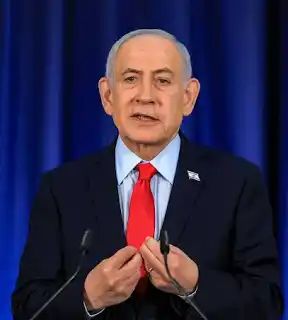
Benjamin Netanyahu pushes Lebanon talks after Israel bombardment in Beirut threatens Iran ceasefire, as Benjamin Netanyahu advances negotiations amid ongoing strikes on Beirut, deepening tensions across political, civilian, and international fronts.
War and diplomacy collide in real time
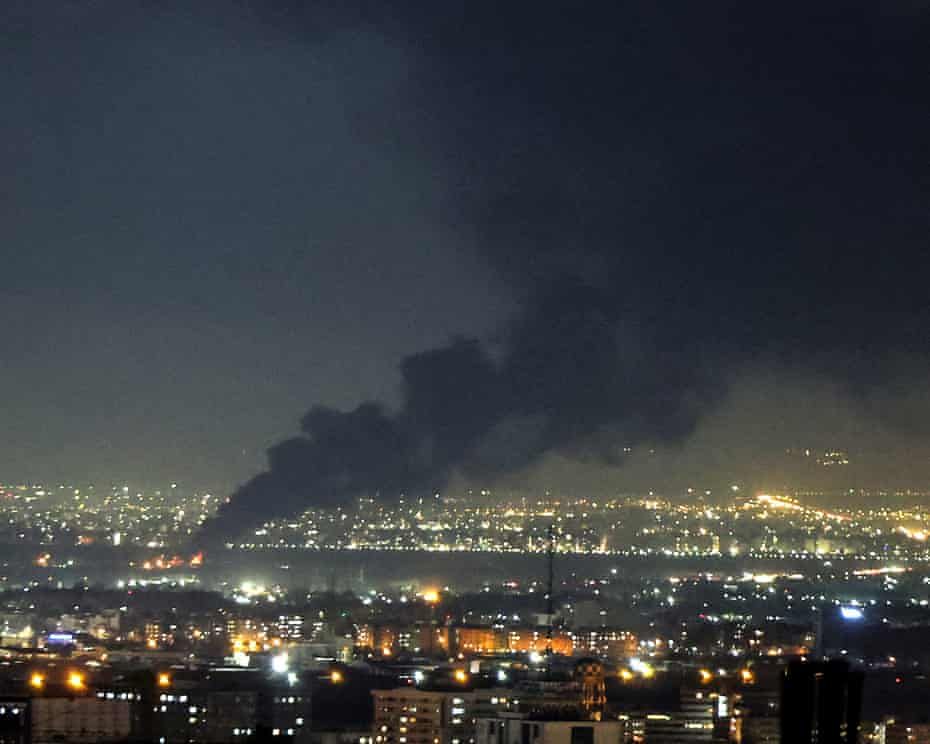
Israel’s push for talks has emerged in the immediate aftermath of one of the most intense bombardments in Lebanon since the conflict escalated, creating a stark contradiction between military escalation and diplomatic signalling.
Netanyahu framed the move as responsive, stating: “In light of repeated requests, I have instructed that negotiations begin as soon as possible.” Yet the timing has drawn scrutiny.
Analysts argue that diplomacy launched under fire risks being perceived as coercive rather than constructive. One regional observer noted: “Negotiations initiated during bombardment are rarely seen as genuine—they are often read as leverage.”
Lebanese civilians speak beyond the rubble
In Lebanon, the human cost is no longer just a statistic—it is shaping political reality. Residents of Beirut described nights of fear, displacement, and growing distrust toward all armed actors.
A local resident said: “We are trapped between powers deciding our fate. There is no safety, only waiting.” Another added: “Talks are meaningless if bombs are still falling.”
These voices reflect a widening gap between diplomatic language and lived experience, with many civilians skeptical that negotiations will deliver immediate relief.
Public sentiment is increasingly complex. While some citizens support any path toward de-escalation, others fear that negotiations tied to disarmament could trigger further instability.
Hezbollah’s stance hardens
The position of Hezbollah remains central to any outcome, yet far from aligned with Israeli expectations.
A Hezbollah-linked figure dismissed the proposal, stating: “Disarmament is not on the table while aggression continues.” This underscores the group’s view that negotiations cannot proceed under military pressure.
Hezbollah’s continued operations, including cross-border attacks, signal that it is not preparing for de-escalation, but rather reinforcing deterrence.
This creates a fundamental deadlock: Israel frames talks around disarmament, while Hezbollah frames resistance as non-negotiable.
Lebanon’s political leadership walks a tightrope
Lebanese officials have adopted a cautious tone, prioritising a temporary ceasefire over immediate negotiations.
A senior official described ongoing diplomacy as a “parallel track,” indicating alignment with broader regional efforts rather than direct acceptance of Israeli terms.
The government faces internal pressure—from civilians demanding safety and from political factions wary of appearing to concede under fire.
This balancing act reflects Lebanon’s fragile political structure, where any misstep could deepen internal divisions.
Washington’s strategic calculus expands
The role of Donald Trump extends beyond ceasefire mediation into broader strategic interests.
Washington is under pressure to stabilise the region not only for security reasons but also to protect global energy flows and avoid further military entanglement.
A U.S. official, speaking indirectly through diplomatic channels, suggested concern that “parallel conflicts risk undermining the credibility of the ceasefire framework.”
Privately, analysts believe the U.S. views Israel’s Lebanon operations as a complication rather than a complement to its Iran strategy.
Europe and allies quietly push back
European actors have become increasingly vocal, though measured, in calling for restraint.
Countries including the United Kingdom and France have signalled that any sustainable ceasefire must extend beyond Iran to include Lebanon.
A European diplomat stated: “A ceasefire that excludes active fronts is not a ceasefire—it is a pause in one theatre.”
Within NATO circles, there is growing concern that fragmented diplomacy could weaken collective strategic coherence.
Israel’s domestic pressures shape external moves
Inside Israel, Netanyahu’s actions are also shaped by internal dynamics.
Facing scrutiny over security outcomes and political stability, the prime minister must demonstrate both strength and strategic direction.
An Israeli political analyst observed: “This is not just about Lebanon—it is about leadership perception at home.”
Public opinion remains divided between those demanding decisive military action and those calling for a diplomatic off-ramp.
This domestic tension adds another layer to Israel’s external posture, influencing both timing and messaging.
Energy markets and global stakes intensify
The crisis extends far beyond regional borders, with disruptions in the Strait of Hormuz sending shockwaves through global markets.
Shipping traffic remains significantly reduced, raising concerns over supply chains and energy security.
Industry experts warn that prolonged instability could lead to sustained price volatility, affecting economies worldwide.
One analyst noted: “This is no longer just a regional conflict—it is a global economic risk.”
Diplomacy in Islamabad and fragile pathways
Efforts to stabilise the situation continue in Islamabad, where talks involving U.S. and Iranian representatives are expected to resume.
Pakistan’s mediating role has expanded to include discussions on extending ceasefire frameworks to Lebanon and other areas of conflict.
However, the gap between positions remains wide. Iran insists on inclusive terms, while the U.S. and Israel maintain narrower definitions.
This divergence threatens to stall progress before talks fully begin.
The credibility question
At the heart of the unfolding situation lies a critical question: can diplomacy and military escalation coexist without undermining each other?
Critics argue that Israel’s continued bombardment weakens the credibility of its call for talks.
A regional expert put it bluntly: “You cannot negotiate peace while actively reshaping the battlefield—it sends conflicting signals.”
Supporters of Israel’s approach, however, argue that pressure is necessary to force concessions.
This debate underscores the strategic ambiguity at play.
A conflict at a crossroads
The situation now sits at a volatile intersection of war, diplomacy, and global stakes.
Israel’s push for talks, Lebanon’s caution, Hezbollah’s resistance, and international pressure form a complex web with no clear resolution.
Read also: UK submarine threat exposed as Royal Navy confronts covert Russian cable mission in North Atlantic
Each actor operates within its own logic, yet all are bound by the same escalating reality.
The coming days will determine whether these competing dynamics can be aligned—or whether they will collide.
What lies ahead
As events continue to unfold, the region faces a narrowing window for de-escalation.
The success or failure of proposed talks could redefine not only the Israel-Lebanon dynamic but also the broader Iran ceasefire framework.
For now, uncertainty remains the dominant force.
Can negotiations take root amid ongoing bombardment, or will the contradictions at the heart of this crisis push the region further toward escalation?
Share your thoughts in the comments.
About The Author





