

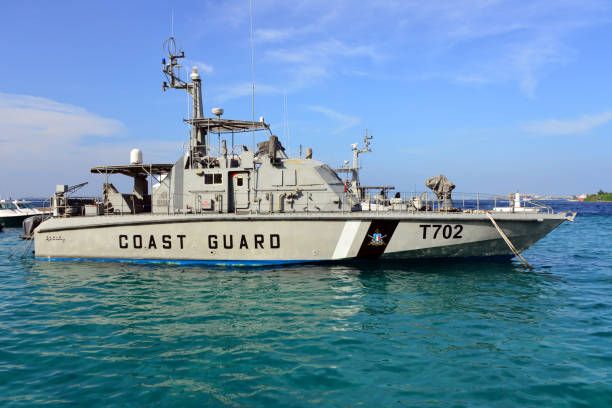
Hezbollah targets Israeli warship off Lebanon coast, marking a dramatic escalation in regional tensions as the Lebanese militant group claims a successful naval strike early this morning.
According to reports carried by Tasnim news agency, the group stated that its fighters launched a precision attack on an Israeli naval vessel positioned 68 nautical miles offshore.
The organization, widely known as Hezbollah, alleged that the warship was preparing to initiate strikes on Lebanese territory before it was engaged.
In its statement, Hezbollah said the operation followed hours of surveillance, suggesting a calculated and deliberate targeting process designed to intercept the vessel before any offensive action could begin.
The group further claimed that the strike was executed using a naval cruise missile, a capability that underscores its evolving arsenal and growing sophistication in maritime warfare.
Hezbollah insisted that the missile made direct contact with the target, describing the outcome as a confirmed hit, though no visual or independent confirmation has yet surfaced.
The Israeli military, represented by the Israel Defense Forces, responded by stating it is currently unaware of the alleged attack and has not verified any such incident.
This conflicting narrative has added uncertainty to an already volatile situation, with both sides presenting sharply different accounts of events in the eastern Mediterranean.
Military analysts note that if confirmed, the incident could signal a widening of engagement zones beyond land and air operations into more aggressive naval confrontations.
Such a development would mark a significant shift in the dynamics of the ongoing tensions between Israel and Hezbollah, raising concerns about broader regional instability.
The eastern Mediterranean has increasingly become a strategic theater, with naval assets playing a crucial role in surveillance, deterrence, and potential strike capabilities.
Hezbollah’s claim of striking a vessel at such a distance suggests improved targeting intelligence and extended operational reach over maritime domains.
However, without independent verification, the exact nature, scale, and outcome of the reported strike remain unclear, leaving room for speculation and misinformation.
Observers emphasize caution in interpreting early reports, especially in high-stakes conflict scenarios where information warfare often accompanies military operations.
The situation continues to develop, with international attention focused on whether further evidence will emerge to substantiate or refute the claims made.
Governments and security agencies are expected to closely monitor developments, particularly given the potential implications for shipping routes and regional security.
Read also: King Charles State visit to Trump: Can royal diplomacy smooth Anglo-American relations?
Hezbollah targets Israeli warship off Lebanon coast remains a developing story, as officials and independent observers seek clarity on what may prove to be a pivotal moment.
About The Author
