The battle over forming Israel‘s next government has intensified after opposition leader Gadi Eisenkot secured endorsements from more lawmakers than Prime Minister Benjamin Netanyahu, leaving President Isaac Herzog with a difficult decision over who should receive the mandate to form a new administration.
Eisenkot received the support of 67 members of the 120-seat Knesset, compared with 46 lawmakers who backed Netanyahu. However, the endorsements do not automatically guarantee either politician the parliamentary majority required to establish a government.
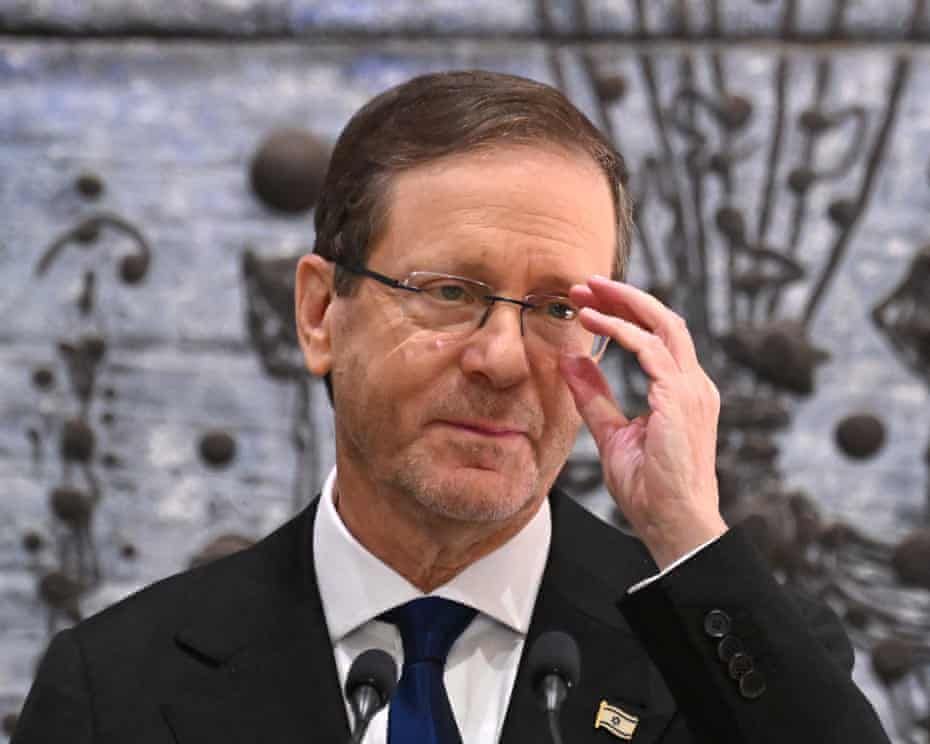
Herzog is expected to announce his decision on Sunday after holding consultations with political party leaders. The discussions are taking place against the background of a deeply divided parliament and disagreements over possible coalition arrangements.
The Israeli president acknowledged that the election outcome appeared clear in some respects but said political divisions had complicated the process of identifying the candidate most capable of forming a government.
He pointed to “mutual vetoes between the blocs and within the blocs themselves” as a major obstacle, suggesting that the endorsements received by individual candidates might not translate into a workable governing coalition.
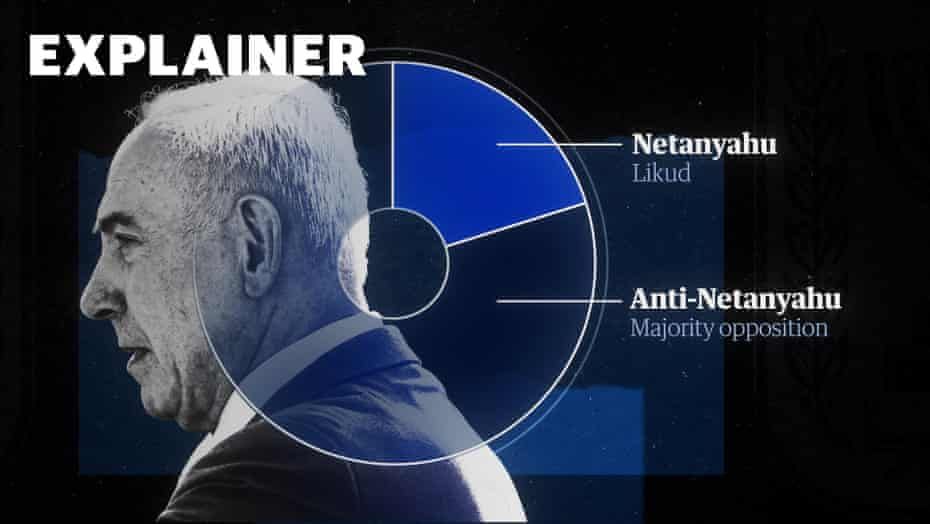
Eisenkot gains more support than Netanyahu
The latest parliamentary consultations have placed Eisenkot ahead of Netanyahu in the number of lawmakers recommending a candidate to Herzog.
However, the figures reveal a complicated political landscape rather than a straightforward transfer of power. Neither candidate has demonstrated an uncontested route to securing the support needed to govern.
Netanyahu’s Likud party emerged with the largest number of seats in the election, but the wider nationalist-religious coalition that previously supported him lost its parliamentary majority.
The coalition, which held 68 seats before the election, has been reduced to 53. That development has weakened Netanyahu’s position despite Likud remaining the largest individual party in the Knesset.
Eisenkot’s Change bloc holds 48 seats, leaving it dependent on additional parliamentary support to establish a government. The Palestinian-led parties could therefore play a decisive role in determining the next political arrangement.
The Joint List holds 11 seats, while the Islamist Ra’am party has eight. Together, their 19 lawmakers represent a potentially significant parliamentary bloc.
Both Arab-majority parties reportedly endorsed Eisenkot during the consultations, although their willingness to participate directly in a coalition differs.
United Torah Judaism, another important parliamentary grouping, did not recommend either candidate to Herzog.
Palestinian parties emerge as potential kingmakers
The support of Palestinian parties has become one of the central issues surrounding the negotiations over forming Israel’s next government.
Their combined parliamentary strength could provide Eisenkot with an opportunity to challenge Netanyahu’s continued hold on power, although disagreements remain over the conditions attached to such cooperation.
Yousef Jabareen, leader of the main Palestinian coalition, explained that his party’s position reflected the political circumstances created by the election and the desire for a change in government.
“We are not choosing between good and better but between what we see as bad and even worse,” he said.
Jabareen acknowledged that his political group had disagreements with Eisenkot but explained that many Palestinian voters wanted an end to the policies associated with Netanyahu’s governing coalition.
He also pointed to concerns about racism, discrimination, crime and the exclusion of Palestinian citizens from important political decisions.
The Palestinian parties have previously made clear that removing Netanyahu’s government, particularly its far-right ministers, is among their principal political objectives.
Jabareen had earlier identified National Security Minister Itamar Ben-Gvir and Finance Minister Bezalel Smotrich as particularly important figures whose departure would be necessary for a meaningful political change.
Their positions reflect longstanding tensions between Palestinian political representatives and the nationalist-religious parties that have supported Netanyahu.
Eisenkot faces conditions over coalition cooperation
Although Palestinian parties have endorsed Eisenkot, their support does not necessarily mean they will become members of his government.
Eisenkot has reportedly outlined conditions for working with Arab parties, including recognition of Israel as a Jewish state, acceptance of compulsory national service, either civilian or military, and condemnation of Hamas as a terrorist organisation.
These requirements could complicate negotiations, particularly because the Palestinian parties have their own political principles and positions concerning the Israeli-Palestinian conflict.
The Joint List and Jabareen have indicated that they could support an opposition arrangement from outside the government rather than participate directly in a coalition.
Ra’am, however, has shown greater willingness to join an Eisenkot-led administration.
The difference between these positions could become crucial if Herzog gives Eisenkot the opportunity to form a government.
Even with the endorsements already secured, Eisenkot would need to negotiate carefully to prevent disagreements over political conditions from undermining the possibility of a parliamentary majority.
The question of whether Palestinian lawmakers would support a government from outside or become formal coalition partners therefore remains unresolved.
Arab Israeli turnout rises sharply
The election also recorded a significant increase in participation among Arab citizens of Israel, whose turnout reportedly more than doubled to approximately 80%.
Palestinian citizens account for about 20% of Israel’s population and possess Israeli citizenship, allowing them to participate in national elections.
Their increased participation has drawn attention because of the potential influence of Arab-majority parties in the closely divided Knesset.
However, Palestinians living in the occupied West Bank and Gaza Strip were unable to participate in the Israeli parliamentary election.
The increased turnout among Arab Israeli voters has strengthened the parliamentary presence of parties representing their communities and made their support more relevant to the government formation process.
It has also highlighted the political significance of communities that have frequently complained about discrimination, insecurity and limited influence over national policymaking.
Herzog urges parties to avoid another election
Herzog has expressed concern about the possibility of another election if political leaders fail to reach an agreement on a new governing arrangement.
Israel has experienced repeated electoral contests in recent years, and the president wants the political parties to find a solution without returning voters to the polling stations.
He stressed the importance of establishing a government capable of addressing the country’s security and diplomatic challenges while managing domestic divisions.
“Any reasonable person need only look at the security and diplomatic challenges before us, at the changing region around us, and remember the issues tearing us apart from within, to understand that an immense responsibility rests upon us,” Herzog said.
His comments underline the pressure facing the political leadership as negotiations continue.
The president’s responsibility is to identify the candidate who has the strongest practical opportunity to assemble a government, rather than simply selecting the politician whose party secured the largest number of seats.
That distinction is particularly important because Netanyahu’s Likud remains the largest party, while Eisenkot has received more recommendations from lawmakers during the consultations.
Netanyahu disputes election developments amid investigation
The political uncertainty has also been accompanied by controversy surrounding an investigation into possible vote tampering.
Netanyahu has seized on the investigation to question aspects of the election results, accusing Israeli Palestinian-led parties of stealing votes.
Critics have accused Netanyahu and his political allies of attempting to undermine confidence in the election outcome, although the prime minister has denied those allegations.
The Central Election Committee said on Wednesday that the integrity of the election had not been compromised.
Its position was significant because the controversy emerged while political parties were preparing for negotiations over the formation of a new government.
Supreme Court Justice Noam Sohlberg, who chairs the Central Election Committee, warned against developments that could undermine democratic institutions.
“This is a real danger. One of the foundations of democracy is the peaceful transfer of power,” he said.
Sohlberg also described the high turnout, including participation by members of Israel’s Arab minority, as a blessing.
Meanwhile, Netanyahu’s far-right allies have called for the immediate arrest and interrogation of Arab party leaders, adding another source of tension to the political environment.
National Security Minister Ben-Gvir has been among those demanding action against the Arab political representatives.
Netanyahu remains caretaker prime minister
Until a new coalition is established, Netanyahu will remain caretaker prime minister, regardless of Herzog’s decision over whom to nominate to form the next government.
The process could still produce complicated negotiations because parliamentary endorsements do not automatically translate into the votes required to approve a coalition.
Eisenkot must reconcile the positions of parties that have expressed support for removing Netanyahu but disagree over participation in a new administration.
Netanyahu, meanwhile, could attempt to retain power through negotiations with smaller parties despite the loss of his previous parliamentary majority.
The coming discussions will therefore determine whether the opposition can turn its numerical advantage in the presidential consultations into a functioning government.
Herzog’s Sunday announcement is expected to provide the next major indication of the direction Israel’s political leadership will take.
For now, the country remains caught between competing political blocs, with Palestinian lawmakers holding potentially decisive influence over the negotiations.
The central challenge is no longer simply which party won the largest number of seats, but which candidate can assemble sufficient parliamentary support to govern.
About The Author