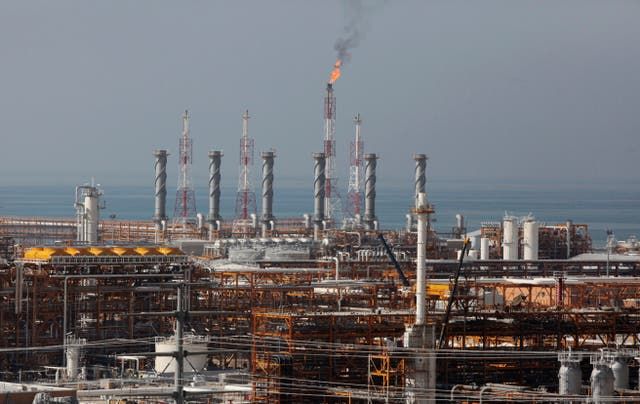
OPEC Production Freeze Plan Unrealistic as Supply Disruptions Deepen Global Oil Crisis
The OPEC production freeze plan for the first quarter of the year has been deemed unrealistic amid escalating supply disruptions and geopolitical tensions that continue to reshape the global oil market.
The Organization of Petroleum Exporting Countries (OPEC), alongside its allies under the OPEC+ framework, had initially considered freezing crude oil output to stabilise prices.
However, evolving global dynamics—particularly conflict-related supply shocks—have forced a reassessment of that strategy.
Recent data indicates that OPEC members increased output significantly, contradicting earlier expectations of production restraint.
According to industry estimates, the cartel’s crude production rose sharply last month, driven largely by Saudi Arabia and key Gulf producers responding to tightening supply conditions.
Saudi Arabia, OPEC’s de facto leader, ramped up production by hundreds of thousands of barrels per day, pushing its total output above 10 million barrels daily. This surge represents one of the most substantial increases in recent months, underscoring the urgency among producers to offset supply gaps caused by disruptions in critical export routes.
At the heart of the crisis is the ongoing instability in the Middle East, particularly around the Strait of Hormuz—a vital corridor through which a significant portion of the world’s oil supply flows.
The disruption of tanker traffic through the strait has had far-reaching consequences, effectively constraining exports from major producers including Saudi Arabia, Iraq, and the United Arab Emirates.
Industry analysts estimate that as much as 8 million barrels per day of crude production, along with additional volumes of condensates and natural gas liquids, have been impacted by the bottleneck. This has intensified pressure on global oil markets, pushing benchmark prices close to $100 per barrel.
The OPEC production freeze plan has therefore become increasingly impractical in the face of such supply constraints. Rather than limiting output, producers are now under pressure to maximise production where possible to mitigate the effects of disrupted logistics and rising demand.
Further complicating the situation is the pre-emptive increase in output observed among Gulf producers prior to recent geopolitical escalations. Tanker tracking data suggests that several countries boosted exports in anticipation of potential conflict, a move that has since proven insufficient to stabilise markets amid ongoing uncertainty.
In response to the supply shock, member nations of the International Energy Agency (IEA), including the United States, Japan, and Germany, have agreed to release large volumes of crude oil from strategic reserves. The coordinated release—estimated at hundreds of millions of barrels—aims to cushion the global market and prevent further price spikes.
Despite these interventions, analysts warn that the structural challenges facing the oil market remain significant. The inability to safely transport crude through key maritime routes continues to undermine supply reliability, while geopolitical tensions show little sign of easing.
For OPEC and its allies, the situation presents a delicate balancing act. While higher oil prices could boost revenues for producing nations, excessive volatility risks destabilising global economic growth and dampening demand.
The OPEC production freeze plan was originally conceived as a tool to maintain market equilibrium. However, the current environment—characterised by supply shocks rather than oversupply—has rendered such measures less effective.
Experts argue that flexibility, rather than rigid production targets, will be critical in navigating the evolving landscape. Producers may need to adopt more dynamic strategies, adjusting output levels in response to real-time market conditions rather than adhering strictly to pre-agreed quotas.
Additionally, the crisis has reignited discussions around energy security and diversification. Import-dependent countries are increasingly seeking alternative supply sources and investing in strategic reserves to shield their economies from external shocks.
For Nigeria and other oil-producing nations, the developments highlight both opportunities and challenges. While elevated prices could translate into higher export earnings, persistent volatility and logistical constraints may limit the ability to fully capitalise on market conditions.
Ultimately, the fate of the OPEC production freeze plan underscores the complex interplay between geopolitics, supply chains, and market forces. As the global oil market continues to grapple with uncertainty, stakeholders will be closely watching how OPEC adapts its strategy in the coming months.
About The Author