US-China tariff cuts covering $30 billion of non-sensitive goods in each direction have been agreed alongside a new artificial intelligence dialogue following President Xi Jinping’s visit to Washington for talks with President Donald Trump.
The agreement marks one of the clearest outcomes from the three-day Trump-Xi summit, with Washington and Beijing also agreeing to establish an AI communication channel and resume discussions on the risks and benefits of the technology.
According to Reuters, the tariff agreement will cover selected US exports and Chinese imports, while both governments prepare for another round of AI discussions in November.
Trump and Xi reach trade agreement
The White House said the two countries had reached consensus on more favourable tariff treatment for $30 billion of non-sensitive goods in each direction.
US exports covered by the arrangement include agricultural products, wood and cosmetics, while Chinese goods affected include small appliances, toys and decorations.
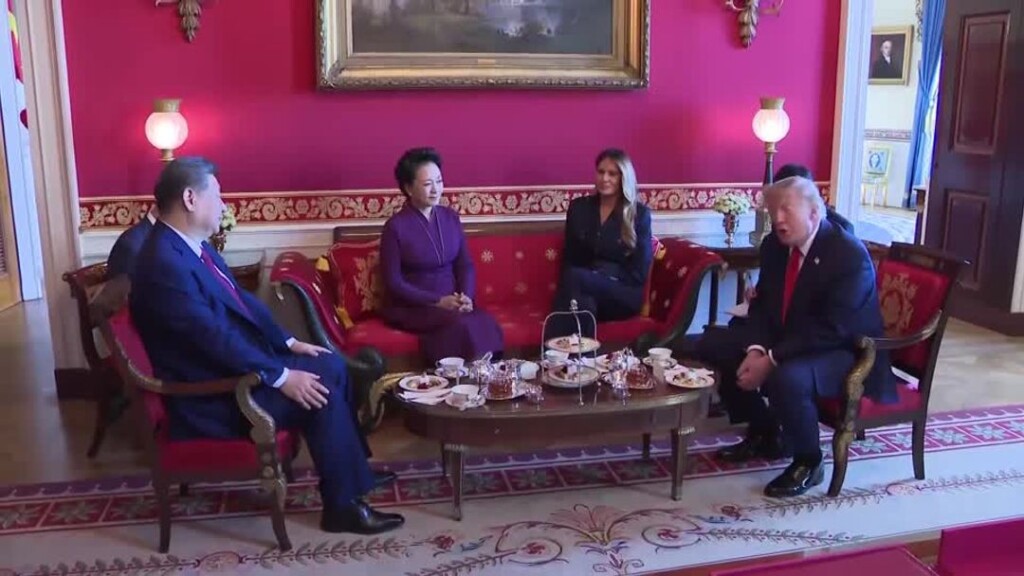
The announcement followed Xi’s three-day visit to Washington, which ended on Friday after meetings and engagements with Trump.
Although the summit highlighted the personal diplomacy between the two leaders, the tariff agreement provides a concrete area where both sides have agreed to adjust their economic relationship.
Trade truce extended before summit
The latest agreement comes after Washington and Beijing agreed earlier in the week to extend their existing trade truce by two months.
The extension had been announced by US Treasury Secretary Scott Bessent ahead of the Trump-Xi meeting and was intended to provide additional time for negotiations on a potentially broader trade agreement.
The previous arrangement had been scheduled to expire on November 10.
The latest US-China trade agreement therefore builds on an already established period of reduced tensions while leaving broader trade negotiations unresolved.
China’s Foreign Ministry also said the two sides had agreed to establish a trade council and extend the outcomes of earlier discussions held in Kuala Lumpur.
US and China launch new AI dialogue
Beyond tariffs, artificial intelligence emerged as another major area of cooperation between Washington and Beijing.
The two governments agreed to hold a dialogue on the risks and benefits associated with AI, with the next round of discussions scheduled for November.
They also agreed to establish a communication channel for dealing with AI-related incidents.
The arrangement comes as the United States and China compete over increasingly advanced artificial intelligence technologies and their economic, security and strategic implications.
Leaders adopt ‘super intelligence’ terminology
The White House said Trump and Xi agreed to use the term “super intelligence” instead of the phrase “artificial intelligence” in the context of their discussions.
China‘s Foreign Ministry said Beijing valued Washington’s adoption of the new terminology.
The ministry said both sides should increase exchanges and work towards greater consensus as AI technology continues to develop.
The November dialogue will therefore provide another channel through which the two governments can discuss emerging technology risks while also exploring potential areas of cooperation.
China describes summit as new chapter
Chinese Foreign Minister Wang Yi described Xi’s Washington visit in strongly positive terms.
“This historic visit enriched the constructive and stable China-US relationship, upheld the overall stability of bilateral ties, opened a new chapter in China-US relations, and will have a far-reaching impact on world peace and development,” Wang said in a statement.
The statement reflects Beijing’s description of the summit, while the specific trade and technology agreements provide the main measurable outcomes announced after the meeting.
Xi has since returned to Beijing, according to China’s state news agency Xinhua.
Trump-Xi talks extend beyond trade
The discussions between the two leaders also covered wider international issues, including foreign policy and international waterways.
The United States and China agreed that Iran should fulfil its commitment not to develop nuclear weapons.
They also agreed that no country or entity should impose transit tolls on international waterways.
The statements came against the backdrop of continuing international tensions involving Iran and concerns over the security of major global shipping routes.
The two sides did not announce a comprehensive resolution to all of their differences, but the agreements demonstrated that trade, technology and selected foreign-policy issues remain areas for direct communication.
A new channel for AI-related incidents
The decision to create a dedicated communication channel for AI-related incidents could become particularly significant as advanced systems develop rapidly.
Washington and Beijing have competing interests in AI development, but both governments have also acknowledged the need for dialogue over risks associated with increasingly powerful technologies.
The November talks will provide an opportunity to discuss those issues directly rather than relying exclusively on broader diplomatic channels.
The agreement also reflects the wider role AI now plays in the relationship between the world’s two largest economies.
Trade council to support future negotiations
China said the two countries had agreed to establish a trade council as part of the latest understandings.
Such a mechanism could provide a structured forum for continued discussions after the Trump-Xi summit.
The move comes as both governments attempt to manage disagreements over tariffs, market access and economic competition while preventing those disputes from disrupting wider bilateral relations.
The $30 billion tariff cuts announced after the summit apply specifically to non-sensitive goods and do not represent a comprehensive settlement of the broader US-China trade relationship.
Further negotiations will therefore be required if Washington and Beijing are to reach a larger trade agreement.
Summit leaves broader issues unresolved
The three-day meeting showcased the personal diplomacy between Trump and Xi, but the two leaders did not resolve every major disagreement between their countries.
Read also: Andy Burnham Brexit plan under pressure as former adviser urges snap election
The latest arrangements instead establish areas for continued negotiation, including trade and artificial intelligence.
The extension of the trade truce gives both sides more time to work towards a wider agreement, while the new AI dialogue creates another avenue for engagement over a technology sector that has become increasingly important to both countries.
The agreement on US-China tariff cuts also provides businesses with greater clarity over the specific categories of goods covered by the latest arrangement, although the broader tariff relationship remains subject to further negotiations.
For Washington and Beijing, the next phase will depend on how the commitments reached during Xi’s visit are implemented and whether they can support additional agreements.
The next major milestone in the technology relationship will be the planned November AI discussions.
At the same time, the trade council and extended truce are expected to keep economic negotiations active as both sides pursue a potentially larger deal.
About The Author