

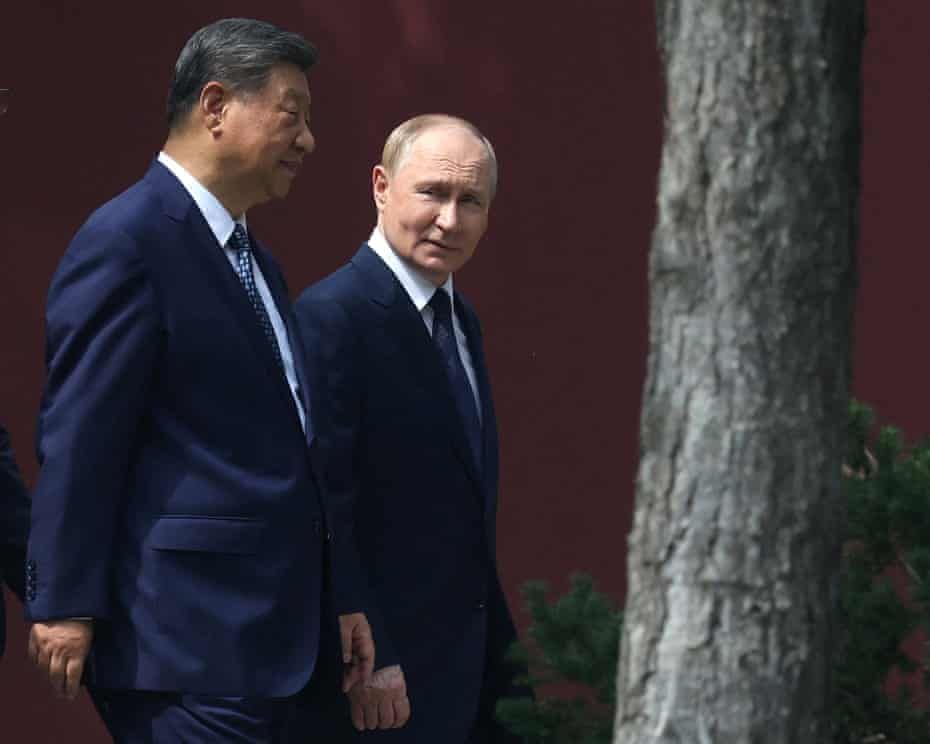
The Xi Jinping Putin meeting in Beijing this week has become one of the most closely watched geopolitical developments of 2026, arriving just days after US President Donald Trump completed a high-level diplomatic visit to China. The rapid sequence of engagements involving Washington, Beijing, and Moscow has intensified scrutiny of China’s growing role at the center of global diplomacy.
Ahead of the talks, Russian President Vladimir Putin delivered strongly worded remarks praising the state of Russia–China relations, describing them as reaching what he called an unprecedented level of strategic trust and cooperation.
Beijing, in response, signaled continued enthusiasm for deepening ties, portraying the partnership as stable, long-term, and increasingly vital in a shifting global order.
Putin’s Statement on China–Russia Relations
Russian President Vladimir Putin set the tone for the meeting with some of his most expansive public comments yet on the relationship between Moscow and Beijing.
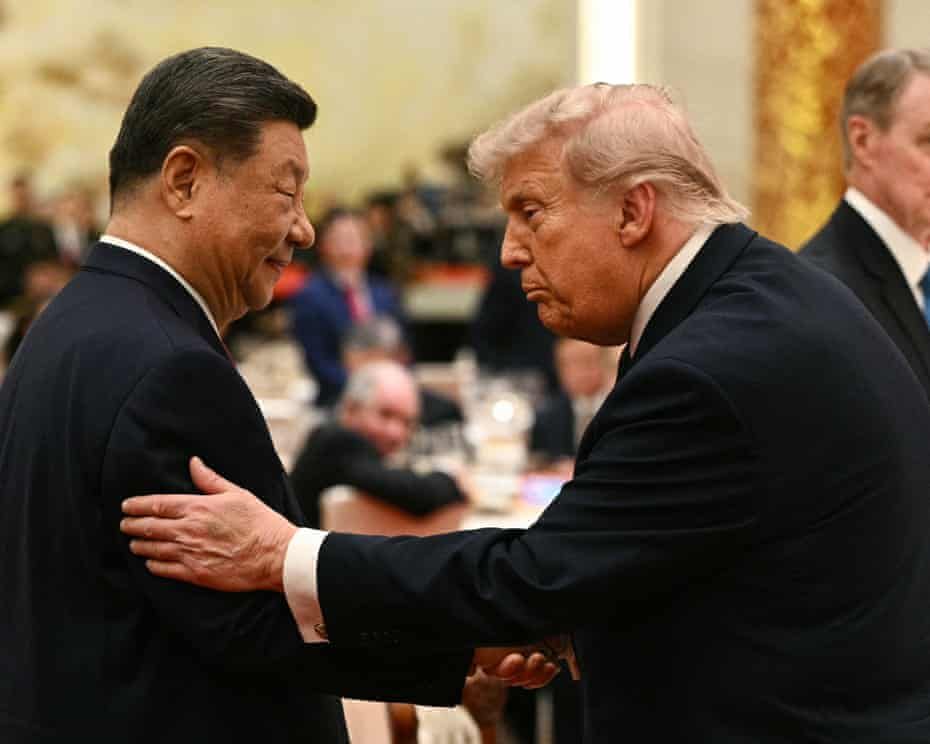
Speaking ahead of his visit, Putin emphasized that the partnership between the two nations had moved beyond traditional diplomacy into what he described as a durable strategic alignment.
Putin said:
“Relations between Russia and China have reached the highest level in history. They are self-sufficient and do not depend on external circumstances or short-term political changes.”
He further stressed that cooperation between both nations was built on long-term strategic convergence rather than temporary geopolitical convenience.
Putin added:
“Russia and China jointly support the emergence of a fairer and more balanced international order. Our cooperation contributes to global stability and long-term development.”
In additional remarks, Putin underscored that relations with Beijing were not directed against any third country but reflected shared interests in reshaping global governance structures.
He said:
“Our cooperation is constructive, forward-looking, and not aimed at any external power. It reflects the reality of a multipolar world.”
The Russian leader also referred warmly to Chinese President Xi Jinping, describing him as a “trusted partner and statesman of global influence,” and highlighted the consistency of their frequent high-level meetings.
Putin said:
“Dialogue with President Xi Jinping is always open, productive, and rooted in mutual respect and understanding.”
Beijing’s Response to Putin’s Remarks
Beijing responded positively to Putin’s statements, reinforcing the perception of a strengthening bilateral relationship that continues to expand across political, economic, and strategic domains.
Chinese officials emphasized that China–Russia relations have “continuously deepened and solidified,” particularly as both countries mark decades of formal strategic partnership.
A Chinese government statement noted:
“China is prepared to work with Russia to further strengthen strategic coordination, deepen practical cooperation, and safeguard international fairness and justice.”
Beijing also highlighted the symbolic importance of hosting major global leaders within a short timeframe, including both the US and Russian presidents.
State media commentary described China as:
“A key focal point of global diplomatic engagement in the current international environment.”
Chinese messaging stressed that high-level exchanges between major powers reflect Beijing’s growing international relevance and its ability to maintain balanced relations across competing global blocs.
Officials also reiterated that China’s foreign policy remains centered on “peaceful development, mutual respect, and win-win cooperation,” even as global geopolitical competition intensifies.
Strategic Timing After Trump’s Visit
The timing of the Xi Jinping Putin meeting has drawn significant global attention, coming only four days after Donald Trump’s high-profile visit to Beijing.
During Trump’s talks with Xi Jinping, discussions reportedly focused on trade relations, Taiwan, and Middle East security issues, while the war in Ukraine received comparatively limited public attention. The contrast in agendas between the US and Russian engagements has fueled debate over China’s evolving diplomatic strategy.
Analysts argue that the rapid transition from Washington to Moscow engagement underscores Beijing’s increasing ability to manage multiple great-power relationships simultaneously.
Observers noted that China’s diplomatic calendar has become a demonstration of strategic flexibility, signaling that it can engage competing global actors without aligning fully with any single bloc.
Taiwan and Security Concerns
Behind the public diplomacy, analysts believe Taiwan remains a critical underlying factor shaping China’s broader strategic posture.
During discussions linked to Trump’s visit, Xi Jinping reportedly warned that mismanagement of Taiwan-related tensions could lead to serious escalation risks in the region.
China continues to view Taiwan as a core national sovereignty issue, while the United States maintains a policy of strategic ambiguity combined with military support for the island.
Experts believe that China’s growing coordination with Russia may also serve broader strategic resilience objectives, including energy security and supply chain stability in the event of regional conflict scenarios.
Energy, Trade, and Strategic Alignment
Economic cooperation remains a central pillar of the China–Russia relationship.
Since 2022, China has significantly increased imports of Russian crude oil and natural gas, providing Moscow with vital revenue amid Western sanctions linked to the war in Ukraine.
Energy infrastructure projects, including long-term pipeline expansion plans, continue to feature prominently in bilateral discussions.
One of the most significant proposals under consideration is the “Power of Siberia 2” pipeline, which would further integrate Russian gas supplies into China’s energy network.
Analysts say these developments reflect a deeper strategic alignment that goes beyond short-term trade benefits and points toward long-term economic interdependence.
Global Implications of the Xi Jinping Putin Meeting
The Xi Jinping Putin meeting is widely seen as more than a routine diplomatic engagement. Instead, it reflects broader shifts in global power dynamics as China continues to expand its influence across Asia, the Middle East, and parts of the Global South.
Western governments have expressed concern that closer coordination between Beijing and Moscow could challenge existing international frameworks and accelerate the emergence of a more fragmented global order.
At the same time, China continues to present itself as a stabilizing force advocating for multilateralism and global economic cooperation.
Putin’s remarks, combined with Beijing’s response, reinforce the perception that both countries are seeking to reshape aspects of the international system while maintaining pragmatic cooperation in energy, trade, and security.
The Xi Jinping Putin meeting underscores a rapidly evolving geopolitical landscape in which major powers are recalibrating relationships amid shifting global tensions. Putin’s strong public endorsement of China–Russia ties, paired with Beijing’s equally supportive response, signals a continued deepening of strategic alignment between the two countries.
As global attention remains fixed on the aftermath of Trump’s visit to Beijing, the latest developments suggest that China is increasingly positioning itself as a central diplomatic hub where competing global powers converge, negotiate, and redefine their roles in the international system.
About The Author
