China sends naval forces to monitor a United States warship near the disputed Sabina Shoal in the South China Sea, escalating maritime tensions as Taiwan separately reports a confrontation with a Chinese Coast Guard vessel near the Pratas Islands.
China’s military said on Tuesday, October 20, that the USS Charleston had entered waters near Sabina Shoal without Beijing’s approval, describing the operation as an infringement of Chinese sovereignty and a threat to regional security.
The incident highlights continuing disagreements over maritime boundaries, freedom of navigation and territorial claims in strategically important Asian waters, where China, the United States, the Philippines and Taiwan remain involved in competing security interests.
China Sends Naval Forces After US Warship Enters Disputed Waters
China’s Southern Theatre Command announced that it had deployed naval forces to track and monitor the USS Charleston after the American vessel allegedly entered waters surrounding Sabina Shoal in the Spratly Islands.
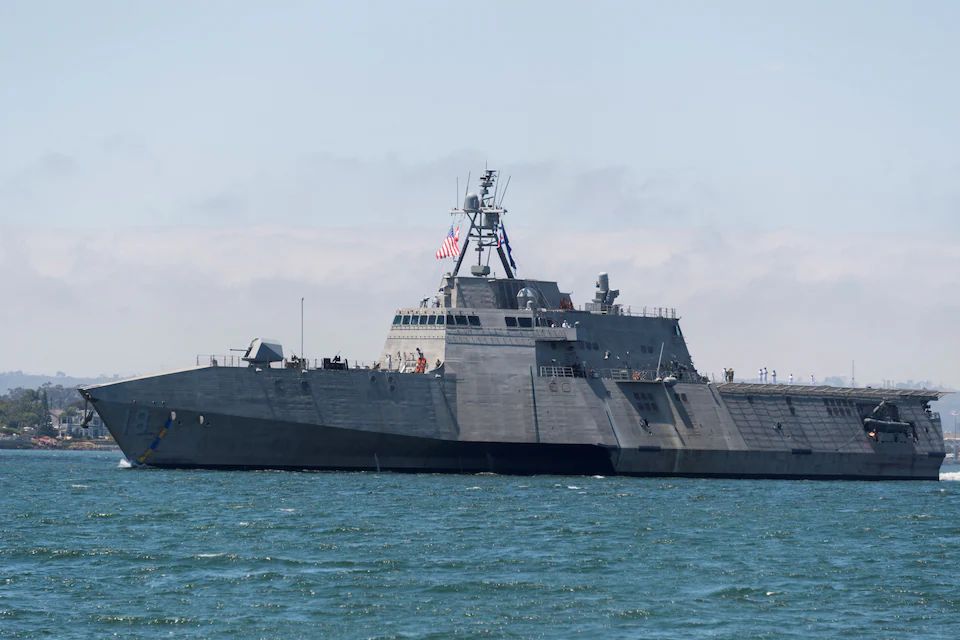
According to the Chinese military, the incident occurred in the early hours of Tuesday, with Beijing accusing Washington of conducting the operation without authorisation from the Chinese government.
The command said the US action threatened maritime security and undermined stability in the region, reinforcing Beijing’s longstanding objections to American military activities in the South China Sea.
In its statement, the Chinese military declared that the operation “infringes upon China’s sovereign rights and interests, jeopardises maritime security, and is detrimental to regional peace and stability.”
It also demanded that Washington immediately stop such activities, while confirming that Chinese naval forces had been dispatched to monitor the American warship.
The United States Navy had not immediately responded to Reuters’ request for comment when the report was published.
Washington Maintains Freedom of Navigation Position
The United States Navy generally describes such operations as freedom of navigation missions, which are intended to challenge maritime restrictions Washington considers inconsistent with international law.
Although the latest reported incident has drawn attention to the USS Charleston, Reuters noted that the American Navy’s last known freedom of navigation operation in the South China Sea was more than a year earlier.
The Philippines, which has overlapping territorial disputes with China, rejected Beijing’s suggestion that the American warship had trespassed into Chinese territory.
A spokesperson for the Philippine military said the vessel had not entered Chinese territory and argued that no country could demand prior permission for lawful passage through international waters.
The disagreement reflects a fundamental divide between Washington and Beijing over the extent of China’s maritime claims and the rights of foreign military vessels operating in contested waters.
Why Sabina Shoal Is Important to China and the Philippines
Sabina Shoal is among the disputed maritime features in the South China Sea, a waterway of considerable strategic and economic importance to countries across Asia.
China claims sovereignty over almost the entire South China Sea, despite overlapping claims by Brunei, Malaysia, the Philippines, Taiwan and Vietnam.
The dispute has produced repeated confrontations involving coast guard vessels, fishing boats and other maritime assets, particularly between China and the Philippines.
Tensions around Sabina Shoal have been especially pronounced, with both Beijing and Manila contesting sovereignty over the area and the wider Spratly Islands archipelago.
The latest confrontation also follows an incident reported last month, when a Chinese Coast Guard vessel allegedly rammed a Philippine boat carrying out a refuelling mission near the same shoal.
According to the Philippine Coast Guard, the collision damaged the Philippine vessel. China, however, blamed the incident on the Philippine side, illustrating how the two governments frequently present conflicting accounts of maritime encounters.
Philippines Warns Against Restrictions on International Waters
The Philippine military’s response to the USS Charleston incident underscores Manila’s opposition to Chinese efforts to control navigation in disputed areas.
The country maintains a mutual defence treaty with the United States, adding a significant security dimension to the South China Sea dispute.
Washington and Manila have strengthened security cooperation amid recurring confrontations with Chinese vessels, while Beijing has repeatedly criticised what it regards as American interference in regional disputes.
Any escalation around Sabina Shoal could therefore have implications beyond the immediate encounter, particularly if a maritime incident draws in additional military or coast guard forces.
However, the Reuters report did not indicate that a military clash had occurred between the Chinese forces and the USS Charleston.
Taiwan Reports Separate Chinese Coast Guard Standoff
While China was monitoring the American warship near Sabina Shoal, Taiwan reported another confrontation involving a Chinese Coast Guard vessel near the Taiwan-controlled Pratas Islands.
Taiwan’s Coast Guard said the Chinese vessel had entered restricted waters near the islands on Tuesday, prompting authorities to dispatch a Taiwanese patrol ship named Taichung to warn it away.
The two vessels subsequently broadcast messages to one another as the confrontation continued, with both sides asserting competing political positions over Taiwan’s status.
According to Taiwan’s Coast Guard, the Chinese vessel broadcast that “the so-called Republic of China does not exist,” referring to Taiwan’s official name.
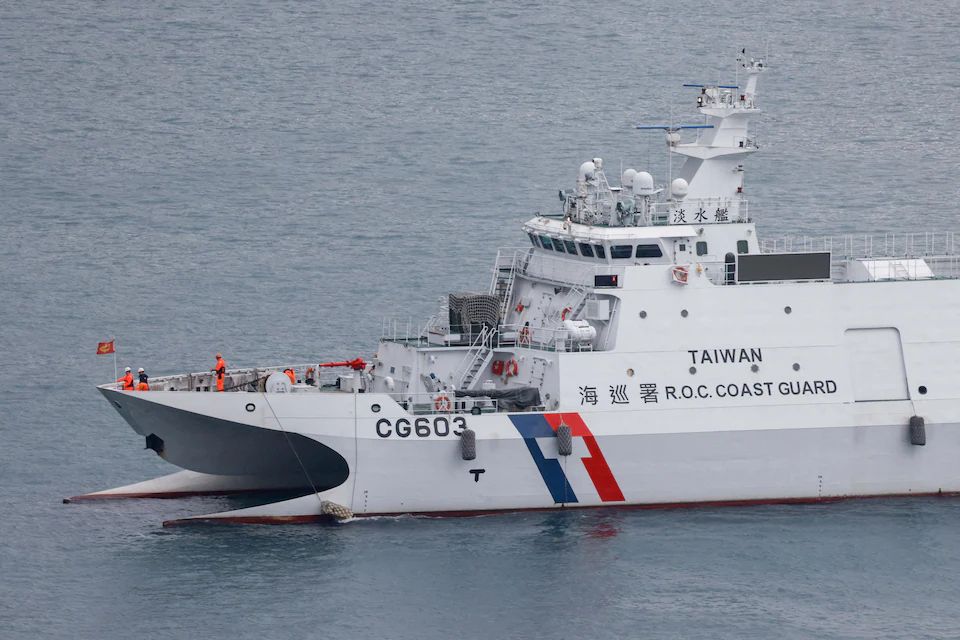
The Taiwanese vessel responded by declaring that “the Republic of China, Taiwan, is a sovereign and independent country,” the Coast Guard said.
Taiwanese authorities reported that the standoff was continuing when the statement was issued.
The incident demonstrates how maritime confrontations around Taiwan can quickly become expressions of the deeper political dispute between Taipei and Beijing.
China Rejects Taiwan’s Separate Political Status
China regards democratically governed Taiwan as part of its territory and has repeatedly opposed any move it interprets as promoting the island’s independence.
Taiwan, meanwhile, operates its own government and security institutions and rejects Beijing’s authority over the island.
The Pratas Islands lie between southern Taiwan and Hong Kong. Although Taiwan controls the islands, their defence arrangements differ from those of more heavily fortified areas, with security responsibilities resting with Taiwan’s Coast Guard.
The latest confrontation follows another dispute last week, when Beijing warned Taiwan that it must “bear the consequences” after Taiwan’s Coast Guard used a water cannon against a Chinese fishing boat near the Pratas Islands.
China’s Taiwan Affairs Office had not immediately responded to a request for comment on Tuesday’s reported standoff.
Chinese Coast Guard Activity Around Taiwan Raises Concerns
China has also increased Coast Guard activity around Taiwan, including patrols off the island’s eastern coast, developments that have raised concerns among Western governments.
The latest criticism came at a forum in Taipei on Tuesday, where the chair of a review commission appointed by the United States Congress described Chinese Coast Guard patrols east of Taiwan as “highly destabilising.”
The assessment reflects concerns that China’s maritime operations could increase pressure on Taiwan and complicate the security environment across the wider region.
Taiwan’s National Security Council Secretary-General Joseph Wu, who addressed the same event, said China had no legal claim to the waters off Taiwan’s eastern coast.
His comments reinforced Taipei’s position that Chinese maritime activities should not be treated as establishing sovereign rights over the surrounding waters.
The separate incidents near Sabina Shoal and the Pratas Islands illustrate the breadth of the maritime disputes involving China, even though the locations and immediate circumstances differ.
What the Latest Maritime Confrontations Mean for Regional Security
The simultaneous reports of Chinese naval monitoring near Sabina Shoal and a Coast Guard standoff near the Pratas Islands highlight the continuing pressure on regional maritime security.
The South China Sea is a strategically important waterway, with overlapping territorial claims creating recurring friction between China and neighbouring countries.
The presence of American military vessels adds another layer to the dispute, particularly because Washington challenges maritime restrictions it considers unlawful and maintains security partnerships with countries such as the Philippines.
At the same time, Chinese Coast Guard operations around Taiwan have intensified concerns about Beijing’s approach to the self-governed island and the potential consequences for regional stability.
Neither reported incident, as described by Reuters on Tuesday, established that armed conflict had begun. However, repeated encounters increase the importance of clear communication and restraint among the parties involved.
Read also: Helen Haines alleged attack: Australian MP loses leg after driver allegedly rams her twice
The latest developments also underline the difficulty of resolving disputes where competing governments disagree not only over territorial sovereignty but also over the legal status of maritime operations.
For now, China says its forces are monitoring the USS Charleston, while Taiwan reports that its Coast Guard remains engaged in a separate standoff near the Pratas Islands.
The situations leave regional observers watching closely for further developments as disputes over navigation, sovereignty and security continue across East Asian waters.
About The Author