

The Alberta separatist referendum has reignited debate over Canada’s future, exposing deep economic frustrations in the oil-producing province even as a majority of residents appear unwilling to abandon the country.
Voters in Alberta are weighing their province’s relationship with the Canadian federation in a non-binding referendum taking place on Monday, October 19, 2026. The vote comes after months of pressure from independence supporters.
Although the result cannot automatically separate Alberta from Canada, the referendum could influence political discussions about provincial autonomy, federal economic policies and the future of the country’s national unity.
A poll released by the Angus Reid Institute on Friday suggested that 66 per cent of Albertans intended to vote against separation. The findings indicate that the independence movement faces considerable resistance among the province’s electorate.
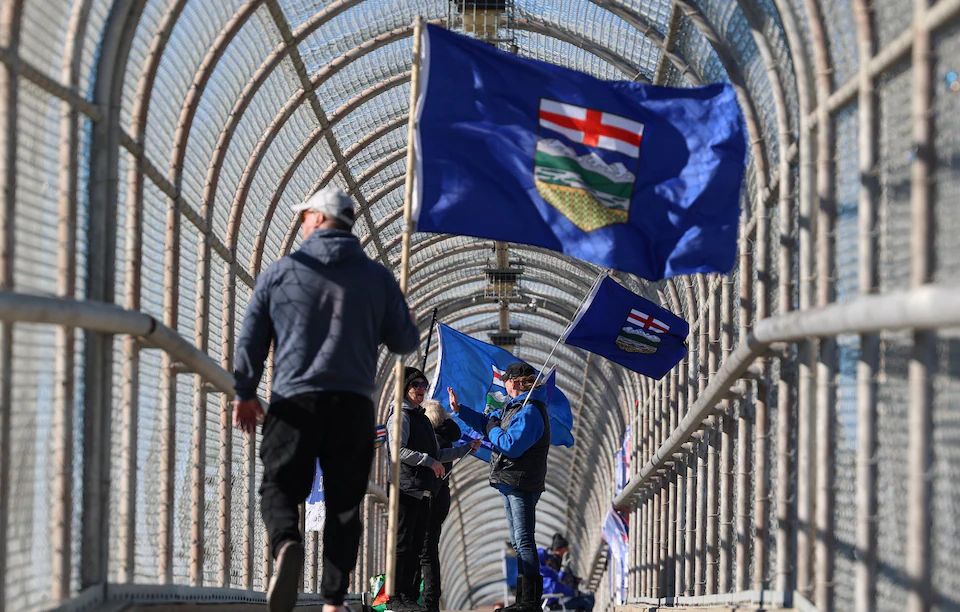
Nevertheless, the same poll revealed that three in five respondents believed Alberta’s separatist movement would never disappear. That finding highlights the enduring nature of the disagreement between Alberta and the federal government.
Alberta Separatist Referendum Exposes Economic Frustrations
Alberta’s independence campaign has largely centred on economic grievances, particularly concerns about federal policies affecting the energy industry and the province’s contribution to Canada’s public finances.
The province, which has approximately five million residents, is one of Canada’s major oil-producing regions. Its economic importance has helped fuel arguments that Alberta should exercise greater control over its resources and financial decisions.
Separatist supporters argue that federal environmental regulations have placed unnecessary restrictions on Alberta’s petroleum industry. They also contend that the province contributes more to the national economy than it receives in return.
These complaints have helped sustain a political movement that presents independence as a possible solution to disagreements over taxation, energy development and federal decision-making.
Cory Morgan, founder of Pathway to Independence, an organisation that has promoted separation through advertising, argued that the Canadian system disadvantages resource-producing provinces.
“Canada has an imbalanced system which feeds the central population and government at the expense of the outlying producing provinces such as Alberta,” Morgan said.
His comments reflect a longstanding grievance among some Albertans who believe the province’s natural resources generate substantial national wealth without giving its residents sufficient influence over federal priorities.
However, opponents of independence question whether leaving Canada would provide a practical solution to these economic concerns. Separation could introduce new uncertainties involving trade, investment, public services and the movement of goods across international borders.
Why Alberta’s Oil Industry Matters
Oil production remains central to Alberta’s economic identity and its political disagreements with Ottawa. Supporters of independence frequently argue that decisions about the province’s energy resources should be made closer to home.
Environmental regulations have become a particularly contentious issue because of their perceived effects on energy development, investment and employment.
For separatists, the disagreement represents a broader struggle over provincial control and the distribution of economic benefits within Canada.
However, Alberta’s energy sector also depends on access to markets, infrastructure and commercial relationships extending beyond provincial boundaries. Establishing an independent country could therefore create fresh challenges even if separation supporters achieved their political objective.
The referendum has consequently raised questions about whether greater provincial autonomy within Canada would address economic complaints without exposing Alberta to the uncertainties of independence.
Mark Carney Campaigns Against Alberta’s Separation
Canadian Prime Minister Mark Carney has urged Albertans to reject separation, arguing that the country’s provinces share economic and political interests that cannot be reduced to individual financial calculations.
Carney, who grew up in Alberta, has sought to address some of the province’s concerns while defending the benefits of remaining part of Canada.
“Canada is not a transaction between provinces. It’s not about gross and net, gives and gets,” Carney said.
His statement challenges the argument that Alberta should assess its place in the federation primarily by comparing its financial contributions with the benefits it receives.
The prime minister has also reversed some environmental policies and supported a proposed oil pipeline intended to expand Canadian energy exports to Asian markets.
These moves illustrate an attempt to balance economic development with broader national priorities while responding to concerns from Alberta’s energy sector.
Nevertheless, policy adjustments have not eliminated the separatist movement. Some campaigners continue to argue that changes introduced by the federal government are insufficient to guarantee Alberta long-term control over its economic future.
Can Federal Policy Changes Stop the Independence Movement?
Carney’s approach suggests that improving relations between Ottawa and Alberta could weaken support for separation without requiring constitutional changes.
Supporters of remaining in Canada argue that Alberta can pursue economic opportunities, influence national policy and negotiate disagreements without creating a new international border.
They also point to the uncertainties that could accompany independence, including the potential effects on trade arrangements, investment decisions and government responsibilities.
Separatists, however, maintain that the province needs stronger guarantees over its resources and political future. Their dissatisfaction suggests that the debate involves more than individual policy disagreements.
The referendum could therefore become a measure of whether recent federal adjustments have reassured enough Albertans or whether economic frustration continues to provide political momentum for independence.
Danielle Smith Faces Pressure Over Separation Vote
Alberta Premier Danielle Smith has emerged as a central figure in the referendum debate after becoming the first provincial leader to put the question of separation before voters.
Smith called the referendum following months of pressure from a small but vocal faction within her governing United Conservative Party.
Although she has urged Albertans to remain in Canada, her decision to hold the vote has given the independence debate a prominent place in provincial politics.
The referendum offers residents an opportunity to express their views on separation, but its non-binding nature means that the result does not automatically establish a legal process for Alberta to become independent.
Smith has said that if a majority supports separation, she would seek a binding referendum. Such a development would raise additional political and constitutional questions about how the province could pursue independence.
For now, the premier faces the challenge of managing divisions within her political movement while responding to residents who oppose separation and those demanding a more fundamental change in Alberta’s relationship with Ottawa.
Referendum Result Could Shape Alberta’s Political Future
The referendum’s most significant consequence may be its influence on future political campaigns rather than an immediate change to Alberta’s constitutional status.
Even a vote against separation could encourage independence supporters to continue organising, campaigning and challenging federal policies.
The Angus Reid findings suggest that the movement’s persistence is an important concern. Although most respondents intended to oppose separation, many did not expect the debate to disappear permanently.
This distinction matters because opposition to independence does not necessarily mean Albertans are satisfied with the existing relationship between their province and the federal government.
Some residents may prefer to remain Canadian while supporting stronger provincial powers or changes to how natural-resource revenues and federal policies are managed.
Consequently, political leaders could face continued pressure to address the grievances that have sustained the movement, regardless of the referendum’s immediate outcome.
Poll Reveals Motivation Behind Support for Separation
Survey findings indicate that support for a future binding referendum could reflect dissatisfaction with the federal government rather than a firm commitment to establishing an independent country.
Among respondents who said they would support a future binding referendum, 60 per cent identified sending a message to the federal government as their motivation.
By comparison, only 37 per cent said their motivation was to create an independent nation.
The figures suggest that the referendum question carries different meanings for different voters. For some, it represents a direct expression of support for independence; for others, it offers a way to register frustration with Ottawa.
This distinction could prove important for political parties seeking to understand the strength of the separatist movement.
If many supporters primarily want federal policy changes, negotiations over energy development, taxation and provincial authority could influence future voting intentions.
However, the presence of committed independence advocates means that addressing immediate grievances may not entirely resolve the dispute.
Duane Bratt, a political scientist at Mount Royal University, said the movement had developed organisational strength that could keep the issue alive.
“This issue is not going away now. Because the separatists are mobilized. They’ve networked. They’re connected,” Bratt said.
He suggested that separatists could pursue another referendum or attempt to establish a powerful political party dedicated to their cause.
Such possibilities mean that Alberta’s separation debate could continue to influence elections and policy discussions even if voters reject independence in the current referendum.
Independence Would Raise Difficult Questions
Beyond the political arguments, separation would require Alberta to confront complex practical issues that remain unresolved.
These include national defence, currency arrangements, border controls and trade relationships. Establishing a new country would also require decisions about government institutions and the province’s future relationship with Canada.
The existence of transition plans does not mean that every major question has been settled. Any serious move towards independence would require negotiations and decisions with potentially significant economic consequences.
Businesses could face uncertainty over cross-border commerce, while residents might seek clarity about citizenship, public services and other arrangements that currently operate within the Canadian federation.
Alberta would also need to consider how independence might affect its access to markets and the infrastructure necessary to transport its energy resources.
These challenges do not automatically determine the outcome of the political debate, but they demonstrate why a referendum campaign cannot be separated from questions about how an independent Alberta would function.
Alberta’s Movement Differs From Quebec’s Separatism
Alberta’s independence campaign has also drawn comparisons with Quebec, where separatism has historically been closely connected to language, cultural identity and questions about the province’s place within Canada.
In Alberta, the movement has focused more heavily on economic grievances, energy policies and perceptions of unfair treatment by the federal government.
That difference gives the Alberta debate a distinct political character. Rather than being driven primarily by linguistic or cultural identity, the movement has concentrated on resource revenues, government regulation and provincial autonomy.

Nevertheless, both debates raise fundamental questions about federalism, regional interests and the conditions under which a province might seek independence.
For Canada’s national leadership, Alberta’s referendum presents a challenge that extends beyond a single vote. The government must contend with a movement that has maintained its visibility despite polling suggesting that most residents do not currently intend to support separation.
Ultimately, the Alberta separatist referendum will provide an important indication of public opinion, but it is unlikely to settle every disagreement between the province and Ottawa. The future of the movement will depend on political organisation, economic conditions and whether federal and provincial leaders can address the grievances that continue to fuel the independence debate.
About The Author


