Russia has escalated tensions with Washington by sending a naval vessel to escort an oil tanker actively pursued by the United States military in the North Atlantic Ocean.
The tanker, formerly known as Bella 1 and now renamed Marinera, has emerged as a focal point in the growing confrontation over sanctions enforcement at sea.
A U.S. official briefed on the operation confirmed Russia’s intervention, speaking anonymously due to the sensitive nature of the unfolding military and diplomatic standoff.
“The development deepens the confrontation between the two countries,” the official said, highlighting the seriousness of Russia’s decision to protect the tanker from U.S. seizure.
Ship-tracking data shows the tanker sailing northeast between Iceland and Britain with its location transponder active, visible to maritime monitoring authorities and international observers alike.
From its current position, analysts suggest the vessel could head toward the Baltic Sea or navigate around Scandinavia to Murmansk, Russia’s ice-free Arctic port of strategic significance.
The Wall Street Journal first reported that Russia dispatched at least one naval vessel, with indications that a submarine may be involved in the escort mission.
The United States has been tracking the tanker for weeks following its attempt to evade a partial blockade imposed around Venezuelan waters under U.S. sanctions.

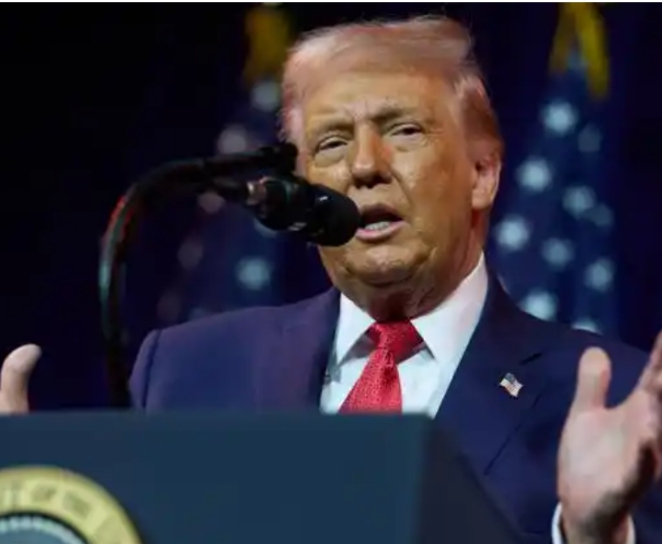
That blockade forms part of President Donald Trump’s order for a “complete blockade” on oil tankers under sanctions traveling to and from Venezuela, aimed at curbing illicit shipments.
U.S. officials say the tanker is part of sanctioned networks involving Iran, Venezuela, and Russia, all subject to sweeping U.S. restrictions and international pressure.
The U.S. Coast Guard initially stopped the tanker in the Caribbean Sea on December 21 after it departed Iran, en route to pick up Venezuelan oil shipments.
At the time, U.S. authorities said they held a seizure warrant because the vessel was not flying a valid national flag, making it eligible for confiscation.
However, the Bella 1 refused boarding by U.S. personnel and instead sailed into the Atlantic Ocean, sparking an extended pursuit by Coast Guard and naval assets.
In a dramatic measure to avoid seizure, the crew painted a Russian flag directly onto the tanker’s hull while fleeing U.S. forces in the Caribbean.
Soon afterward, the vessel was renamed Marinera and formally entered into Russia’s ship registry, a move intended to bolster claims of legal protection under Russian jurisdiction.
Russia also issued a formal diplomatic request demanding that the United States immediately cease its pursuit, framing the incident as a challenge to international law.
Despite these steps, U.S. officials continued to track the tanker, signaling that Washington does not recognize the legitimacy of its sudden reflagging or renaming.
On Tuesday, Russian state broadcaster RT published video showing the tanker being trailed by a U.S. Coast Guard vessel in foggy conditions.
The footage, filmed from the ship’s bridge, could not be independently verified or precisely dated by The New York Times, leaving some details uncertain.
The Marinera is part of a so-called shadow fleet, a collection of older vessels used to transport oil for Russia, Iran, and Venezuela while avoiding sanctions.
These shadow fleet tankers often manipulate tracking systems, switch flags, and rename vessels to evade international monitoring and enforcement mechanisms.
U.S. authorities have said the shadow fleet has become a central mechanism for sanctioned states to bypass restrictions and deliver oil covertly.
Since the U.S. blockade of Venezuelan waters began, Washington has intensified surveillance, interdiction, and intelligence operations to intercept these vessels at sea.
Russia’s decision to provide a naval escort to Marinera represents one of the most visible protections of a shadow fleet tanker to date.
The move risks escalating a sanctions enforcement effort into a broader confrontation between two major powers with significant naval and nuclear capabilities.
“The tankers appear to be an increasing point of friction between the United States and Russia,” U.S. officials acknowledge, underscoring the rising stakes.
Tensions have already been strained following recent U.S. military actions near Venezuela, a longtime ally of Moscow, heightening geopolitical sensitivities in the region.
In the same week that Bella 1 adopted a Russian flag, another tanker operating in Venezuelan waters, the Hyperion, made a similar move to avoid seizure.
That pattern has continued, with at least three additional tankers switching to Russian flags and registering in Russian maritime databases in recent days.
All five vessels had previously operated in Venezuelan waters and now appear under Russian ship registries, with declared home ports in Sochi or Taganrog.
Each of these vessels is subject to U.S. sanctions for transporting Iranian or Russian oil in violation of American and international restrictions.
Earlier this week, one of the reflagged tankers disappeared from Venezuelan waters despite the active U.S. blockade, raising questions about enforcement limitations.
Legal experts note that while reflagging mid-voyage does not automatically shield a vessel from seizure under maritime law, the Russian naval escort complicates any potential U.S. action.
Any direct confrontation at sea carries significant diplomatic and military risks, raising the possibility of escalation between Washington and Moscow.
For the moment, U.S. officials report that they continue to monitor the situation closely while weighing next steps in the ongoing pursuit of Marinera.
Russia maintains that the tanker is sailing legally under the Russian flag and has accused the United States of overreach in pursuing the vessel.
As Marinera continues its northward trajectory, the standoff highlights the risks and complexities of enforcing sanctions at sea in a high-stakes geopolitical context.
The incident demonstrates how oil shipments, sanctions, and naval power intersect in increasingly dangerous ways, creating flashpoints for international tension.
Whether the tanker reaches Russian waters without interception may set a precedent for future confrontations involving sanctions, freedom of navigation, and naval enforcement.
Read also: Béla Tarr, legendary Hungarian film director, dies at 70
For both the United States and Russia, the outcome could reshape maritime strategy, signaling how far each side is willing to go to defend national economic interests.
What began as a routine shipment of oil has now evolved into a high-stakes test of power, authority, and international maritime norms between two global powers.