Iran drone attacks on US base: Iran drone attacks on a US military installation in Bahrain have intensified fears of a wider Middle East conflict, further undermining prospects for renewed negotiations between Tehran and Washington as military tensions spread across the Gulf and neighbouring Yemen.
The latest strikes came on Sunday, November 15, marking the second Iranian drone assault in three days in retaliation for recent American attacks on Iranian targets. Although Bahrain said its air defence systems intercepted the incoming drones, the incident has renewed concerns that the confrontation could escalate into a broader regional crisis.
Iran’s Islamic Revolutionary Guards Corps (IRGC) said it launched six drones against a US air defence radar facility at the Al-Rifaa helicopter base in Bahrain. The military organisation described the operation as retaliation for what it called hostile American actions against Iran.
Bahraini authorities maintained that the drones were intercepted before reaching their intended targets. However, the attack triggered security alerts and sirens, prompting residents to seek shelter as the kingdom faced another period of uncertainty.
The renewed assault has also raised questions about the future of diplomatic efforts to end the conflict, which began with joint American and Israeli military operations against Iran in February.
Tehran signals determination to retaliate against US military operations
Iranian officials have indicated that the country will continue responding to military actions against its territory, regardless of whether negotiations with Washington resume.
Speaking at a press conference in Tehran, Iranian foreign ministry spokesperson Esmaeil Baghaei said the country would not remain passive in the face of aggression from the United States or other states.
Asked whether the latest attacks represented a shift in Tehran’s approach while diplomatic discussions remained stalled, Baghaei said Iran was “not waiting for anyone” and was concentrating on protecting its security.
His comments reinforced the impression that Iranian authorities are prepared to maintain military pressure even as international efforts to prevent further escalation continue.
The attacks also followed several American operations against Iranian targets in recent weeks. These included strikes on Qeshm Island in the Strait of Hormuz, a strategically important waterway through which a substantial proportion of the world’s oil supplies normally passes.
US President Donald Trump previously described some of the operations as minor strikes. He also said Saudi Arabia and other Gulf countries had warned Washington against embarking on large-scale combat operations.
However, Trump subsequently indicated that his administration was no longer pursuing a negotiated agreement with Tehran. He also reportedly instructed Vice-President JD Vance to redirect his attention towards allegations of corruption and fraud involving Democratic-controlled cities and states.
The uncertainty surrounding Washington’s diplomatic position has added another complication to an already volatile situation.
Bahrain becomes a renewed target amid escalating tensions
Bahrain occupies an important position in American military operations across the Middle East, making the latest attacks particularly significant.
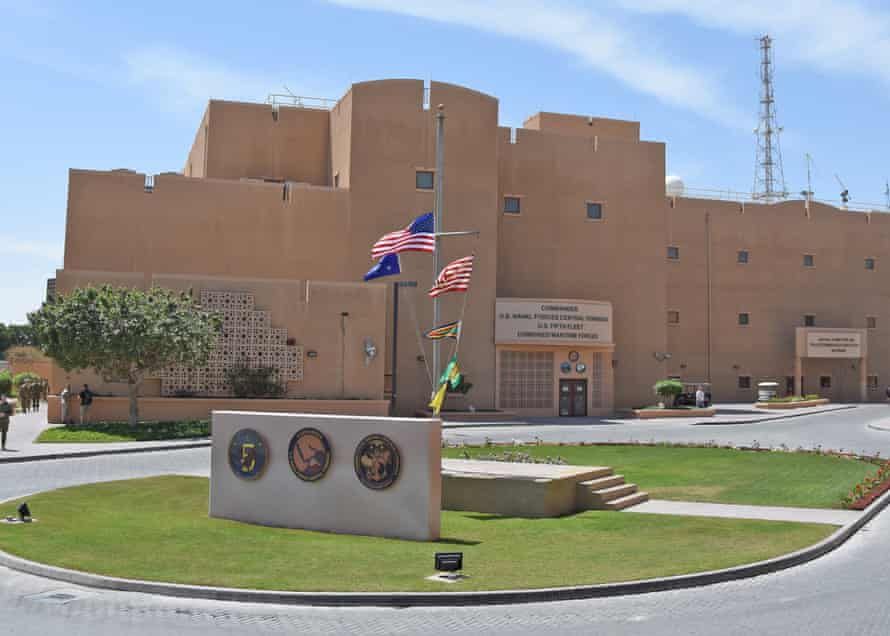
The Gulf kingdom hosts major US military facilities, including installations associated with the US Fifth Fleet and US Naval Forces Central Command. The facilities provide logistical and operational support for American naval activities throughout the region.
The presence of these installations has repeatedly made Bahrain a sensitive location during confrontations involving Washington and Tehran.
Iran had previously targeted the kingdom during the conflict, although attacks had subsided from September until the latest escalation. That period of relative calm ended on Friday, when Iranian drones were directed towards a US radar facility.
US Central Command said American forces shot down two drones during Friday’s incident, with no reported injuries or damage.
Sunday’s attack demonstrated that the earlier confrontation had not been resolved. It also suggested that Tehran was increasingly prepared to target American military infrastructure in neighbouring Gulf states as part of its response to US operations.
The renewed strikes prompted Bahraini authorities to issue emergency alerts, advising residents to take shelter as air defence systems responded to the threat.
A 65-year-old resident, Hayat Ibrahim, told Agence France-Presse that the return of Iranian attacks was precisely what she had hoped would not happen, expressing concern about the fear and uncertainty facing ordinary people.
Her reaction reflected the anxiety surrounding the possibility that Bahrain and other Gulf countries could become increasingly exposed to the consequences of the confrontation.
Bahrain condemns Iranian strikes as regional powers express solidarity
The Bahraini government strongly condemned the latest attacks, describing them as a serious violation of its sovereignty and international law.
In a statement, the country’s foreign ministry characterised the resumption of Iranian military operations as “heinous aggression”.
Bahrain also rejected Tehran’s explanations for targeting its territory, describing the claims as baseless and insisting that the kingdom should not become a battleground for disputes between other countries.
The government held Iran responsible for the attacks and warned that Tehran would be accountable for their consequences.
The statement also reflected Bahrain’s concern that its territory could increasingly be drawn into a conflict involving the United States and Iran, particularly because of the American military presence within the country.
Several Arab governments expressed support for Bahrain following Sunday’s incident. Jordan, Egypt, Saudi Arabia and Qatar condemned the attacks and reaffirmed their solidarity with the Gulf kingdom.
Their reactions demonstrated the growing regional concern that the confrontation could spread beyond Iran and American military positions into neighbouring countries.
For Gulf governments, the danger extends beyond direct military attacks. Prolonged instability could disrupt shipping, threaten energy infrastructure, increase insurance and transportation costs, and place additional pressure on international oil markets.
Strait of Hormuz tensions deepen after Iran claims oil tanker sank
The military confrontation has also intensified concerns about the security of the Strait of Hormuz, one of the world’s most important maritime routes.
Iran’s Revolutionary Guards separately claimed that two vessels struck mines in the waterway, resulting in massive explosions and fires.
According to the Iranian military organisation, one of the vessels was an oil supertanker carrying approximately two million barrels of crude oil. The Guards claimed the tanker sank following the incident.
However, the report had not received independent verification at the time of publication. There was also no immediate confirmation from other authorities that the vessels had been struck by mines or that the supertanker had gone down.
The claim is particularly significant because the United States has maintained a naval blockade against Iran while Tehran continues to exert pressure over the strategic waterway.
Read also: Myanmar genocide case: ICJ ruling could reshape international law and influence Israel proceedings
The US military recently said it had cleared all mines from the main shipping routes through the strait, making the Iranian announcement another source of uncertainty about maritime security.
Any confirmed disruption to commercial shipping through the passage could have serious consequences for global energy supplies.
The waterway is a critical route for oil and gas exports from several Gulf producers. A prolonged interruption could therefore affect energy prices, international trade and economies that depend heavily on imported fuel.
The continuing confrontation has left shipping operators and energy markets facing the possibility of further disruption.
Yemen conflict creates another front for regional instability
While tensions escalated around Bahrain and the Strait of Hormuz, developments in Yemen added another dimension to the deteriorating regional security situation.
Iran-aligned Houthi forces made advances against forces supporting Yemen’s internationally recognised government in the south, raising concerns about a possible route towards Aden.
The developments followed difficulties in a Saudi-backed campaign aimed at pushing the Houthis away from strategically important areas near the southern Red Sea.
Government-aligned forces withdrew from the Bab el-Mandeb area and repositioned towards Aden, a major city on Yemen’s southern coast.
In a statement, the Southern Armed Forces announced that they had begun redeploying troops from Dhubab Airport and the Bab el-Mandeb area, west of Taiz Governorate.
The withdrawal appeared to represent a major setback for a six-week counteroffensive intended to remove Houthi forces from the entrance to the Red Sea.
The Bab el-Mandeb Strait is another strategically important maritime passage, connecting the Red Sea with the Gulf of Aden and providing access towards the Suez Canal.
Control and security around the waterway are particularly important for international shipping, including vessels transporting oil and other commercial goods between Asia, Europe and the Middle East.
Agence France-Presse also reported that a Houthi missile strike near Aden killed people and injured 12 others, citing military and government sources.
The developments suggest that the regional confrontation is no longer confined to direct exchanges involving Iran, Israel and the United States. Armed groups and competing forces in neighbouring countries are also shaping the security situation.
Peace negotiations face mounting obstacles
The latest developments have further weakened expectations of an immediate diplomatic breakthrough between Washington and Tehran.
The conflict has remained deadlocked since the joint American and Israeli attacks against Iran in February. The United States continues to maintain its naval blockade, while Iran retains its ability to threaten movement through the Strait of Hormuz.
Vice-President JD Vance had reportedly requested a personal meeting with Iranian negotiators to discuss possible terms for peace.
However, the political uncertainty in Washington, Trump’s apparent withdrawal from efforts to secure an agreement and Iran’s continued military responses have complicated the prospect of meaningful negotiations.
Vance had also blamed the Republican Party’s losses in the midterm elections on the war with Iran, highlighting the domestic political pressure surrounding the conflict.
The situation presents a difficult challenge for the American administration. Continued military operations risk provoking further Iranian retaliation, while diplomatic engagement could require concessions that Washington and Tehran may struggle to accept.
For Iran, the attacks appear intended to demonstrate that American military pressure will carry consequences across the region. For Bahrain and other Gulf states, the immediate priority is preventing their territories and critical infrastructure from becoming targets in an expanding confrontation.
The Guardian, reporting on the latest developments with additional information from Agence France-Presse and the Associated Press, said the attacks had deepened pessimism about the possibility of diplomatic progress.
With military operations continuing, shipping security under pressure and fighting intensifying in Yemen, the Middle East faces another dangerous period in which a single incident could trigger a much wider escalation.
About The Author