The US military strikes three Iranian tankers after American warships came under what Washington described as multiple missile attacks, marking another sharp escalation in the conflict between the two countries.
The Pentagon said a US aircraft carrier and a destroyer were conducting operations in the region when they encountered several attacks from Iranian forces. According to American officials, the vessels successfully avoided the attacks, with no US personnel reported injured.
Three Iranian Tankers Targeted
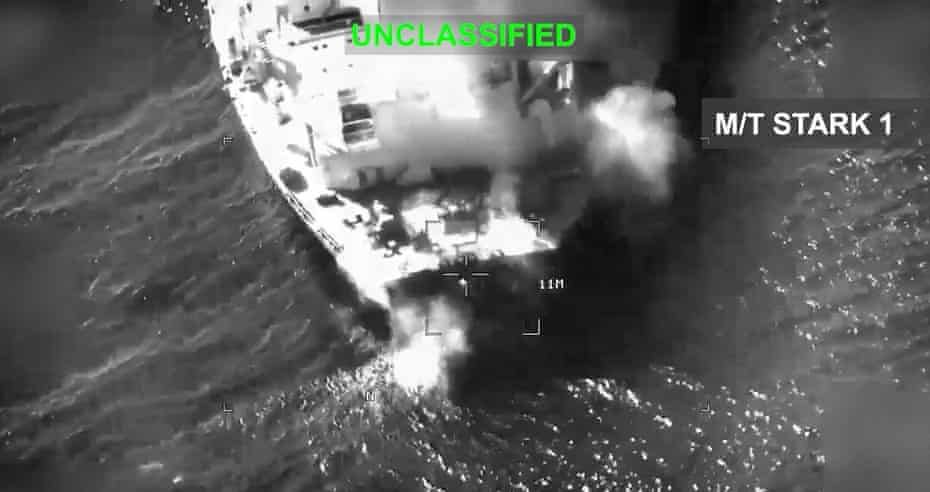
The US military said three Iranian oil tankers were struck during the latest operation, with the attacks occurring in waters around strategically important locations.
Two of the vessels were described by the Pentagon as “permanently disabled”, while another tanker, which was reportedly carrying no cargo, was destroyed during the operation.
US officials alleged that the targeted vessels were connected to a covert oil network used to generate revenue for Iran’s Islamic Revolutionary Guards Corps and armed groups allied with Tehran across the Middle East.
The strikes represent a significant expansion of American military pressure on Iran’s oil infrastructure, potentially threatening one of the country’s most important sources of revenue during the continuing confrontation.
Pentagon Issues Warning
US Central Command commander Adm Brad Cooper defended the operation and issued a strong warning about Washington’s willingness to take further action against Iranian maritime assets.
“We will not hesitate to defend American forces, and if necessary, destroy Iran’s limited and exposed oil fleet,” Cooper said in a statement.
The warning suggests that the latest attacks may not be an isolated operation, particularly if Iranian forces continue targeting American military assets operating in the region.
Washington’s description of the incident also places the strikes within a broader campaign aimed at disrupting financial networks that US officials believe support Iran’s military and regional proxy organizations.
Iran Reports Tanker Attack
The announcement from Washington came after Iranian reports emerged concerning an earlier strike against an Iranian tanker close to Kharg Island, a major oil-exporting location.
Tasnim, a semi-official Iranian news outlet affiliated with the Islamic Revolutionary Guards Corps, reported that the tanker was attacked Saturday morning.
The report said members of the vessel’s crew survived the incident and were being evacuated, although details surrounding the attack remained disputed between the two sides.
The US later confirmed that one tanker had been hit near Kharg Island, while another was targeted close to Jask. The third, an unladen vessel, was struck in the Gulf of Oman.
The American military also released what it described as video footage showing the strikes, providing Washington’s visual account of the operation.
Conflict Enters Another Dangerous Phase
The US military strikes three Iranian tankers as the wider conflict enters another increasingly dangerous phase following a period of relative calm between Washington and Tehran.
The latest exchange occurred almost one week after military operations resumed following roughly a month without major strikes between the two countries.
The broader conflict began with US and Israeli attacks against Iran in February and has continued through repeated periods of escalation and temporary calm.
Efforts to establish negotiations have now collapsed, leaving military action as the dominant feature of the relationship between the two countries.
The latest tanker attacks could further complicate any prospect of diplomacy, particularly as Washington threatens additional action against Iran’s exposed oil fleet.
Wedding Strike Adds to Pressure
The renewed fighting has also intensified international scrutiny over civilian casualties caused by military operations.
An American strike in southern Iran earlier this week hit a wedding celebration, according to Iranian officials. Four people, including a child, were reportedly killed, while dozens more were injured.
US Vice-President JD Vance was subsequently asked whether an American strike had been responsible for the deaths.
His response — “sometimes things happen” — drew attention as questions continued over civilian protection and accountability during the conflict.
The incident has added to criticism surrounding American military operations in Iran and increased pressure on Washington to explain the circumstances surrounding civilian deaths.
Previous Strike on Iranian School Under Investigation
The latest attacks have also revived scrutiny of an earlier US operation in Minab, where a strike on 28 February hit a school compound.
Iranian officials said at least 156 people were killed in that attack, with most of the victims reportedly being schoolchildren.
A preliminary US military investigation reportedly concluded that the devastating incident resulted from a targeting mistake.
According to reports, outdated coordinates had caused the school to be identified as part of a nearby Revolutionary Guards naval facility.
The Pentagon previously said it was investigating the incident, but a complete report into the strike has not been publicly released.
The continuing questions surrounding the Minab attack, combined with the latest tanker strikes, are likely to keep civilian casualties and military targeting under intense international scrutiny.
Oil Infrastructure Becomes New Battleground
The targeting of Iranian tankers introduces another major dimension to the conflict, as oil remains central to Iran’s economy and its ability to finance military operations.
By threatening vessels allegedly connected to Iran’s oil network, Washington appears intent on increasing economic pressure alongside its military campaign.
Read also: Malaysia declares emergency in Sarawak as Indonesian haze worsens
For Tehran, attacks on shipping and energy assets could also create significant economic and strategic consequences, particularly if the confrontation spreads further across the Gulf and surrounding waterways.
The US military strikes three Iranian tankers therefore carry implications beyond the immediate battlefield, potentially affecting regional shipping, oil markets and the wider security environment.
Washington Signals More Action
The latest statement from US Central Command leaves open the possibility of additional attacks if American forces face further threats from Iran.
That warning could set the stage for more confrontations at sea, particularly around major Iranian energy-exporting facilities and shipping routes.
With negotiations stalled and military operations intensifying again, the risk of a broader regional confrontation remains high.
The tanker strikes demonstrate how quickly the conflict can expand from missile exchanges into attacks on commercial and energy-linked infrastructure, raising concerns about what could follow if neither side steps back.
About The Author