The Myanmar genocide case is approaching a historic moment as the International Court of Justice (ICJ) prepares to decide whether the country committed genocide against its Rohingya minority during the military crackdown that forced hundreds of thousands of people to flee in 2017.
The judgment, scheduled for Thursday in The Hague, will be closely watched by survivors, human rights organisations and governments because the court has never before ruled that a state is responsible for genocide. Its decision could establish an important legal benchmark for future cases involving allegations of mass atrocities, including South Africa’s genocide case against Israel over its military campaign in Gaza.
Nearly a decade after Myanmar’s military operations drove large numbers of Rohingya across the border into Bangladesh, judges have spent seven years examining allegations that the country violated the 1948 United Nations Genocide Convention.
The case was brought by The Gambia, a Muslim-majority West African country, which argues that Myanmar’s treatment of the Rohingya amounted to acts intended to destroy a protected ethnic and religious community.
Why the ICJ judgment matters
Genocide is among the gravest crimes recognised under international law. The Genocide Convention defines it through certain prohibited acts committed with the intention of destroying, in whole or in part, a national, ethnic, racial or religious group.
Proving that intention is one of the most difficult aspects of genocide cases. Courts must examine not only what happened to victims but also whether the conduct demonstrated an intention to destroy the group, rather than simply suppress an armed opposition or pursue another military objective.
The ICJ has previously considered allegations of genocide arising from conflicts in the Balkans. Those proceedings did not result in findings that Serbia or Croatia had directly committed genocide, although Serbia was held legally responsible for failing to prevent the genocide at Srebrenica.
The forthcoming decision will therefore be significant in determining how the court evaluates evidence of systematic violence, the treatment of civilians and the relationship between sexual violence and the alleged intention to destroy a population.
Yanghee Lee, a former United Nations human rights investigator on Myanmar, described the judgment as historic for Rohingya survivors and their families worldwide.
She said the international community had failed to prevent the military atrocities against the minority nine years ago and should use the proceedings as an opportunity to pursue justice and confront those failures.
Survivors’ accounts and evidence of systematic attacks
Lawyers representing hundreds of Rohingya survivors say the military campaign involved repeated patterns of violence against civilian communities.
Antonia Mulvey, founder of Legal Action Worldwide, an organisation supporting survivors, said she was cautiously optimistic that the court would hold Myanmar fully accountable.
She argued that the repeated nature of the attacks on villages provided evidence of an organised pattern of conduct. According to her account, soldiers attacked civilians, destroyed homes, separated men from women and subjected people to sexual violence. Killings also continued as residents attempted to escape.
Mulvey said the court’s treatment of rape and other forms of sexual violence would be particularly important. Her legal team has gathered accounts of soldiers mutilating women’s genitals and biting their faces, acts she said were intended to mark victims and prevent reproduction.
She argued that such abuses should be considered within the wider question of whether the military intended to destroy the Rohingya as a group.
The evidence presented by survivors has also included accounts of children being killed, mass graves and the destruction of entire communities.
During closed-door hearings in January, the ICJ heard directly from Rohingya witnesses who travelled from refugee camps in Bangladesh. According to Legal Action Worldwide, one woman described how her child was taken from her arms, stabbed and thrown into a fire. Another witness recounted seeing piles of bodies in a mass grave.
The Gambia’s justice minister, Dawda Jallow, told judges during the proceedings that the case was not simply an abstract debate about international law.
He emphasised that the allegations concerned real people and a community that had been targeted for destruction.
Myanmar rejects the genocide allegations
Myanmar has denied committing genocide, maintaining that its military operations were directed at an armed uprising by Rohingya insurgents.
The government has presented the campaign as a security response, while the allegations before the court focus on the scale and nature of the violence against the wider civilian population.
The dispute cannot be separated from the long history of discrimination faced by the Rohingya. For decades, members of the minority have been denied citizenship and subjected to restrictions and persecution, amid communal tensions in Rakhine state in western Myanmar.
The crisis escalated in 2017 after a Rohingya militant group launched attacks that summer. Myanmar’s military responded with what it described as clearance operations.
Hundreds of thousands of Rohingya escaped into Bangladesh. Those who fled reported killings, sexual violence and the burning of villages.
One of the most widely documented incidents occurred in Tula Toli, where survivors described soldiers shooting civilians and children being drowned in a river. Satellite images later showed that the village had been razed.
These accounts, alongside evidence gathered by investigators and human rights organisations, have contributed to the case alleging that the military campaign was intended to destroy the Rohingya community.
Pressure on Myanmar’s leadership
A finding of genocide would increase international pressure on Myanmar’s leadership, particularly Min Aung Hlaing, who headed the military during the 2016-2017 operations.
He later overthrew the elected government of Aung San Suu Kyi in a 2021 coup, triggering a civil war that has resulted in tens of thousands of deaths.
Min Aung Hlaing, a former general, was installed as civilian president in April following elections widely criticised as lacking credibility. He is also being investigated separately by the International Criminal Court over allegations of crimes against humanity.
The distinction between the two international courts is important. The ICJ hears disputes between states and considers questions of state responsibility, while the ICC prosecutes individuals accused of international crimes.
A decision against Myanmar would therefore address the country’s responsibility under the Genocide Convention rather than automatically establish the criminal guilt of individual officials.
Why the ruling could affect the Israel case
The implications of the Myanmar genocide case are expected to extend beyond south-east Asia.
Legal observers and human rights advocates will examine the judgment for guidance on how the ICJ interprets evidence of genocidal intent, military conduct and the treatment of civilians. Those principles could become relevant to South Africa’s separate case accusing Israel of violating the Genocide Convention during its campaign in Gaza.
Both proceedings involve allegations that a powerful military targeted a protected population. However, the circumstances, evidence and legal arguments are not identical, and the court will have to assess each case on its own record.
The Myanmar judgment will also arrive amid growing tensions between the United States and international legal institutions. Washington has taken steps against international human rights bodies, including imposing sanctions on the ICC.
The US government has, however, previously recognised the atrocities against the Rohingya as genocide. That position was formally announced by the Biden administration in 2022.
President Donald Trump’s ambassador to the United Nations, Mike Waltz, has warned that the ICJ must not establish a standard for genocide that could be applied against soldiers from allied countries. His comments have attracted attention because of the possible implications for Israeli military personnel.
What could happen after the judgment?
Human rights organisations and supporters of the Rohingya case say a finding of genocide should prompt governments to take practical measures, including blocking arms transfers and supplies of jet fuel that could support military operations.
However, the ICJ does not have its own enforcement mechanism. Although its judgments carry legal authority and have been respected in previous cases, implementing them can depend on the willingness of states and the international community.
The United Nations Security Council could potentially strengthen the impact of the ruling, but political divisions among major powers, particularly the United States and China, could make decisive action difficult.
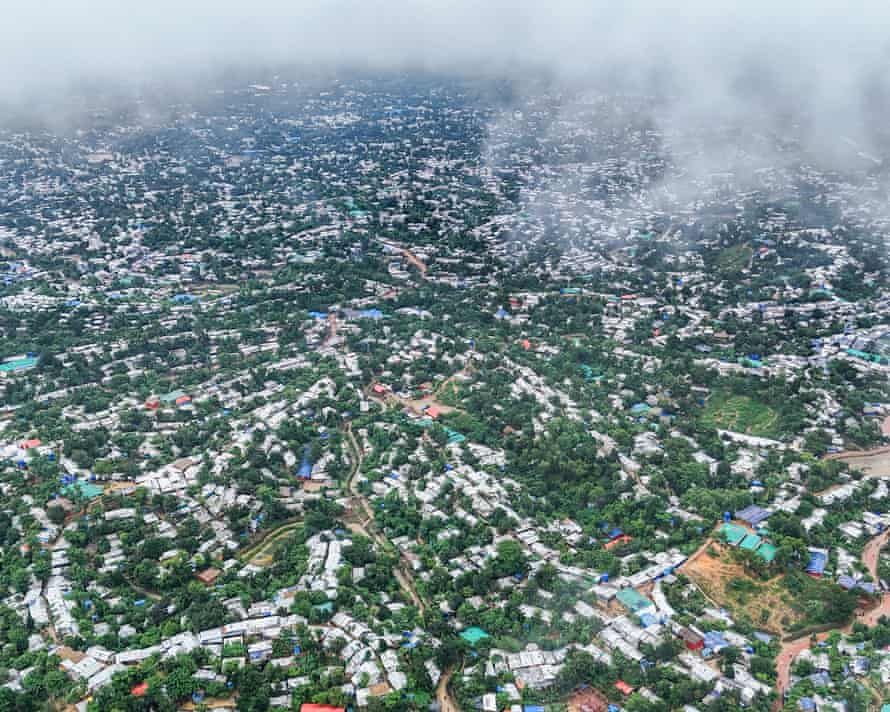
The scale of the Rohingya displacement remains enormous. More than one million members of the minority are still living in Bangladesh, mainly in the world’s largest refugee settlement, while fewer than 600,000 are estimated to remain in Myanmar.
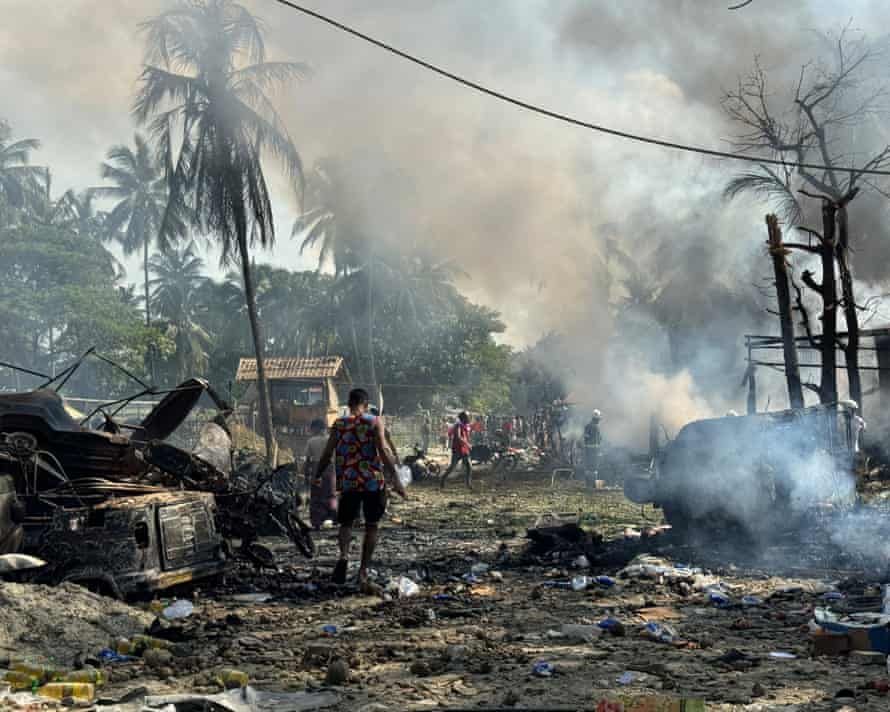
For displaced families, the court’s decision represents more than a legal milestone. Many hope it will contribute to an end to decades of discrimination, displacement and insecurity.
A Rohingya person displaced within Myanmar told the Guardian that the community was seeking justice, recognition, equal rights and a future in which children could live safely and with dignity in their homeland.
The judgment may not immediately return refugees to their homes or end the violence and discrimination they face. Nevertheless, its findings could shape international legal responses to genocide allegations and influence how governments are expected to act when communities face the threat of destruction.
For survivors who have waited years for accountability, Thursday’s ruling will be a defining moment in their pursuit of justice.
About The Author