

Venezuela agreed to transfer 50 million barrels of crude oil to US authorities, marking a dramatic shift in energy diplomacy following political upheaval in Caracas.
The agreement was announced by United States President Donald Trump through his Truth Social account, several days after a controversial US-led operation reshaped Venezuela’s leadership.
According to Trump, the deal involves between 30 million and 50 million barrels of what he described as “high-quality, sanctioned oil” previously restricted by international measures.
He stated that the oil would be sold at prevailing international market prices rather than discounted emergency rates often associated with politically driven energy transfers.
Trump emphasized that the proceeds from the oil sales would be overseen directly by his administration to ensure transparent allocation across agreed humanitarian and bilateral priorities.
“I am pleased to announce that the Interim Government in Venezuela has agreed to turn over 30-50 million barrels of ‘high-quality, sanctioned oil’ to the United States,” Trump wrote.
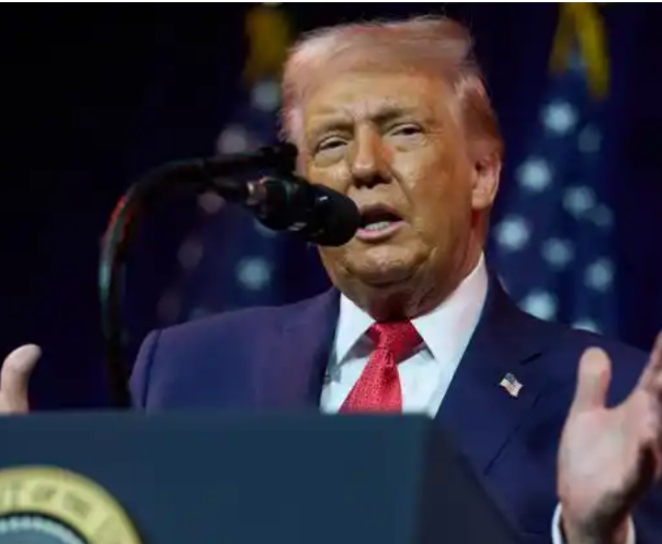
The US president added that the oil revenues would be managed centrally by Washington to benefit both Venezuelan citizens and the American public.
“The oil will be sold at its Market Price, and that money will be controlled by me, as President of the United States of America,” Trump stated.
He further explained that the arrangement was designed to stabilize Venezuela’s collapsing economy while also strengthening US energy security during volatile global market conditions.
Trump confirmed he had instructed US Energy Secretary Chris Wright to immediately implement the agreement without delay or bureaucratic obstruction.
“I have instructed Secretary of Energy Chris Wright to execute this plan, immediately,” the president wrote in the same announcement.
The oil transfer agreement followed the arrest of Venezuelan President Nicolás Maduro during a recent US military operation conducted under Trump’s authorization.
Maduro was subsequently flown to the United States, where he faces long-standing federal charges related to narcotics trafficking and organized criminal networks.
US officials described the operation as a targeted enforcement action rather than a full-scale military intervention or regime-change invasion.
Following Maduro’s removal, Venezuela’s Vice President Delcy Rodríguez was sworn in as interim president, pending broader political stabilization efforts.
The interim government quickly moved to secure international recognition and economic relief, with energy assets forming the cornerstone of early negotiations.
Venezuela agreed to transfer 50 million barrels of crude oil to US authorities as part of this transitional strategy.
Analysts say the deal reflects Caracas’ urgent need for liquidity after years of sanctions, infrastructure decay, and declining oil production capacity.
Venezuela possesses the world’s largest proven oil reserves, yet production has remained severely constrained by mismanagement and international isolation.
Much of the oil involved in the agreement had been previously classified as sanctioned Venezuelan crude, limiting its legal export destinations.
Trump acknowledged this status directly, referring to the barrels as “sanctioned oil” now redirected under US oversight mechanisms.
Energy analysts note that the arrangement effectively shifts control rather than ownership, maintaining US leverage over sales and distribution.
The White House argued that centralized control would prevent corruption and ensure funds are not diverted by criminal networks or political elites.
Critics, however, questioned the legality of a foreign government controlling proceeds from another nation’s natural resources.
Human rights groups expressed concern about transparency, demanding clear accounting frameworks for how the funds would be allocated.
Trump dismissed such criticisms, insisting the agreement was structured to prevent misuse and accelerate humanitarian relief inside Venezuela.
“This will be used to benefit the people of Venezuela and the United States,” Trump wrote, reinforcing his administration’s stated objectives.
Oil markets reacted swiftly to the announcement, with crude prices dipping amid expectations of increased near-term supply availability.
West Texas Intermediate futures declined modestly as traders assessed the impact of additional barrels entering US-controlled distribution channels.
Brent crude prices also softened, reflecting broader market concerns about oversupply during an already uncertain global demand outlook.
Some analysts suggested the psychological impact of the announcement outweighed its immediate physical supply implications.
Logistical challenges remain significant, including transportation, storage, and refining compatibility for Venezuelan heavy crude grades.
Read also: Trump floats using American taxpayer funds to reimburse oil companies for Venezuela oil revival
US refiners, particularly along the Gulf Coast, are among the few globally equipped to efficiently process Venezuelan crude blends.
The deal may therefore reduce US reliance on other heavy crude suppliers while reshaping regional energy trade flows.
China, a major historical buyer of Venezuelan oil, was notably absent from early reactions to the announcement.
Observers believe the agreement could strain Beijing’s influence in Caracas, at least temporarily.
Latin American governments responded cautiously, calling for respect for sovereignty while acknowledging Venezuela’s humanitarian crisis.
European officials sought clarification on how the agreement aligns with existing international sanctions frameworks.
Trump framed the deal as a practical solution rather than an ideological statement on Venezuelan governance.
“This is about oil, stability, and helping people,” a senior administration official later said, summarizing the White House position.
The interim Venezuelan leadership has not publicly contradicted Trump’s account of the agreement.
However, Caracas officials emphasized that the transfer was temporary and tied to economic recovery benchmarks.
Venezuela agreed to transfer 50 million barrels of crude oil to US authorities during a period of exceptional political transition.
Whether the deal evolves into a longer-term energy partnership will depend on Venezuela’s internal stability and international recognition.
For now, the agreement stands as one of the most consequential energy-linked geopolitical moves of Trump’s presidency.

It underscores how oil remains inseparable from power, diplomacy, and crisis management in the modern global order.
About The Author


