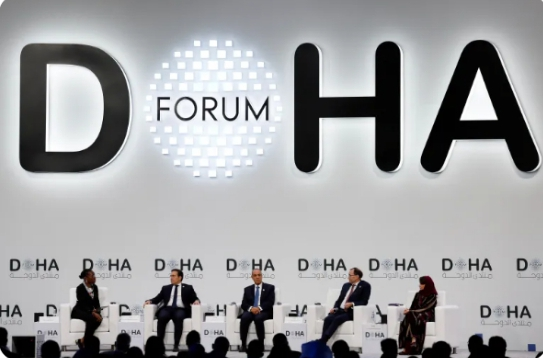
European diplomacy took centre stage as the bloc’s foreign policy chief insisted transatlantic unity remains intact despite tensions linked to the US security downgrade, stressing cooperation remains vital.
European officials emphasised that disagreements with Washington should not overshadow shared strategic interests, arguing the US security downgrade should be treated as a challenge to address jointly through renewed dialogue and political discipline.
Speaking at a major global policy forum, the foreign policy chief, Kaja Kallas stated that allied nations must avoid framing the US security downgrade as a deterioration of trust, describing it instead as recalibration.
She acknowledged that the strategy document prompting the US security downgrade contained criticism of Europe’s confidence, capacities, and preparedness, but argued these assessments should push Europe towards stronger coordination and self-reliance.
According to her, the relationship with Washington remains robust because both sides understand that evolving threats require deeper unity, especially as negotiations continue over the future of the war in Eastern Europe.
She explained that the forum offered an opportunity to reassure world leaders that the US security downgrade does not signify fragmentation, insisting mutual commitments within longstanding alliances remain foundational to global security.
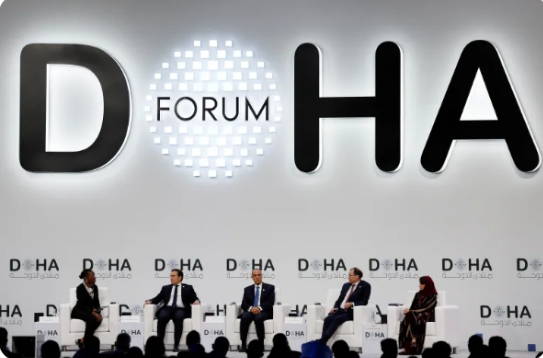
European policymakers have interpreted Washington’s revised security posture as a signal for Europe to increase defence investments, step up operational readiness, and demonstrate stronger burden-sharing across strategic theatres.
Officials at the event suggested that even though the US security downgrade raised questions, it should accelerate Europe’s transition towards a more capable, self-confident, and independent security identity.
She acknowledged that Europe had previously underestimated its leverage in geopolitical affairs, urging member states to embrace their collective power at a moment where international tensions remain unpredictable.
According to her, the overarching message for global partners is that the US remains Europe’s biggest ally, and the US security downgrade must not be misinterpreted as strategic abandonment.
On the sidelines of the forum, diplomats emphasised ongoing discussions between Washington and Kyiv as both sides seek to refine proposals intended to lay the groundwork for an eventual ceasefire deal.
Officials familiar with the talks described the negotiations as delicate, with Ukraine pushing back against draft provisions perceived as concessions that could legitimise territorial claims enforced through violence.
Analysts suggested that the US security downgrade may also reflect an American desire to reduce prolonged geopolitical overextension, redirecting emphasis towards domestic stability while preserving international leadership roles.
Despite this recalibration, European experts insisted that Washington’s global influence remains unmatched, and the US security downgrade merely highlights the evolving distribution of responsibilities among democratic allies.
Observers noted increasing pressure on European capitals to assume a more assertive role in supporting Ukraine’s defence, especially as ceasefire negotiations face obstacles created by entrenched battlefield positions.
Diplomats attending the forum highlighted that real progress in the peace process would depend on demonstrable moves toward de-escalation, restraint, and credible commitments to ending violence across contested territories.
During her address, the foreign policy chief warned that pressuring Ukraine into accepting territorial concessions could undermine international norms and set a dangerous precedent for resolving conflicts through coercion.
She argued that rewarding aggression would encourage similar behaviour elsewhere, reiterating that peace built on forced compromise would be unsustainable, unstable, and vulnerable to future violations.
The US security downgrade, she said, should instead motivate transatlantic partners to align strategies, strengthen deterrence, and demonstrate unified resolve against unlawful territorial expansion.
Commentators at the forum remarked that Europe’s concerns extend beyond immediate conflict dynamics, as the continent fears security spillover effects that could impact energy systems, borders, and internal stability.
She stressed that Europe must adapt swiftly, becoming more proactive and strategically mature, particularly when responding to power competition shaping global politics and regional military calculations.
According to regional analysts, the geopolitical environment remains fluid, and the US security downgrade serves as another reminder that alliances evolve in response to shifting international realities.
The foreign policy chief concluded that maintaining strong links with Washington is essential, regardless of changing rhetoric or strategic documents, because collective resilience depends on shared democratic values.
She reiterated that transatlantic relationships must be sustained through transparency, dialogue, and commitment, ensuring political misunderstandings never hinder security cooperation or weaken deterrence frameworks.
Forum participants observed that political leaders often use provocative language during strategic resets, but actions consistently reveal enduring reliance on the United States for defence and stabilisation.
Some analysts noted that Washington’s criticisms sometimes reflect frustration with uneven defence contributions, while European leaders interpret such messages as motivation to accelerate internal defence reforms.
Despite contrasting interpretations, both sides recognise that long-term security depends on revitalising collaborative military planning, modernising capabilities, and coordinating political responses to crises in neighbouring regions.
Attendees predicted that debates surrounding the US security downgrade would continue, but practical cooperation on intelligence sharing, weapons supply chains, and sanctions enforcement would remain unaffected.
In concluding sessions, experts emphasised that shared goals—ending hostilities, stabilising markets, and preventing escalation—outweigh rhetorical disagreement stemming from security assessments or strategic re-evaluations.

Observers left the forum convinced that although challenges persist, neither side intends to weaken the alliance, because global instability requires unity, predictability, and renewed political engagement.
The foreign policy chief assured participants that Europe remains committed to bolstering defence readiness, urging member states to enhance strategic depth through improved military spending and technological development.
Analysts believe that the US security downgrade underscores Washington’s expectation that Europe must shoulder greater responsibility, especially regarding territorial defence near areas of active conflict.
She concluded by warning that geopolitical rivalry demands sustained vigilance, arguing that uncertainty should not undermine the trust binding Europe and the United States together for decades.
The final sentiment from the forum was clear: the transatlantic alliance remains resilient, and despite tensions surrounding the US security downgrade, both partners are determined to preserve global stability.
About The Author