

The Doha Forum 2025 dialogue convened leaders in Qatar to address conflicts, regional diplomacy, humanitarian needs, and strategies for building greater stability across fragile regions experiencing mounting geopolitical tensions.
Global participants emphasized that the Doha Forum 2025 dialogue represented a crucial moment for renewing international commitments, strengthening cooperative frameworks, and ensuring effective responses to worsening crises across multiple conflict-affected societies worldwide.
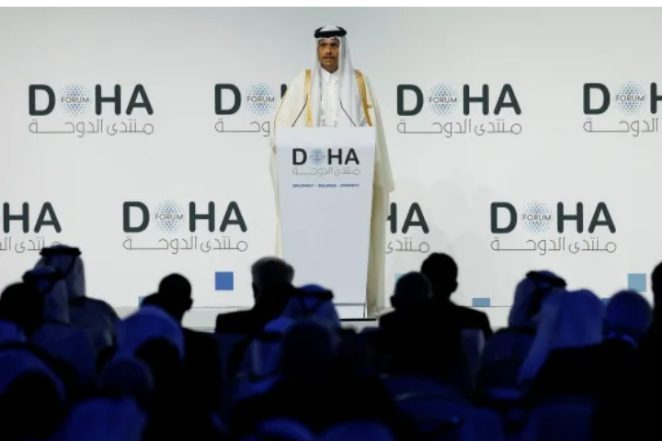
Speakers highlighted that the Doha Forum 2025 dialogue was shaped by widespread concerns over protracted wars, stalled negotiations, shifting alliances, and rising frustration among populations seeking meaningful pathways toward long-term peace.
Qatar’s prime minister reiterated that the Doha Forum 2025 dialogue must serve as an inclusive platform where stakeholders confront difficult disagreements honestly while still prioritizing humanitarian protection and sustainable diplomatic progress.
He warned that a complete Gaza ceasefire remained elusive, stressing that the Doha Forum 2025 dialogue could help bridge gaps between negotiating parties while urging international actors to maintain constructive pressure.
Regional diplomats insisted that the Gaza humanitarian crisis required immediate attention, noting that political paralysis could worsen conditions unless coordinated action emerged from discussions taking place within the Doha Forum environment.
Officials described how suffering in Gaza continued to shape global political debates, reinforcing the urgency of commitments presented at the forum as leaders debated accountability, reconstruction, and rapid humanitarian access.
Participants from several nations argued that any long-term political framework for Gaza must address governance, civil protection, border management, and coordinated reconstruction anchored in internationally recognized principles.
Speakers urged all sides to avoid the cycle of temporary calm followed by renewed escalation, emphasizing that durable solutions depend on addressing structural grievances fueling recurring violence.
A number of representatives stressed that political fatigue must not overshadow urgent humanitarian realities, warning that disengagement has historically prolonged the suffering of civilians trapped within conflict zones.
Turkiye’s foreign minister reflected on the Syrian conflict’s lasting toll, describing how early stages dramatically affected regional security, economic stability, and cross-border migration dynamics still shaping regional realities today.
He emphasized Turkiye and Qatar’s shared stance on supporting political transitions rooted in inclusive dialogue, arguing that external actors had often undermined efforts by backing groups with conflicting agendas.
He described years of uncertainty when international support for Syrian opposition movements weakened, leaving regional states navigating difficult decisions amid shifting global approaches to the conflict.
Iran’s former foreign minister stated that regional stability required open communication, mutual respect, and acknowledgment of shared interests, arguing that mistrust harms everyone involved, regardless of political alignment.
He claimed Iran sought constructive relations with neighboring countries, asserting that regional cooperation would deliver long-term benefits unreachable through isolation, confrontation, or unilateral pressure campaigns.
He argued that the region had suffered because global powers encouraged divisions, urging leaders to assume ownership of regional solutions grounded in local political and cultural realities.
He further insisted that systemic instability originated from unresolved grievances, highlighting how the Palestinian issue continues to influence every major diplomatic discussion held within the Middle East.
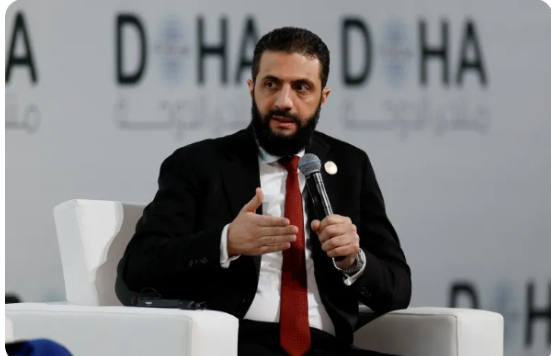
The Syrian president addressed perceptions of terrorism, stating that narratives describing entire governments as terrorist entities are often shaped by political motivations rather than transparent assessments of events.
He argued that definitions of terrorism require consistent standards, emphasizing that targeting civilians must always be condemned regardless of the identities or alliances of those involved.
He received applause when pointing to the high number of civilian casualties in multiple global conflicts, arguing that international accountability should not be selectively applied or politically manipulated.
He noted that Syria’s internal challenges were inherited from previous regimes, stressing that years of conflict created divisions requiring extensive reconciliation efforts rather than simple political restructuring.
He said the government implemented pardons to ease tensions and rebuild social trust, arguing that long-term stability depends on broad participation in dialogue and institutional rebuilding.
He maintained that elections would follow the transitional period, emphasizing that political legitimacy must reflect popular consent and functioning institutions rather than symbolic gestures.
He reiterated that continuity of governance depended on building resilient institutions capable of enduring political changes, economic pressures, and evolving societal expectations.
Saudi representatives warned that the global community must not overlook core elements of the Palestinian conflict when discussing Gaza’s future, stressing that sustainable peace requires addressing historical grievances.
They insisted that political solutions cannot disrupt long-standing international agreements, emphasizing that redefining ceasefire terms or governance frameworks could produce dangerous precedents for future negotiations.
They argued that every previous conflict cycle ended with temporary international engagement followed by global inattention, allowing unresolved disputes to re-emerge even more violently.
They stated that regional security depends on fulfilling Palestinian aspirations, insisting that without progress, neither Israel nor its neighbors will experience genuine security.
Iranian voices argued that the region’s instability stemmed from expansionist policies, insisting that any durable approach to peace must address decades of political exclusion and unresolved territorial disputes.
Norway’s foreign minister examined diplomatic sequencing, noting that unclear timelines within proposed peace plans could allow both sides to delay actions, undermining broader goals for long-term stability.
He emphasized that establishing temporary governance structures and international security mechanisms must begin early, preventing power vacuums from enabling renewed conflict or militant reorganization.
Diplomats agreed that conflict resolution requires coordinated international involvement, long-term monitoring, and guarantees ensuring the protection of civilians during transitional phases.
Forum speakers concluded that successful diplomatic processes depend on transparent commitments, credible guarantees, and equitable cooperation among states with overlapping yet often competing interests.
They stressed that inconsistent international engagement has historically contributed to renewed hostilities, urging states to sustain their focus long after immediate crises recede from headlines.
Humanitarian organizations argued that fragile regions cannot endure repetitive cycles of destruction, urging leaders to prioritize reconstruction strategies providing education, healthcare, and economic stability for future generations.
Participants insisted that political settlements must integrate economic development, institutional reform, and community-level empowerment to prevent long-term instability from returning.
They reminded attendees that peace processes collapse when communities feel excluded or abandoned, emphasizing the significance of grassroots participation throughout transitional phases.
Economic experts emphasized that investment must remain conflict-sensitive, ensuring that reconstruction funds benefit local populations rather than reinforcing existing political imbalances.
Speakers underscored the importance of multilateralism, warning that unilateral action risks deepening tensions, escalating conflict, and diminishing trust among global partners.
They reiterated that the Doha Forum provided rare opportunities for open exchanges among leaders unwilling or unable to meet in other political arenas.
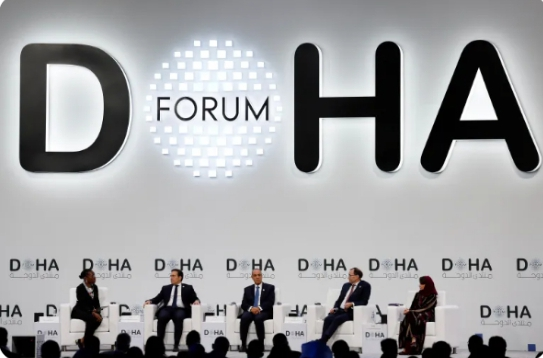
Representatives concluded that the international system stands at a pivotal moment where decisive action could prevent escalating crises or allow instability to spread further.
They urged leaders to transform commitments into concrete initiatives, stressing that global diplomacy must shift from reactive measures toward proactive, preventive, and community-centered approaches.
The forum ended with renewed calls for collaborative strategy frameworks, emphasizing diplomacy, humanitarian protection, and coordinated reconstruction as essential pillars for a more stable global future.


