

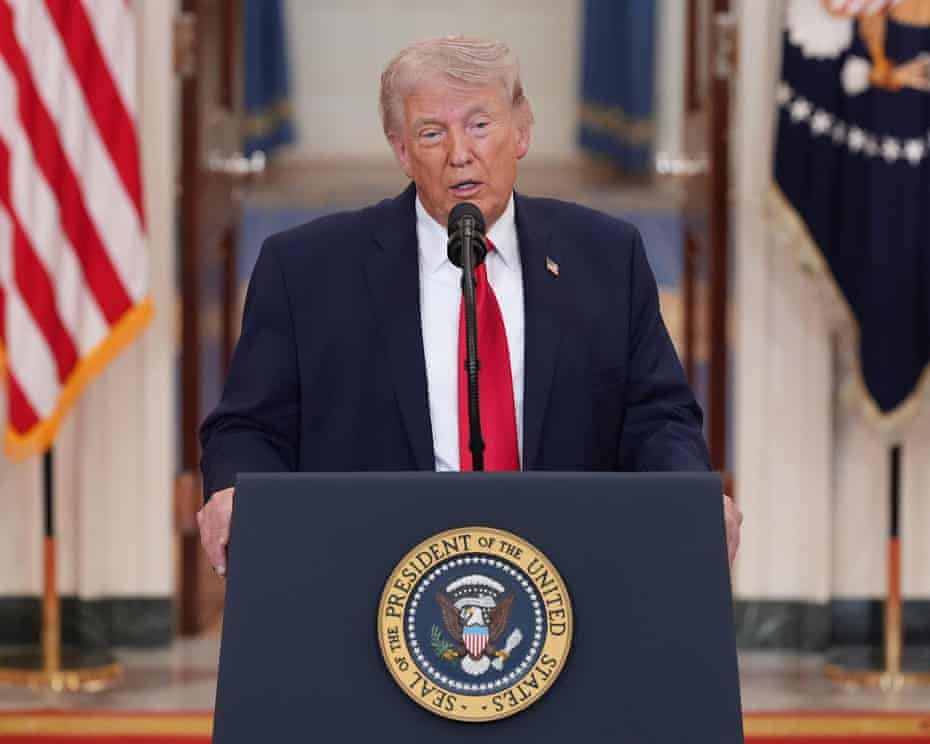
The Trump Iran war address delivered by Donald Trump framed the ongoing conflict as nearing completion, despite mounting global uncertainty, economic strain, and continued military escalation across the Middle East region.
Speaking from the White House, Trump described the military campaign as highly successful, claiming that key objectives had been achieved while offering limited clarity on how the war would conclude.
He insisted the United States had weakened Iran significantly, portraying its military capabilities as diminished and no longer posing a substantial threat to American interests or global security dynamics.
Despite those assertions, Trump acknowledged the conflict’s economic consequences, particularly rising energy costs, attributing global disruptions to Iran’s actions rather than US military operations or broader geopolitical instability factors.
Markets reacted negatively following the speech, with oil prices rising sharply and investor confidence shaken by continued uncertainty surrounding the closure of the Strait of Hormuz.
The strait remains a crucial global energy artery, and its disruption has intensified fears of prolonged economic fallout, especially for countries heavily dependent on oil and liquefied natural gas imports worldwide.
Trump urged other nations to take greater responsibility in securing the waterway, suggesting that allies should act independently rather than relying on continued American intervention in the region.
His remarks highlighted growing tensions between Washington and its allies, with criticism directed at countries perceived as unwilling to contribute more actively to military or logistical efforts surrounding the crisis.
While projecting confidence, Trump provided little detail on a concrete exit strategy, instead repeating that the conflict could conclude within weeks, a timeline analysts view with increasing skepticism.
The address also emphasized military achievements, with claims that thousands of targets had been struck, significantly degrading Iran’s infrastructure and operational capabilities across multiple domains including air and naval forces.
However, independent verification of these claims remains limited, and ongoing strikes across the region suggest that the conflict continues to evolve rather than wind down as suggested by US leadership.
In response, Iran has maintained its stance, denying any weakness and continuing retaliatory actions, including missile strikes targeting regional adversaries and reinforcing its position against external pressure.
Casualty figures continue to rise across multiple countries, with thousands reported killed and tens of thousands injured, highlighting the human cost of a conflict that has expanded beyond its initial scope.
Regional instability has intensified, affecting neighboring countries and drawing in non-state actors, further complicating diplomatic efforts aimed at achieving de-escalation or a negotiated settlement.
Criticism from US lawmakers has also grown, with opposition figures questioning the administration’s strategy and demanding clearer answers regarding objectives, timelines, and long-term implications of continued military engagement.
Some lawmakers described the address as lacking coherence, arguing that it failed to address fundamental concerns about escalation risks and the broader economic consequences facing American citizens.
Supporters within Trump’s political base defended the speech, emphasizing perceived military successes and endorsing the administration’s assertive approach toward Iran and regional security challenges.
Meanwhile, global markets remain highly sensitive to developments, with fluctuations in oil, gold, and other commodities reflecting uncertainty about the duration and intensity of the ongoing conflict.
Diplomatic channels appear strained, with limited progress toward negotiations, as both sides continue to exchange accusations and maintain hardline positions regarding ceasefire conditions and territorial security issues.
The conflict has also reshaped geopolitical alliances, with traditional partnerships facing pressure and new alignments emerging as countries reassess their strategic interests amid prolonged instability in the region.
Analysts warn that without a clear resolution framework, the situation could escalate further, potentially drawing additional countries into the conflict and exacerbating its global economic and humanitarian impact.
Read also: US Supreme Court birthright citizenship test sparks constitutional showdown over immigration policy
Trump’s emphasis on short-term pain for long-term gain reflects a broader narrative aimed at justifying the war domestically, even as public opinion remains divided over its necessity and effectiveness.
Uncertainty surrounding Iran’s nuclear capabilities continues to be a contentious issue, with conflicting assessments about the extent of its program and its role in justifying military intervention.
As the war enters its fifth week, the gap between political rhetoric and on-ground realities remains significant, raising questions about the accuracy of official narratives and future developments.
Ultimately, the address underscores a complex and volatile situation where claims of progress coexist with ongoing violence, economic disruption, and a lack of clear pathways toward sustainable peace.
About The Author
