

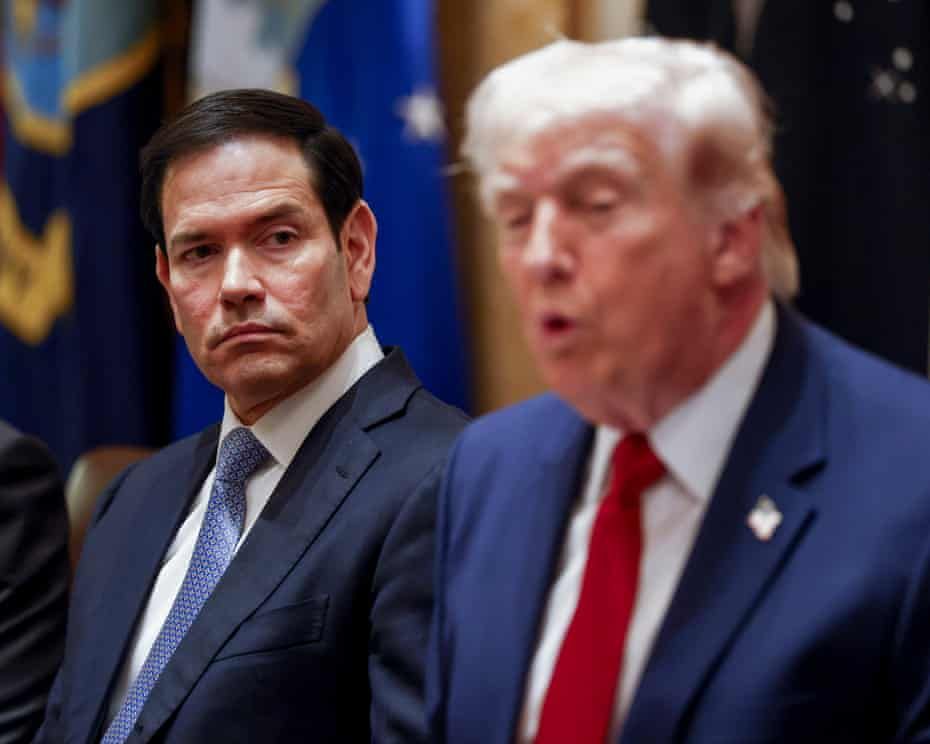
“Iran war ending soon” has taken center stage after Donald Trump projected a rapid end to military operations, even as conflicting signals emerge from within his administration.
The “Iran war ending soon” assertion sharply contrasts with remarks from Marco Rubio, who warned that the United States may need to reassess its NATO relationship after the conflict.
Trump’s confidence suggests a short-term resolution, estimating that operations in Iran could conclude within two to three weeks if current strategies proceed as planned.
However, Rubio’s comments indicate deeper geopolitical consequences, hinting that the aftermath of the conflict could reshape longstanding international alliances.
The divergence between both positions reflects a broader uncertainty surrounding the direction and outcome of the ongoing Middle East crisis.

While Trump focuses on concluding military engagement quickly, Rubio is raising concerns about structural issues within global defense partnerships.
At the center of the conflict is Iran, where ongoing strikes and counterattacks have intensified tensions across the region in recent days.
Israel has continued to intercept incoming missiles, demonstrating the persistent threat posed by Iranian attacks despite defensive measures.
Airstrikes in Lebanon and reported explosions in Tehran further underline the expanding scope of the conflict beyond a single battlefield.
Meanwhile, the strategic importance of the Strait of Hormuz has come into sharper focus as global energy security hangs in the balance.
Trump has suggested that responsibility for keeping the vital waterway open should fall on nations that depend on it most.
This stance has raised concerns among allies, particularly those heavily reliant on oil shipments passing through the region.
Rubio’s warning about NATO adds another layer of tension, as it questions whether the alliance still serves US strategic interests effectively.
His remarks suggest frustration with limitations on military coordination and access to bases in Europe during the conflict.
Such statements risk straining relationships with key allies at a time when unity is critical to managing global security challenges.
On the ground, military developments continue to unfold rapidly, with drone attacks, missile launches, and naval incidents reported across multiple locations.
A tanker strike near Qatar has heightened fears of maritime insecurity, while incidents in Gulf states have added to regional instability.
The United States has responded by increasing its military presence, deploying additional troops and naval assets to the area.
This buildup appears to contradict the notion that the “Iran war ending soon,” indicating preparedness for prolonged engagement if necessary.
Financial markets have reacted with cautious optimism, with some gains recorded amid hopes of a potential de-escalation.
However, volatility remains, as investors weigh the risks of continued conflict against the possibility of a diplomatic breakthrough.
Public opinion in the United States is also shifting, with many supporting a quicker end to involvement in the war.
This sentiment could influence policy decisions, especially as political leaders consider both domestic and international pressures.
Beyond military considerations, the economic impact of the conflict is becoming increasingly evident across global markets.
Rising fuel prices and disrupted supply chains are already affecting businesses and households in multiple regions.
Diplomatic efforts are ongoing, with some countries advocating for coordinated international action to stabilize the situation.
There are also discussions about securing shipping routes through potential multinational cooperation or enforcement measures.
The kidnapping of an American journalist in Iraq has further highlighted the dangers faced by civilians amid the escalating conflict.
Such incidents emphasize the human cost of war, extending far beyond strategic and political calculations.
The contrast between Trump’s optimism and Rubio’s caution illustrates the complexity of the current geopolitical landscape.
While one narrative focuses on imminent resolution, the other underscores long-term challenges that could persist beyond the battlefield.
The “Iran war ending soon” claim may resonate politically, but it is being tested against evolving realities on the ground.
As developments continue, the gap between expectation and reality could shape both domestic opinion and international relations.
The coming days will be critical, particularly with Trump expected to address the nation and provide further clarity on US strategy.
His remarks may either reinforce confidence in a swift resolution or highlight the difficulties of achieving such an outcome.
Read also: ‘Go get your own oil’, Trump tells US allies in angry outburst
For now, the global community remains watchful, as contrasting messages from US leadership add uncertainty to an already volatile situation.
Ultimately, the balance between ending the conflict quickly and managing its long-term consequences will define the next phase of the crisis.
About The Author
