

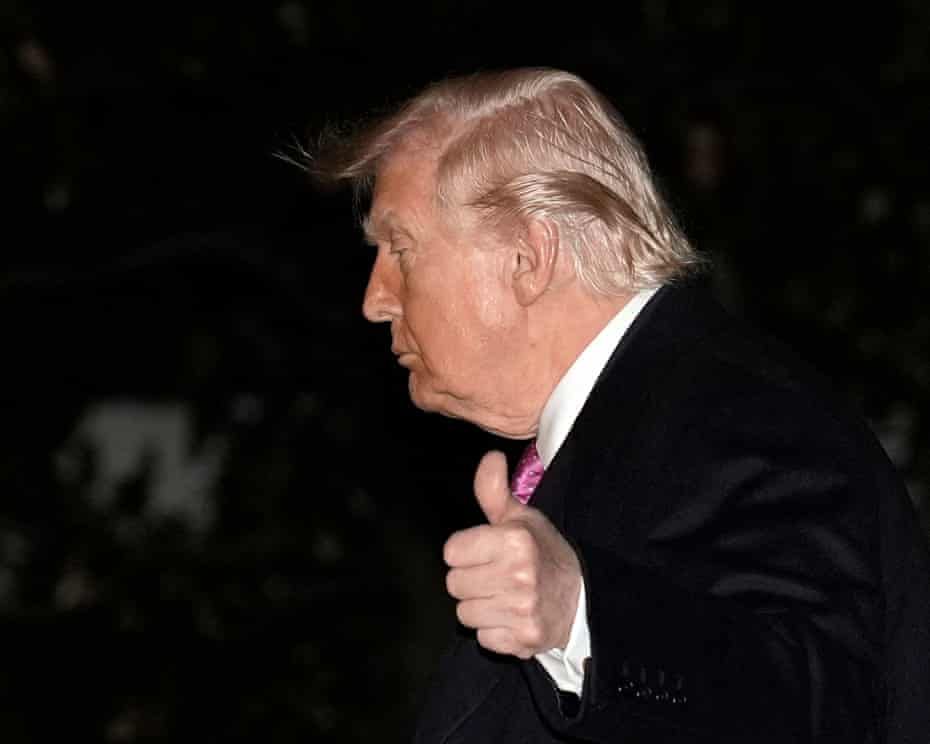
US President Donald Trump has triggered global debate after issuing a blunt message to allied nations, telling them to “go get your own oil” amid rising tensions over energy security and military cooperation.
The controversial statement came as Go get your own oil became the defining tone of Trump’s remarks, reflecting his frustration with countries he believes have relied too heavily on the United States.
Trump’s comments were shared via social media, where he criticised allies for failing to support US-led efforts against Iran during recent geopolitical tensions.
In particular, he singled out countries like the United Kingdom, urging them to build the courage needed to secure their own energy resources without depending on Washington.
He pointed directly to the Strait of Hormuz, one of the world’s most strategically important waterways, suggesting that nations should go there and “just take” the fuel they require.
The Strait of Hormuz remains a critical passage for global oil shipments, with a significant portion of the world’s crude supply passing through the narrow route daily.
Any disruption in the area can have immediate consequences on global oil prices, making Trump’s remarks particularly sensitive in the current climate.
By telling allies to take matters into their own hands, Trump signaled a shift toward a more isolationist and transactional approach to foreign policy.
He warned that the United States might no longer be willing to provide the level of military and logistical support that allies have come to expect.
“You’ll have to start learning how to fight for yourself,” Trump said, reinforcing his long-standing criticism of what he sees as unequal burden-sharing.
The statement aligns with his broader political stance that allies should contribute more to their own defense and reduce dependence on US intervention.
Trump also took aim at nations that “refused to get involved” in efforts aimed at weakening Iran’s capabilities, suggesting that their reluctance had consequences.
He claimed that Iran had already been significantly weakened, describing the country as “essentially decimated” following recent developments.
This assertion, however, has been met with skepticism from analysts who argue that Iran remains a key regional power with considerable influence.
The rhetoric surrounding Iran continues to be a major point of tension between the United States and its allies, many of whom favor diplomatic solutions over military escalation.
Trump’s remarks risk widening that divide, particularly with European nations that have historically taken a more cautious approach to Middle Eastern conflicts.
Despite his criticism, Trump did offer an alternative to allies concerned about fuel shortages, suggesting they could purchase jet fuel from the United States.
He emphasized that the US has abundant energy resources and is capable of supplying partners who are willing to pay for it.
This dual message—urging independence while offering commercial support—highlights the complex nature of Trump’s foreign policy approach.
On one hand, he pushes for reduced reliance on American protection, while on the other, he promotes US economic interests abroad.
Energy security has become an increasingly urgent issue for many countries, especially in light of ongoing geopolitical instability.
The dependence on key transit routes like the Strait of Hormuz exposes vulnerabilities that can be exploited during conflicts.
Trump’s suggestion that allies should directly secure resources from such regions raises serious legal and ethical questions.
International law governs maritime conduct and resource access, meaning that any attempt to “just take” oil could lead to significant escalation.
Experts warn that such actions could provoke military responses and further destabilize an already volatile region.
The global community has long relied on cooperation and agreements to maintain stability in critical shipping lanes.
Any shift toward unilateral action could undermine these frameworks and increase the risk of conflict.
Trump’s comments also reflect broader frustrations within US politics regarding the cost of maintaining global security commitments.
For decades, the United States has played a leading role in protecting international trade routes and ensuring energy flows.
However, this role has often come with significant financial and military burdens.
Calls for allies to share more responsibility are not new, but Trump’s tone marks a sharper and more confrontational approach.
His message resonates with supporters who believe the US should prioritize domestic interests over international obligations.
At the same time, critics argue that such rhetoric could damage long-standing alliances and weaken global cooperation.
Diplomatic relationships are built on trust and mutual understanding, both of which can be strained by public criticism.
European leaders, in particular, may view Trump’s remarks as dismissive of their strategic concerns and policy choices.
The situation also underscores the ongoing challenge of balancing national interests with collective security goals.
In an interconnected world, actions taken by one country can have far-reaching consequences for others.
Energy markets are especially sensitive to geopolitical signals, and statements like Trump’s can influence investor confidence and pricing trends.
Even without immediate policy changes, rhetoric alone can contribute to uncertainty and volatility.
As reactions continue to emerge, governments and analysts alike are assessing the potential impact of Trump’s words.
Some see the comments as a negotiating tactic aimed at pressuring allies into greater cooperation or financial contributions.
Others interpret them as a genuine indication of a shift in US foreign policy priorities.
Read also:Four Israeli soldiers killed in southern Lebanon
Regardless of intent, the statement has reignited debates about the future of global alliances and the role of the United States on the world stage.
The Middle East remains a focal point of these discussions, given its central role in global energy production.
Stability in the region is crucial not only for oil markets but also for broader geopolitical balance.
Any perceived change in US commitment could alter calculations for both allies and adversaries.
For now, Trump’s message stands as a stark reminder of the evolving dynamics in international relations.
Whether it leads to concrete policy changes or remains rhetorical, its implications are likely to be felt across diplomatic and economic spheres.
As countries navigate these uncertainties, the call to “go get your own oil” may continue to shape discussions on energy independence and global cooperation.