Conflicting Strait of Hormuz control claims intensified global tensions Wednesday as Iranian and American officials issued sharply contradictory statements about military dominance over the critical maritime corridor for energy shipments worldwide.
Conflicting Strait of Hormuz control claims emerged after Iran’s Revolutionary Guards declared they had secured the strategic waterway, warning that any vessel attempting passage risked missile strikes or drone interference.
A Guards Navy official, Mohammad Akbarzadeh, said in a statement carried by Fars news agency that “currently, the Strait of Hormuz is under the complete control” of Iran’s forces.
He added that foreign ships navigating the narrow channel should proceed with “extreme caution,” suggesting that heightened military readiness could translate into unpredictable encounters at sea during ongoing regional hostilities.
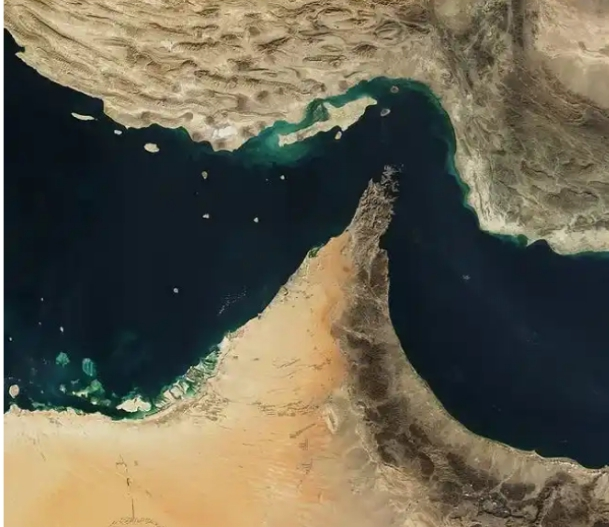
The waterway, linking the Arabian Gulf to the Gulf of Oman, is widely regarded as one of the world’s most important chokepoints for oil and liquefied natural gas exports.
Energy analysts warn that even temporary disruption in the strait can trigger sharp spikes in global crude prices, disrupt supply chains, and unsettle financial markets already strained by geopolitical instability.
However, Admiral Brad Cooper of the United States Central Command forcefully rejected Tehran’s assertion, describing it as “fiction” and insisting American forces maintained operational superiority throughout the contested waters.
Speaking at a Pentagon briefing, he declared that “today there is not a single Iranian ship underway” across the Arabian Gulf, Strait of Hormuz, or Gulf of Oman.
Cooper further claimed that US naval operations had neutralized significant Iranian maritime capabilities, asserting that 17 Iranian vessels were destroyed in coordinated strikes over recent days of confrontation.
He described the campaign tempo as “relentless,” noting that the initial wave of strikes nearly doubled the scale of the 2003 shock-and-awe bombardment during the Iraq invasion.
According to US officials, nearly 2,000 targets inside Iran have been struck since hostilities escalated, marking one of the most expansive air and naval operations in recent Middle Eastern history.
The escalating war rhetoric has fueled uncertainty among shipping companies, insurers, and energy traders assessing risk premiums tied to vessels transiting the volatile maritime corridor.
Maritime security consultants say conflicting Strait of Hormuz control claims complicate navigation planning, as commercial captains must weigh official guidance against real-time intelligence and satellite tracking reports.
The Strait of Hormuz security crisis has revived longstanding fears about freedom of navigation, a principle long defended by Western naval coalitions operating in the region.
President Donald Trump signaled that the United States could deploy naval escorts for oil tankers if required, calling such measures “a protective necessity” amid rising tensions.
He stated Tuesday that “we will ensure ships move safely,” emphasizing that energy markets must not become “hostages to regional aggression or political theatrics.”
Iranian officials countered that foreign military presence itself constitutes provocation, arguing that regional waters should remain under sovereign oversight by coastal nations bordering the Gulf.
Tehran’s rhetoric framed the situation as defensive rather than expansionist, with spokespeople insisting that “security of the strait is best guaranteed by those who live beside it.”
Observers note that the strait narrows to roughly 21 miles at its tightest point, making it particularly vulnerable to missile deployments, naval mines, or drone incursions.
Any escalation in the Arabian Gulf maritime tensions could ripple through global economies, especially energy-importing nations dependent on Gulf crude and gas shipments.
Insurance premiums for tankers have already begun to rise, with underwriters citing “heightened exposure to military confrontation” as justification for temporary rate adjustments.
Shipping associations urged calm, releasing statements encouraging “transparent communication” between military authorities and commercial operators navigating the region’s constrained shipping lanes.
Diplomats from European and Asian countries called for de-escalation, warning that conflicting Strait of Hormuz control claims risk miscalculation and accidental confrontation between heavily armed forces.
Strategic analysts emphasize that control of the waterway is not solely about naval presence but also air superiority, surveillance capacity, and electronic warfare dominance.
Satellite imagery and independent tracking data have yet to fully corroborate either side’s sweeping assertions regarding total control or complete destruction of opposing fleets.
Military historians caution that wartime statements often serve psychological and strategic messaging objectives, designed to influence adversaries, domestic audiences, and financial markets simultaneously.
Within Iran, state media portrayed the announcement as evidence of resilience, declaring that “the nation stands firm” against external pressure and sanctions.
Meanwhile, US officials framed their operations as a defensive effort to safeguard international shipping and deter further destabilizing actions across the Gulf region.
Regional neighbors, including Oman and the United Arab Emirates, closely monitored developments, mindful that instability could spill into their territorial waters or ports.
The conflicting Strait of Hormuz control claims have therefore become not only a military dispute but also a diplomatic and economic flashpoint.
Energy traders described markets as “nervously reactive,” with futures contracts fluctuating sharply in response to each new official statement or military update.
Security experts underline that even absent a formal blockade, the mere perception of risk can slow maritime traffic and raise transaction costs.

Both Washington and Tehran appear determined to project strength, yet analysts warn that rhetorical escalation can narrow pathways toward negotiation or ceasefire talks.
Ultimately, the Strait of Hormuz security crisis underscores the fragility of global energy networks concentrated through a single, strategically exposed maritime artery.
Whether the conflicting Strait of Hormuz control claims translate into sustained confrontation or give way to diplomacy may shape economic and geopolitical stability for months ahead.
Read also: Trump, Merz meet at the White House as Iran strikes take centre stage; Trump says, ‘We’ve knocked out everything’