

Nigeria exports 950,000 barrels of Cawthorne crude blend
Nigeria has recorded a significant breakthrough in its upstream oil sector with the successful export of a newly introduced crude grade, marking a major step in expanding its global energy footprint.
The development, driven by Nigerian National Petroleum Company Limited, signals renewed momentum in crude production, export diversification, and infrastructure modernisation.
The milestone shipment involved the lifting of approximately 950,000 barrels of the newly developed Cawthorne crude blend into the international market.
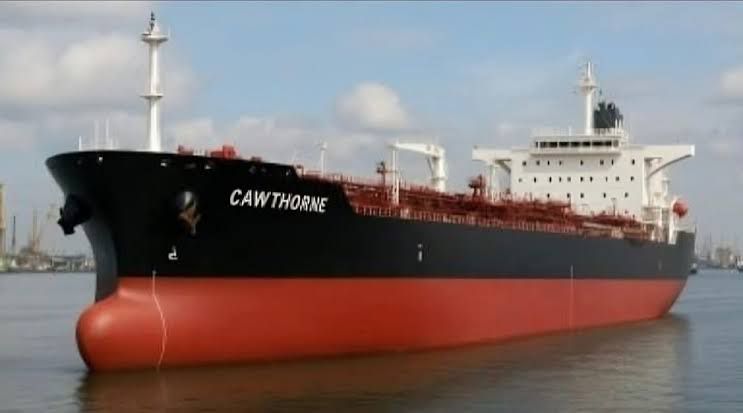
The export was executed via the state-of-the-art Floating Storage and Offloading vessel, FSO Cawthorne—Nigeria’s first newly established crude oil terminal in over five decades.
Industry stakeholders say the emergence of the Cawthorne blend adds to Nigeria’s portfolio of light sweet crude grades, which are highly sought after globally due to their lower sulphur content and relatively easier refining processes.
Strategic infrastructure drives Nigeria exports 950,000 barrels milestone
The successful cargo loading was facilitated through the FSO Cawthorne, a critical offshore asset designed to provide storage, stabilisation, and evacuation capabilities for crude produced from Oil Mining Lease (OML) 18 and surrounding fields.
Operated within a joint venture framework, the facility reflects increasing collaboration between indigenous energy firms and regulatory institutions. The project received formal approval and licensing from the Nigerian Upstream Petroleum Regulatory Commission, underscoring regulatory support for expanding domestic production capacity.
Energy analysts note that the deployment of such modern offshore infrastructure is essential for addressing long-standing bottlenecks in Nigeria’s oil evacuation systems.
By enabling seamless storage and export operations offshore, the FSO reduces reliance on ageing onshore terminals and mitigates risks associated with pipeline vandalism and logistical disruptions.
Indigenous partnerships and sector growth
The export initiative also highlights the growing role of indigenous players in Nigeria’s oil and gas value chain. Sahara Group, a key partner in the OML 18 asset, described the development as a pivotal moment for both the partnership and the wider industry.
According to the company, the introduction of the Cawthorne blend demonstrates the effectiveness of collaborative investment strategies anchored on technical expertise, operational discipline, and long-term value creation.
A senior executive at Asharami Energy, an upstream subsidiary of Sahara Group, noted that the commencement of crude lifting from the FSO represents a defining achievement. He emphasised that the milestone aligns with broader efforts to build a resilient and scalable upstream portfolio capable of supporting Nigeria’s production ambitions.
Industry observers say this model of partnership—combining private sector efficiency with regulatory oversight—is increasingly becoming central to Nigeria’s oil sector reforms.
Technology and efficiency at the core
One of the distinguishing features of the FSO Cawthorne facility is its integration of advanced digital and monitoring technologies. According to project stakeholders, the vessel incorporates artificial intelligence-enabled systems that enhance real-time monitoring, predictive maintenance, and operational safety.
These systems are complemented by robust Quality, Health, Safety, and Environment frameworks designed to meet international standards. The adoption of such technologies is expected to improve asset integrity, reduce downtime, and minimise environmental risks.
Experts argue that the integration of smart technologies into upstream operations is critical for Nigeria to remain competitive in a rapidly evolving global energy market, where efficiency and sustainability are increasingly prioritised.
Expanding Nigeria’s crude oil portfolio
The introduction of the Cawthorne blend comes at a time when Nigeria is seeking to optimise its crude oil output and strengthen its position in international markets. With global demand patterns shifting and competition intensifying, the diversification of crude grades offers a strategic advantage.
Light sweet crude blends, such as Cawthorne, typically attract premium pricing due to their refining efficiency. This positions Nigeria to capture higher value from exports while appealing to a broader range of international buyers.
Furthermore, the development aligns with the country’s broader strategy to increase production levels and maximise revenue generation amid fluctuating oil prices and fiscal pressures.
Regulatory and institutional support
The successful execution of the export operation also reflects coordinated efforts across multiple government agencies. Key institutions, including the Nigerian Ports Authority, Nigeria Customs Service, and the Nigerian Midstream and Downstream Petroleum Regulatory Authority, played crucial roles in ensuring smooth logistics and compliance.
Stakeholders say such inter-agency collaboration is essential for improving operational efficiency and attracting further investment into the sector.
In addition, host communities were acknowledged for their cooperation, highlighting the importance of community engagement in sustaining oil and gas operations. Industry leaders emphasised that inclusive development and social impact initiatives remain key to maintaining stability in producing regions.
Implications for Nigeria’s energy future
The export of 950,000 barrels of Cawthorne crude is more than a one-off achievement—it represents a broader shift toward modernisation, efficiency, and resilience in Nigeria’s oil industry.
With increasing global focus on energy transition, Nigeria faces the dual challenge of maximising current hydrocarbon resources while preparing for a lower-carbon future. Investments in infrastructure, technology, and local capacity development are seen as critical to navigating this transition.
Analysts believe that projects like the FSO Cawthorne will play a vital role in sustaining production levels, improving export reliability, and enhancing Nigeria’s competitiveness in global markets.
As the country continues to implement reforms under the Petroleum Industry Act, the success of such initiatives will be closely watched as indicators of progress in unlocking the full potential of Nigeria’s vast energy resources.
About The Author
