Trump 2025 presidency analysis: 229 executive orders, controversial pardons, economic shifts & foreign policy wins in his historic return to power.
A creative chronicle of Trump’s actions in his last 365 days in office to fulfil his mandate, ‘Make America Great Again ‘.
By the numbers: 229 executive orders. 1,500+ pardons. 158 Truth Social posts in three hours. The Trump 2025 presidency delivered unprecedented speed, controversy, and transformation as Donald Trump returned to the White House with a mandate to reshape America.

Day One: The Golden Age begins (again)
When Donald Trump placed his hand on the Bible in the Capitol Rotunda on January 20, 2025, he didn’t whisper. He proclaimed. The “Golden Age of America” had arrived, he announced, and within hours, the 47th president signed a record-breaking 26 executive orders in a single day, more than some presidents have signed in entire years.
The whirlwind had begun. Trump’s second term has been defined by unprecedented speed, issuing 229 executive orders in his first year, the highest first-year total since Franklin Delano Roosevelt in 1933. But this wasn’t your grandfather’s New Deal. This was Trump unleashed, unburdened by the learning curve of a first term, armed with Project 2025’s 920-page blueprint, and determined to remake America in his image before the political winds could shift.
Among his first acts: pardoning more than 1,500 people convicted in the January 6 Capitol attack, withdrawing from the Paris Climate Agreement, renaming the Gulf of Mexico to the “Gulf of America,” and creating the Department of Government Efficiency,DOGE, with Elon Musk briefly at its helm.
The message was clear: buckle up.
The Economy: Tariffs, tax cuts, and the “One Big Beautiful Bill”
Liberation Day or Libation Day?
April 2, 2025. Trump dubbed it “Liberation Day.” Wall Street called it something else entirely. When Trump announced a 10% universal import duty on all goods, traders and economists predicted recession. Instead, Trump wielded tariffs as both economic weapon and diplomatic sledgehammer, using the threat to extract concessions from allies and adversaries alike.
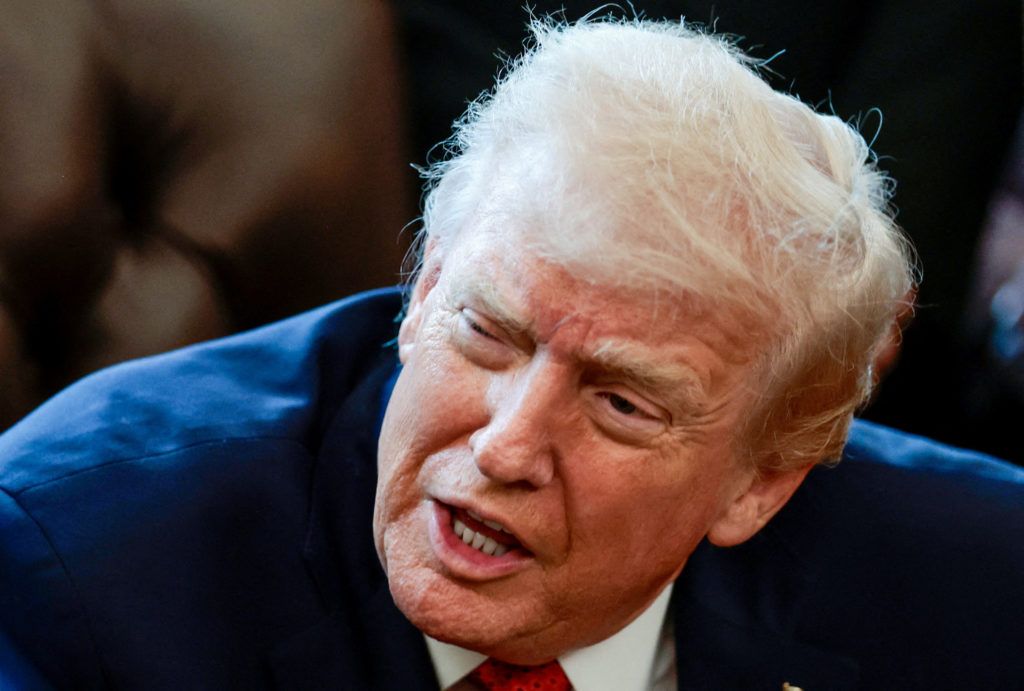
By year’s end, customs duties were running at over $300 billion annually, nearly triple 2024 levels. Trump boasted endlessly about the tariff revenue pouring into federal coffers, though fact-checkers repeatedly noted that tariffs are paid by U.S. importers, not foreign countries.
The economic results were mixed. First quarter GDP growth was negative, dropping by half a percent as businesses rushed to import goods ahead of new tariffs. But the economy rebounded sharply, with third-quarter growth hitting 4.3%, the fastest rate in two years. Inflation hovered around 2.7%, just below year-earlier levels, though businesses absorbed much of the tariff costs rather than passing them to consumers, leading to a significant hiring slowdown despite solid growth.
The One Big Beautiful Bill
On July 4, 2025, Trump signed what Republicans officially named at his insistence, the “One Big Beautiful Bill Act.” The legislation made the 2017 Tax Cuts and Jobs Act permanent, established “No Tax on Tips,” created senior deductions, and launched Trump Accounts with $1,000 deposits for newborns.
Critics called it fiscal recklessness. Supporters called it the largest tax cut in American history. Trump called it beautiful. The Congressional naming committee called it whatever Trump wanted.
The Immigration crackdown: “Negative net migration”
The Trump 2025 immigration agenda proved perhaps his most uncompromising policy arena. The United States experienced negative net migration for the first time in at least 50 years as a result of the Trump administration’s immigration crackdown, according to Brookings Institution research.
The Department of Homeland Security claims more than 622,000 people have been deported since Trump took office. ICE operations expanded nationwide, with agents conducting arrests at schools, hospitals, and public gatherings, locations previously considered sensitive zones.

The human cost made headlines repeatedly. In January 2026, an ICE agent shot and killed a Portland woman dropping her child at school during a deportation operation, the eleventh shooting by ICE agents since September 2025. Trump and Homeland Security Secretary Kristi Noem defended it as self-defense.
Encounters on the southern border plummeted 99% since January, the State Department reported, amid what it called a “whole-of-government effort to stop the flow of migration.”
Foreign Policy: The dealmaker’s return
Peace through strength and threats
Trump’s foreign policy in Year One defied easy categorization. He wasn’t an isolationist, despite predictions. The Trump foreign policy 2025 approach involved direct engagement with nine international conflicts, including Gaza and Ukraine. He threatened to seize the Panama Canal, suggested purchasing Greenland, and floated the idea of Canada as America’s 51st state.
The Gaza ceasefire: Trump’s most celebrated foreign policy achievement came when he brokered a ceasefire between Israel and Hamas. Trump announced a 20-Point Gaza Peace Plan alongside Benjamin Netanyahu in September 2025, aimed at achieving a ceasefire, returning Israeli hostages, and dismantling Hamas’s military capabilities. The delicate peace deal held and moved into its second phase, earning Trump praise even from critics.
Ukraine,the elusive peace:
Despite Trump’s promises to end the Ukraine war “in 24 hours,” a deal to end the Russia-Ukraine war remained elusive. Trump publicly berated Ukrainian PresidentVolodymyr Zelensky in the Oval Office, called him a “dictator” on social media, and demanded Ukraine provide rare earth minerals in exchange for U.S. assistance.
The Venezuela gambit:
In one of the year’s most dramatic moves, Trump ordered an on-the-ground operation to capture Venezuelan President Nicolás Maduro. The State Department designated Cartel de Los Soles and the Trump administration captured its leadership, Nicolás Maduro and Cilia Flores, bringing them to face justice in the United States.
NATO and European relations:
European leaders learned to manage Trump’s emotions as a strategic priority. The NATO Secretary-General referred to Trump as “daddy.” A Swiss delegation presented him with a gold bar. Qatar gifted him a $400 million plane. More than 40 foreign heads of government visited the White House,double Biden’s first-year total.
Truth Social: The Presidential megaphone
If Trump’s policy moves defined his administration, his social media presence defined his personality. And in 2025, that presence reached fever pitch on Truth Social, the platform he owns.
The Midnight marathons
On one December night, Trump made 158 posts between 9 PM and midnight, nearly one post per minute. It wasn’t his only marathon. In early January, he posted nearly 100 times in a single late-night session. Trump’s record came in June 2020, when he posted 200 times in one day.
His posts ranged from the presidential to the bizarre. He announced nuclear submarine positioning via Truth Social. After Russia’s Dmitry Medvedev made provocative statements, Trump revealed he had ordered two nuclear submarines to be positioned “in the appropriate regions, just in case”.
He posted AI-generated images of political opponents in prison jumpsuits. He called critical media coverage “illegal.” He threatened to revoke broadcast licenses for networks with negative GOP coverage. And in one memorable post, he falsely announced that director Rob Reiner had died from “TRUMP DERANGEMENT SYNDROME” (Reiner was very much alive).
The misinformation machine
Trump’s 2025 was characterized by dogged repetition of false claims. He claimed to have secured “$17 trillion” then “$18 trillion” in investments even as the White House website listed less than $10 trillion, and that figure was itself wildly inflated. He invented stories about sending “$50 million” then “$100 million” to Gaza “to buy condoms for Hamas.” He insisted every drug boat in the Caribbean “kills 25,000 Americans.”
Truth Social remained financially troubled despite Trump’s vocal support. Estimates in early 2025 suggested 6.3 million monthly active users, small compared with major rivals. By May, active users had risen to 359,000, still dwarfed by X’s 131.9 million.
The Controversies: Pardons, power, and pushback
January 6: “Patriots” set free
No single action in Trump’s first year generated more controversy than his day-one Trump pardons controversy. Trump issued a proclamation granting blanket clemency to all people, nearly 1,600, convicted of or awaiting trial for offenses related to the January 6 Capitol attack.
More than 600 rioters had been convicted of or pleaded guilty to assault or obstructing law enforcement officers, and 170 of using a deadly weapon. Trump called them “patriots” who had been treated “very unfairly.”
An NPR/PBS News/Marist poll found that roughly six out of 10 Americans disapproved of the pardons, including 89% of Democrats, 62% of independents and 30% of Republicans. Even some Republican senators objected. Senator Thom Tillis said of those who assaulted police: “I just can’t get there at all.”
At least 33 pardoned insurrectionists have been rearrested, charged, or sentenced for other crimes since January 6, 2021, including six charged with child sex crimes.
The pardon-for-sale allegations
Beyond January 6, the Trump pardons controversy deepened with allegations of financial connections. In May, he pardoned Paul Walczak, a nursing home executive convicted of tax fraud, days after Walczak’s mother attended a $1 million-per-plate dinner at Mar-a-Lago. He pardoned Changpeng Zhao, the Binance CEO convicted of anti-money laundering violations, one week after Trump Jr. introduced Zhao’s lobbyist to Trump.
In November, Trump issued symbolic pardons to 77 people involved in the 2020 “fake electors” scheme, including Rudy Giuliani, Sidney Powell, and Mark Meadows, none of whom faced federal charges.
The Department of Government Efficiency (DOGE)
With Elon Musk briefly overseeing it, DOGE became both an achievement and a controversy. The department oversaw mass layoffs of federal workers and efforts to dismantle agencies. In late March, DOGE announced plans to migrate Social Security’s base code from COBOL to a modern programming language in months, a task experts said should take years.
Cultural warfare: DEI, education, and gender
Trump’s cultural agenda was swift and sweeping. On his first day, he signed Trump executive orders ending DEI programs across the federal government, removing diversity considerations from federal hiring and promotion. He declared that the U.S. government recognizes only two biological sexes: male and female.
In March, he signed an executive order to dismantle the Department of Education, shifting its functions to other agencies. He declared English the official language of the United States.
The actions thrilled his base and horrified progressives, deepening the nation’s cultural divisions.
Trendy moments and viral wins
The White House Ballroom:
In October, Trump tore down the White House East Wing to build a 90,000-square-foot ballroom, sparking outrage from Democrats and architectural historians alike. Trump called it “tremendous.”
The Kennedy rename: Trump’s hand-picked board at the Kennedy Center voted to rename it the “Trump-Kennedy Center.” Critics howled. Trump shrugged.
Cryptocurrency embrace: Trump signed the GENIUS Act in July, establishing a regulatory framework for dollar-backed stablecoins, and released a 180-day crypto report with 100+ recommendations to make America “the crypto capital of the world”.
Energy dominance:Gas prices hit a four-year low, averaging about $2.90 per gallon. The U.S. produced more oil than Saudi Arabia and Russia combined, that is,24.2 million barrels daily.
Presidential achievements under scrutiny
The Trump presidency achievements list grew throughout 2025, though assessments varied wildly by political perspective. Supporters highlighted the Gaza peace deal, negative net migration, 4.3% GDP growth, cryptocurrency framework, and energy dominance. They celebrated Trump executive orders that dismantled what they viewed as bureaucratic overreach and cultural excess.
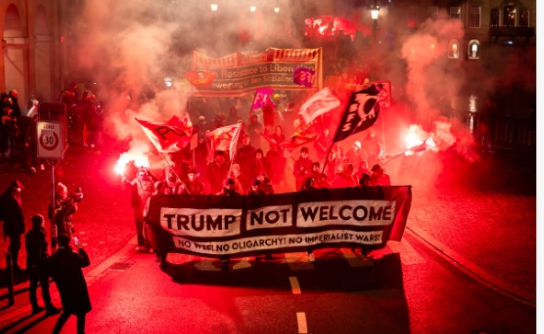
Critics countered that the Trump presidency achievements came at enormous cost: democratic norms shattered, international alliances strained, domestic polarization deepened, and vulnerable populations targeted. They pointed to the Trump pardons controversy, mass deportations resulting in civilian deaths, and the erosion of federal institutional integrity.
The verdict: Transformation or chaos?
As the final chapter closed on Trump’s first year, Americans remained deeply divided on what it all meant. His supporters pointed to economic growth, energy independence, border security, and the Gaza ceasefire. His detractors highlighted democratic erosion, international instability, and domestic polarization.
A recent Reuters-Ipsos poll found that on every issue measured, Trump does not enjoy majority approval. Yet his base remained intensely loyal, energized by his aggressive style and relentless pace.
One thing was certain: Trump had shattered the mold of traditional presidential behavior. Russell Riley, a professor at the University of Virginia’s Miller Center, described Trump’s tenure as “one of the least conservative presidencies in American history” when judged by the speed and scope of its upheavals.
Whether history would judge this year as a necessary disruption or a dangerous deviation remained to be seen. But it was quiet. In the Trump era, quiet was never an option.
The Golden Age had arrived or the Gilded Cage, depending on who you asked. Either way, America had been transformed. Again.
Read more news at: ireport247news.com