Zelensky hits back after Trump blames him- Ukrainian President Volodymyr Zelensky has firmly rejected claims by US President Donald Trump that Kyiv is responsible for delays in ending the Ukraine-Russia war, insisting that Ukraine “will never be a stumbling block to peace” and arguing that Russia’s continued military aggression proves Moscow has no genuine interest in negotiations.
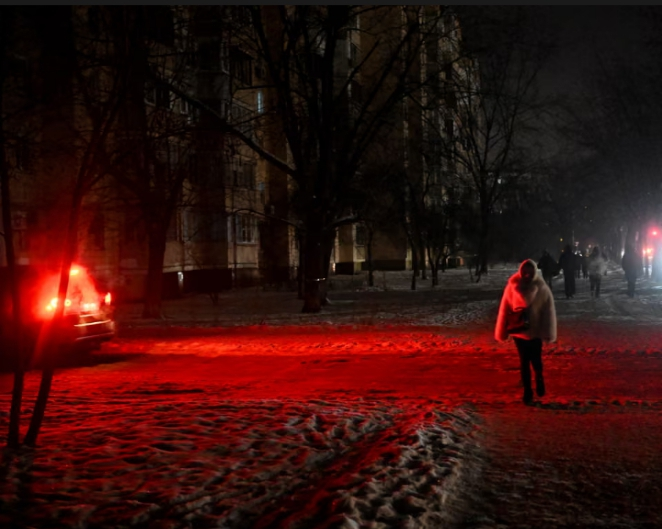
The exchange marks a significant escalation in public tensions between Kyiv and Washington at a time when Ukraine is facing relentless Russian attacks on its energy infrastructure, plunging cities into darkness amid freezing winter temperatures and forcing the government to declare a nationwide energy emergency.
Speaking after a phone call with Nato secretary general Mark Rutte, Zelensky said Ukraine remained fully committed to diplomatic efforts, including engagement with the United States, but stressed that peace could not be achieved while Russia continued to bombard civilian infrastructure with missiles and drones.
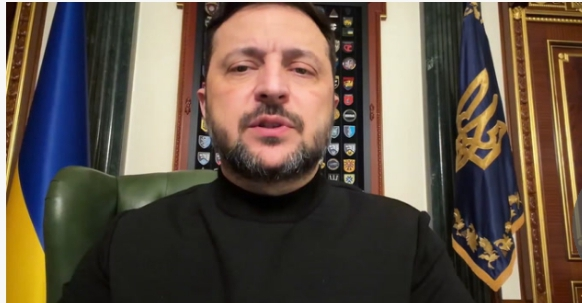
“Ukraine has never been and will never be an obstacle to peace,” Zelensky said in his nightly address. “It is precisely Russian missiles, Russian drones, and Russia’s attempt to destroy Ukraine that demonstrate Moscow is not interested in any agreement.”
Trump’s remarks spark backlash in Kyiv
Trump’s comments came after he was asked why US-led peace efforts had yet to bring an end to Europe’s largest land war since the Second World War.
In response, the US president blamed Zelensky directly, saying that Russian President Vladimir Putin was “ready to make a deal” while Ukraine was “less ready”.

The remarks triggered immediate concern in Kyiv and across Europe, where officials fear that placing pressure on Ukraine rather than Russia risks rewarding aggression and undermining international law.
Ukrainian officials argue that any peace process must include clear security guarantees and accountability for Russia’s invasion, which began in February 2022. They also stress that Russia’s actions on the battlefield contradict claims of willingness to negotiate.
Ukraine energy emergency deepens crisis
The diplomatic dispute comes as Ukraine faces one of the most severe energy crises of the war. Russian forces have intensified strikes on power stations, substations, and heating facilities, deliberately targeting infrastructure critical to civilian survival during winter.
In Kharkiv, Ukraine’s second-largest city, local authorities confirmed that a major energy facility had been destroyed, leaving large areas without electricity and heating. The city, located just 25 kilometres from the Russian border, has been repeatedly targeted by missiles, drones, and glide bombs.
Zelensky declared a nationwide energy state of emergency, warning that recovery efforts must accelerate to prevent a humanitarian disaster.
He also publicly criticised Kyiv’s city administration for what he described as a lack of urgency in responding to the crisis, prompting a rare public dispute with mayor Vitali Klitschko.
Emergency crews across the country are working around the clock to restore power and heating as temperatures fall well below freezing, with some regions experiencing lows of minus 20 degrees Celsius.
UK announces emergency support package
In response to the worsening situation, the United Kingdom announced a £20 million emergency funding package to support Ukraine’s battered power grid.
British officials said the funds would be used to repair, restore, and protect energy infrastructure throughout the winter months.
The UK Foreign Office said hundreds of thousands of Ukrainians, including children, hospital patients, and elderly residents, had been left without heat and power due to Russian attacks.
The new support aims to ensure that electricity and heating remain available for homes, schools, and medical facilities during the coldest period of the year.
The announcement underscores continued European backing for Ukraine at a time when uncertainty surrounds the future scale of US involvement.
Nato engagement and diplomatic push
Zelensky’s call with Nato chief Mark Rutte focused on both the security situation and ongoing diplomatic efforts with Washington.
Nato officials have repeatedly warned that Russia’s strategy of targeting energy infrastructure amounts to weaponising winter against civilians.
Alliance members continue to provide military, financial, and humanitarian assistance to Ukraine, though the balance of support has shifted as European countries take on a greater role.
French President Emmanuel Macron revealed this week that France is now providing roughly two-thirds of Ukraine’s intelligence needs, largely replacing the United States after Washington suspended some intelligence sharing in 2025 as part of its push to pressure Kyiv into talks.
Macron said Europe had stepped up to ensure Ukraine was not left vulnerable, praising a coalition of around 35 countries now providing financial and military assistance.
IMF pledges new funding programme
International financial support for Ukraine also received a boost following a surprise visit by International Monetary Fund managing director Kristalina Georgieva to Kyiv.
Inspecting energy infrastructure damaged by Russian strikes, Georgieva said she expected a new $8.1 billion IMF lending programme to be approved in the coming weeks.
The funding is intended to stabilise Ukraine’s economy and unlock additional support from other international institutions as the country approaches the fourth anniversary of Russia’s full-scale invasion.
Georgieva acknowledged that the situation on the ground had deteriorated since a preliminary agreement was reached in November but said the programme’s core requirements would remain unchanged.
Battlefield developments continue
While diplomatic tensions dominate headlines, fighting on the ground continues unabated.
Ukrainian officials reported significant battlefield gains near Kupiansk, claiming that Ukrainian forces killed 27 Russian soldiers for every Ukrainian loss during operations to regain control of the strategic northeastern city.
According to intelligence shared with British officials, Russian forces have suffered heavy casualties due to what Ukraine describes as “meat grinder” tactics relying on overwhelming numbers rather than manoeuvre.
Despite these gains, military analysts caution that the conflict remains finely balanced, with Russia continuing to mobilise resources and Ukraine relying heavily on Western support to sustain its defence.
Europe wary of rushed peace deal
Across Europe, there is growing scepticism about the prospects of a near-term ceasefire.
Spain’s defence minister Margarita Robles said Russia showed no real desire for peace and would not accept foreign troops as part of any peace mission.
Other European leaders have stressed that any settlement must respect Ukraine’s sovereignty and territorial integrity, warning against pressuring Kyiv into concessions that could set a dangerous precedent.
Zelensky has echoed those concerns, arguing that peace cannot come at the cost of Ukraine’s security or independence.
A widening political divide
The public dispute between Zelensky and Trump highlights a widening divide over how the war should be resolved.
While Trump has positioned himself as a deal-maker eager to end the conflict, Ukrainian and European leaders argue that peace requires more than a ceasefire—it requires Russia to stop its aggression.
Read more here: Ukraine-Russia war latest: Trump claims Zelensky, not Putin, holding up peace deal
As winter deepens and energy shortages persist, Ukraine faces immense pressure both on the battlefield and in diplomatic corridors. Zelensky’s message remains clear: Ukraine is ready for peace, but not at any price.
With Russian missiles continuing to strike cities and infrastructure, Kyiv insists that responsibility for prolonging the war lies not with Ukraine, but with the Kremlin’s refusal to end its invasion.
About The Author