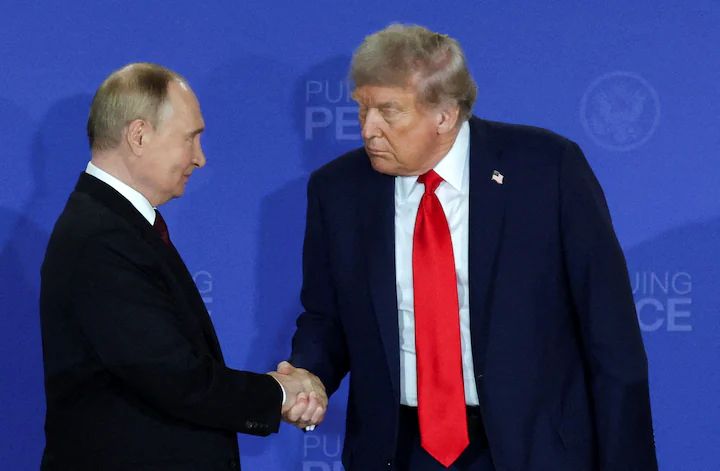
Trump refuses to blame Putin for starting the war against Ukraine as he suspends a new sanctions package targeting Russia, citing US national interests just days before the measures were due to take effect.
US President Donald Trump signed an executive order on Friday, October 16, suspending a broad package of proposed sanctions against Russia, two days before the deadline for implementing the measures.
The decision has raised fresh questions about Washington’s approach to Moscow and its commitment to supporting Ukraine as the war continues, with Russian attacks causing casualties and damage to critical infrastructure.
The proposed sanctions were intended to increase economic pressure on Russia over its invasion of Ukraine. Trump had previously approved bipartisan legislation sponsored by US Senator Lindsey Graham, which was designed to target Moscow’s financial resources.
However, the latest executive order placed the measures on hold, with Trump telling Congress that suspending them was in the “national interest.”
The move came amid other controversial developments in US policy towards the conflict, including an agreement involving Russian diesel purchases and uncertainty surrounding Ukraine’s access to satellite communication services.
Trump refuses to blame Putin for starting Ukraine war
Trump’s decision to suspend the sanctions coincided with renewed questions about whether he considers Russian President Vladimir Putin responsible for launching the war against Ukraine.
When asked about Putin’s responsibility for the invasion, Trump declined to directly blame the Russian leader, instead insisting that his priority was bringing the conflict to an end.
Responding to a question suggesting that he had forgotten Putin invaded Ukraine, Trump said: “I know the details, OK, and at some point I’ll release the details. But I don’t care about anything except for one. I want that war ended.”
The statement reinforced concerns about the direction of US policy, particularly as Ukraine continues to face Russian military pressure and seeks stronger international support.
Trump has repeatedly presented ending the war as a central foreign policy objective. However, his latest decision to suspend sanctions has raised questions about the economic pressure Washington is prepared to maintain against Moscow.
The sanctions legislation had been developed as a bipartisan effort to increase the costs Russia faces for continuing its military campaign. Suspending the proposed measures could affect the timing and effectiveness of that pressure.
Sanctions suspension raises questions over US policy
The executive order came despite Trump’s earlier approval of the legislation sponsored by Graham, illustrating the uncertainty surrounding the administration’s approach to additional restrictions on Russia.
The proposed measures were intended to target Russia’s financial resources and increase the economic consequences of its war against Ukraine.
By suspending their implementation shortly before the deadline, Trump has delayed another potential source of pressure on the Kremlin while diplomatic efforts to end the conflict remain uncertain.
The administration’s stated justification was the national interest. However, the decision has attracted attention because it came alongside other developments that could affect Ukraine’s position in the war.
Macron criticises US agreement involving Russian diesel
French President Emmanuel Macron has criticised a US decision involving the purchase of diesel from Russia, warning that the arrangement sends a negative signal and risks creating divisions among Western partners.
Trump recently said the United States had agreed to purchase diesel from Russia as part of efforts to reduce global energy prices.
The arrangement has raised concerns because purchasing Russian energy products could provide Moscow with additional revenue while its military operations against Ukraine continue.
Speaking after a European Union summit in Brussels, Macron said: “This decision is not good for anyone. It sends a negative signal. It adds an element of division and doubt,”
His comments highlighted the tension between efforts to manage energy costs and the broader objective of restricting the financial resources available to Russia.
European governments have supported measures intended to reduce Moscow’s ability to finance its war, although energy security and economic considerations have complicated the implementation of those policies.
The diesel issue therefore adds another dimension to the debate over whether Washington and its European partners are maintaining a consistent approach towards Russia.
Zelenskyy warns of further Russian attacks
Ukrainian President Volodymyr Zelenskyy has warned that Russia could intensify attacks on western Ukraine and potentially deploy ballistic missile systems in neighbouring Belarus.
The warning comes as Ukrainian authorities continue to respond to Russian strikes targeting populated areas and infrastructure.
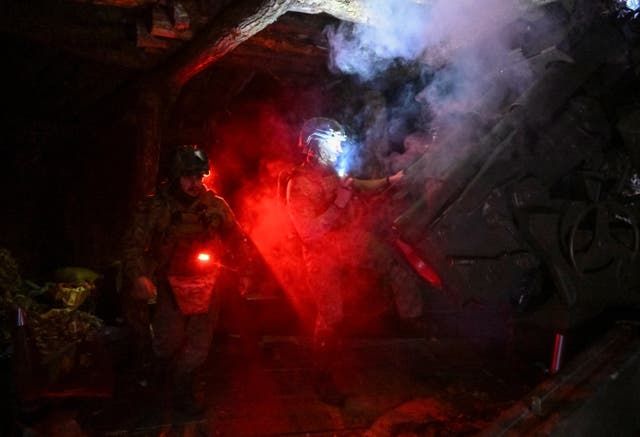
According to reports cited in the latest developments, Russian attacks on Friday killed at least eight people and injured approximately 60 others. The strikes hit two shopping centres and disrupted electricity supplies affecting more than one million people.
Attacks were reported in areas including Kharkiv, Kramatorsk and Dnipropetrovsk, adding to the pressure on Ukrainian communities already dealing with the consequences of prolonged fighting.
Ukrainian authorities said repairs had restored electricity to more than one million people. However, the precise number of people still without power was unclear.
Damage to electricity infrastructure remains a major concern because power disruptions affect homes, businesses and essential public services, particularly when attacks occur alongside deteriorating security conditions.
Starlink restrictions create additional concerns for Ukraine
Zelenskyy has also warned that restrictions affecting Starlink services are creating difficulties for Ukraine’s military operations, including the use of interceptor systems against Russian drones.
Ukrainian officials have been discussing the issue with the United States as Kyiv seeks to maintain the communication capabilities required for battlefield coordination.
Trump rejected suggestions that he or Elon Musk was responsible for Ukraine’s loss or restriction of Starlink access. Reuters reported that the White House had approved a reduction in Starshield services.
Satellite communication services have played an important role in Ukraine’s ability to maintain connectivity during the war, especially in areas where conventional communications infrastructure has been damaged.
Any limitations could therefore have consequences for military coordination and the operation of certain defence systems. The latest dispute adds to Ukraine’s concerns about the reliability of American support as Washington reassesses elements of its policy.
Putin declares a non-negotiable security zone
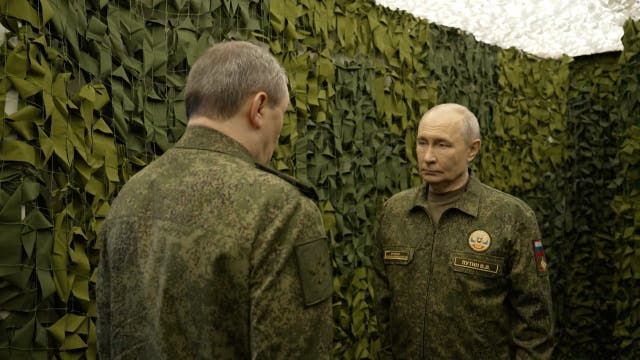
Russian President Vladimir Putin has said Moscow is establishing a security zone inside Ukraine along the countries’ shared border, describing the initiative as necessary to protect Russian border regions.
Putin linked the operation to Ukraine’s incursion into Russia’s Kursk region during 2024 and 2025, saying Russian forces had been instructed to push Ukrainian troops out of Russian territory and extend their operations into adjacent Ukrainian areas.
“The Russian armed forces were tasked not only with expelling the enemy from our land but also with establishing a security zone in the adjacent territory. This task is being carried out successfully.”
Putin also indicated that Moscow did not intend to negotiate the proposed security zone as part of a potential peace agreement.
“Our goal is to ensure the absolute security of Russia’s border regions for the future, and we do not plan to make this a subject for potential peace negotiations with Ukraine.”
The declaration suggests that Russia intends to maintain control over additional areas near the border, potentially complicating future negotiations over territory and security arrangements.
Kremlin outlines the proposed security zone
Kremlin spokesperson Dmitry Peskov said the security zone extended across approximately 660 kilometres, with Russia controlling around 70 per cent of it.
However, he did not specify how far the proposed zone extended into Ukrainian territory.
Read more here: President Trump waives Russia sanctions before new Graham law takes effect
Establishing such a zone would require Russian forces to seize additional land in Ukraine’s Sumy and Kharkiv regions. These areas are not among the Ukrainian territories Russia has formally claimed as its own.
The proposal could therefore create further obstacles to a negotiated settlement, particularly if Moscow insists that the territory remain outside the scope of future peace discussions.
Ukraine, meanwhile, continues to face the challenge of defending its border regions while responding to attacks elsewhere in the country.
Ukrainian official describes walkout during Russian minister’s address
Ukraine’s central bank governor, Andriy Pyshnyi, has described the departure of numerous officials during an address by Russian Finance Minister Anton Siluanov at an International Monetary and Financial Committee meeting.
The meeting was held as part of the International Monetary Fund and World Bank gatherings in Bangkok.
Pyshnyi said he was struck by the number of delegates who left while Siluanov was speaking, describing the moment as personally significant.
“I was impressed by the numbers,” Pyshnyi said.
He added: “It was a really deep and emotional moment for me.”
The Ukrainian central bank chief also called for an end to Russia’s military campaign, saying: “This unprovoked aggression has to be stopped.”
Bundesbank president Joachim Nagel said nearly half of the delegates had walked out during the Russian minister’s address.
The incident illustrated the diplomatic isolation Russia continues to face in some international settings because of its invasion of Ukraine, even as Russian officials maintain their participation in major economic institutions.
What the latest Ukraine war update means
The latest developments underline the competing pressures shaping international efforts to end the war. Trump has suspended additional sanctions while continuing to describe ending the conflict as his overriding priority.
At the same time, Macron’s criticism of the Russian diesel arrangement highlights concerns among European leaders about decisions that could weaken the economic pressure on Moscow.
Ukraine is also confronting continued attacks, electricity disruptions and uncertainty over the communication services available to its military. Zelenskyy’s warning about possible further Russian operations adds to concerns about the conflict’s potential expansion.
Putin’s declaration that a proposed security zone should remain outside future peace negotiations presents another challenge for diplomacy, particularly if Russia seeks to retain control over additional Ukrainian territory.
For Kyiv, the central question remains whether international partners will maintain sufficient military, economic and diplomatic support to help it defend its territory and strengthen its position in any eventual negotiations.
The suspension of the sanctions package does not, by itself, establish what Washington’s next move will be. Nevertheless, the decision has renewed debate about the balance between diplomatic engagement with Moscow and the use of economic pressure to influence Russia’s conduct.
As the war continues, the relationship between US policy, European unity and Ukraine’s security needs is likely to remain central to the prospects for a negotiated settlement.
About The Author