Ukrainian President Volodymyr Zelenskyy has defended himself against Donald Trump’s criticism, insisting that he is only standing up for Ukraine’s interests after the US president suggested he was more difficult to deal with than Russian President Vladimir Putin.
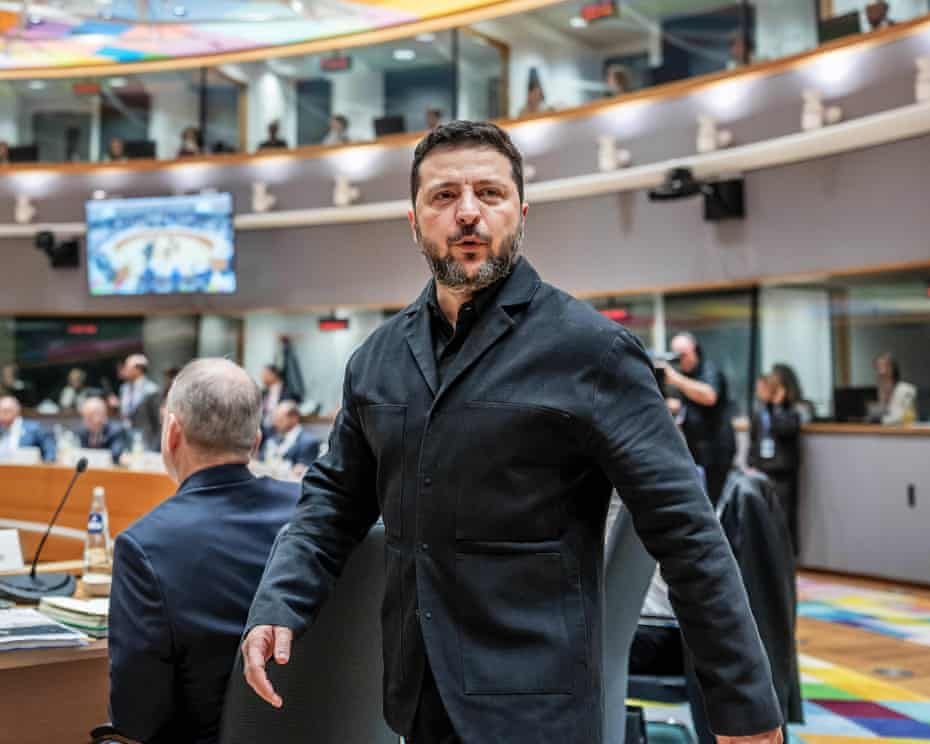
Speaking to journalists at a European Union summit in Brussels on Friday, October 16, Zelenskyy said his discussions with Trump had always produced topics for discussion and decisions, rejecting the suggestion that he was an obstacle to ending the war.
“I’m only standing up for Ukraine’s interests,” Zelenskyy said, explaining his country’s response to continued Russian attacks.
“And no matter how Russia would like to limit all of our rights, it’s clear that we do have a right to defend ourselves.”
His remarks came amid escalating tensions over Washington’s approach to negotiations with Moscow, including a reported diesel deal with Russia and disagreements over Ukraine’s military response to Russian attacks.
Zelenskyy Accuses Putin of Playing Games With Peace Negotiations
Zelenskyy argued that Putin was not genuinely interested in ending the war, accusing the Russian leader of using rhetoric to create the appearance of diplomatic engagement without making meaningful progress towards peace.
“He does not seek negotiations in any format,” Zelenskyy said of Putin, accusing the Russian president of “playing these games of words.”
“He does not want the war to end,” he added, describing Putin’s actions as a “parody” of efforts to achieve peace.
The Ukrainian president’s comments underscored Kyiv’s concern that negotiations could be used to weaken international pressure on Moscow while Russia continues its military campaign.
Ukraine has repeatedly insisted that any diplomatic settlement must account for its security and sovereignty rather than reward Russia for its invasion.
Zelenskyy Rejects Comparison With Putin
Trump’s comparison of Zelenskyy and Putin has added to the strain between Washington and Kyiv at a critical moment in the war.
The US president has argued that Zelenskyy is more difficult to negotiate with than the Russian leader, a position that has drawn criticism from European leaders who continue to support Ukraine.
Zelenskyy maintained that defending his country’s interests should not be interpreted as obstructing peace efforts.
“If I don’t stand up to this, if I don’t defend it, who else will do this diplomatically?” he asked.
His response suggests that Kyiv remains concerned about diplomatic arrangements that could lead to sanctions relief for Russia without securing a lasting end to hostilities.
Ukraine Rejects Concerns Over US-Russia Diesel Deal
Zelenskyy also defended Ukraine’s opposition to a reported diesel agreement involving the United States and Russia, warning that such arrangements could pave the way for broader efforts to ease restrictions on Moscow.
He said Ukraine could not accept a deal that might be followed by agreements involving Russian gas or attempts to lift sanctions imposed after Russia’s invasion.
According to Zelenskyy, the potential consequences could extend beyond energy trade to Russia’s frozen assets, banking system, chemical industry and individuals subject to restrictions.
The Ukrainian president argued that relaxing economic pressure without meaningful Russian concessions could undermine efforts to force Moscow towards a genuine peace settlement.
The issue has become another source of friction between Kyiv and Washington, particularly as Ukraine continues to depend on Western military and financial support.
Zelenskyy Says Ukraine Was Caught by Surprise
Zelenskyy told journalists that the reported diesel deal had caught Ukraine by surprise, arguing that Kyiv should have been informed about developments that could directly affect its security.
He said Ukrainian officials remained in contact with their American counterparts and expected further discussions in the coming days.
The Ukrainian president also indicated that his country remained willing to support an energy ceasefire, but stressed that its success depended on Russia’s willingness to respect the arrangement.
“It all depends on Russia and they do not want it,” he said.
Zelenskyy called on Washington to provide additional air-defence assistance if an energy ceasefire could not be secured.
“And if there is no energy ceasefire, give us anti-ballistic missiles so that I can protect my energy facilities,” he said, adding that Ukraine needed assistance during the period covered by the diesel deal.
Zelenskyy Says Starlink Restrictions Still Affect Ukraine
The Ukrainian president also revealed that restrictions affecting Starlink’s operating speeds had not been completely reversed, raising further concerns about Ukraine’s battlefield communications and air-defence capabilities.
Zelenskyy said Starlink had not been switched off entirely, but that speed limits had been reduced, affecting some of the systems Ukraine relies on to defend its population against Russian attacks.
“Starlink was not turned off, but the speed limits were lowered,” he said.
He explained that the reduced speeds had affected Ukraine’s ability to use certain tools against Russian jet-powered Shahed drones.
According to Zelenskyy, the drones can travel at approximately 400 kilometres per hour, while the relevant speed limits had been reduced to 70 kilometres per hour.
He described the disruption as a “very dangerous and unpleasant surprise”, stressing that the technology was important for defensive operations and other military activities.
Ukraine Works With France on Alternative Capabilities
Zelenskyy said Ukraine was working with several countries, including France, to develop or secure additional capabilities that could reduce its vulnerability to restrictions affecting satellite communications.
He also confirmed that numerous countries continued sharing intelligence with Ukraine, helping Kyiv monitor Russian military activity and plan its defence.
On the status of Starlink, Zelenskyy said Ukraine had received indications from partners in Washington that the restricted capabilities would be restored.
“Have they returned to the previous speed limits? No. But is it coming back now? Yes,” he said.
His comments suggest that some improvements may be under way, although the previous operating conditions had not yet been fully restored.
The issue has reinforced calls among European leaders for the continent to develop alternatives to satellite communications systems controlled by American companies.
European Leaders Promise Continued Support for Ukraine
Zelenskyy said he had received support from European leaders despite his disagr eement with Trump over the reported diesel deal.
Read more here:Trump calls Ukraine’s oil refinery strikes ‘a disgrace’ as Putin ignores ceasefire and Zelenskyy hits back
Asked whether fellow leaders had criticised his response to the agreement, he said he had “heard … only support” and expressed gratitude for their backing.
The Ukrainian president also discussed military assistance, financial resilience and preparations for the coming winter during meetings with European officials.
He said Ukraine’s requests for additional assistance represented “the bare minimum” needed to protect the country against continued Russian attacks.
Zelenskyy expressed confidence that European countries had enough air-defence interceptors to help Ukraine get through the winter, although the precise amount of assistance available remained uncertain.
He also called for faster and cheaper production of new anti-ballistic systems that could eventually be shared across Europe.
Ukraine Expects More F-16 Fighter Jets
Zelenskyy said Ukraine expected additional F-16 fighter jets from Belgium by the end of 2026, as Kyiv continues seeking equipment to strengthen its defences against Russian air attacks.
He also renewed calls for a decision on Russian frozen assets, arguing that Ukraine wanted to receive funds in a format that would protect them from being returned to Moscow.
The issue remains a major point of discussion among European governments, with Ukraine seeking financial support to sustain its defence and rebuild damaged infrastructure.
Zelenskyy said Kyiv was continuing to coordinate with European partners on financial assistance and its path towards European Union membership.
He also stressed the need for European leadership to protect civilians from Russian attacks on energy infrastructure and populated areas.
Zelenskyy Welcomes Meeting With Hungary’s Magyar
In a separate development, Zelenskyy described his meeting with Hungarian Prime Minister Péter Magyar as “a very good meeting”.
The discussions focused on the economy, logistics and energy, with the Ukrainian president saying he was open to meeting Magyar again in Budapest.
The talks could signal an opportunity to improve relations between Kyiv and Budapest following tensions under Hungary’s previous government led by Viktor Orbán.
Magyar expressed support for Ukraine in the face of Russia’s invasion and said Hungary was prepared to offer assistance through diplomatic channels to achieve an immediate ceasefire and lasting peace.
The two sides also discussed minority rights and steps towards restoring mutual trust, issues that have affected Ukraine’s efforts to advance its EU membership ambitions.
Ukraine’s Position Remains Firm as Tensions With Trump Continue
Zelenskyy’s latest comments show that Ukraine is determined to defend its interests even as Washington seeks to shape negotiations with Moscow.
The Ukrainian president has argued that meaningful peace cannot be achieved through agreements that ease pressure on Russia while leaving Ukraine exposed to further attacks.
Read also: China urges Israel to stop ‘forced establishment’ of West Bank settlements
His concerns extend beyond the reported diesel deal to sanctions, frozen Russian assets, air-defence supplies and the reliability of satellite communications essential to Ukraine’s military operations.
While Zelenskyy welcomed continued support from European leaders, his remarks also highlighted Kyiv’s dependence on Western assistance at a time of uncertainty over US policy.
For Ukraine, the central question remains whether diplomatic efforts can deliver a lasting peace without compromising the country’s sovereignty or its ability to defend itself.
About The Author