Russia‘s new drone launch base near Ukraine is nearing completion after just six weeks of construction, satellite imagery shows, as Moscow expands its attack capabilities and Kyiv struggles to intercept faster jet-powered drones targeting its cities and infrastructure.
The facility, located near Millerovo in Russia’s southwestern Rostov region, covers approximately 0.9 square kilometres, equivalent to around 126 football pitches. Commercial satellite images provided by Planet Labs and Airbus reveal the rapid transformation of an empty field into a major military installation.
Images captured on August 31 showed little activity at the site, while photographs taken the following morning indicated that construction had begun. By October 14, the facility had developed into a substantial complex featuring launch platforms and emerging infrastructure for deploying attack drones.
The development comes as Russia increases its use of jet-powered drones against Ukraine, presenting a growing challenge for Ukrainian air defences. Defence experts warn that the speed of construction demonstrates Moscow’s ability to expand its long-range strike capabilities rapidly.
Russia’s New Drone Launch Base Near Ukraine Nears Completion
The new installation is situated approximately 3.5 kilometres from Millerovo air base, which houses Russia’s 31st Guards Fighter Aviation Regiment. Its proximity to the existing military facility could provide additional protection against potential Ukrainian attacks.
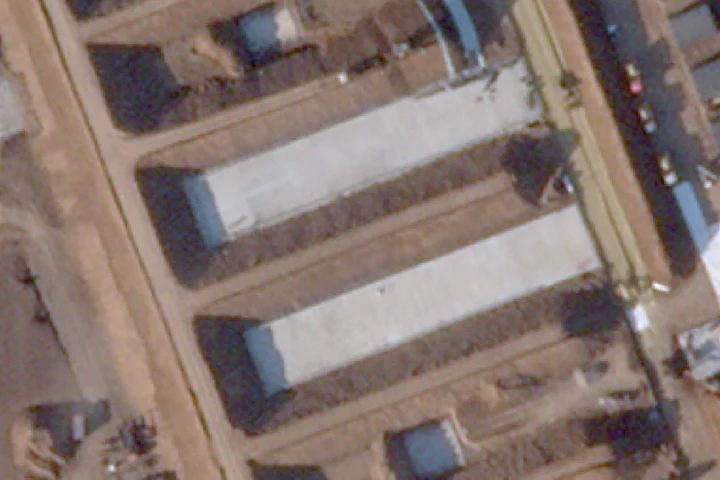
Satellite imagery analysed by Reuters shows eight platforms along the western edge of the complex that could accommodate launch rails for Russian jet-powered drones.
Mike Monnik, founder and chief executive of private intelligence company DroneSec, said the facility appeared capable of supporting the deployment of Russia’s newer Geran-4 and Geran-5 drone models.
“The speed of construction … demonstrates the ease with which Russia can bring now-established offensive capabilities to bear rapidly,” Monnik said.
His assessment highlights the pace at which Russia has developed infrastructure intended to support its expanding drone warfare operations.
Monnik also said the installation appeared close to completion, suggesting it could become operational soon.
“It will be probably a matter of weeks before (it is) fully operational, if not earlier,” he said.
Reuters’ satellite imagery analysis found that two of the eight launch platforms already had rails installed. Construction work was also visible on two additional platforms, while other parts of the facility continued to develop.
The rapid progress suggests Russia is prioritising infrastructure that could support the deployment of larger numbers of jet-powered attack drones against Ukrainian targets.
Facility Could Support Large-Scale Drone Launches
Monnik estimated that the site could potentially launch 100 or more jet-powered drones within 24 hours, although its actual output would depend on available supplies, operational requirements and other logistical factors.
Russia does not necessarily launch its drones in large simultaneous waves. Instead, it frequently deploys them in smaller numbers throughout the day, a pattern that can place sustained pressure on Ukrainian air defences.
The new facility could provide Moscow with another location from which to organise and launch attacks, expanding an existing network of at least 11 fixed drone launch sites identified by DroneSec.
However, the estimated capacity remains a potential capability rather than a confirmed daily launch figure. The actual number of drones the facility could deploy would depend on how Russia operates the installation once construction is complete.
Its location near Millerovo air base may also complicate Ukrainian attempts to destroy the site.
According to DroneSec, the facility appears to lie within the air defence coverage associated with the existing air base, potentially making it more difficult for Ukrainian forces to target.
Russian Jet-Powered Attack Drones Present a Growing Threat
The construction of the new facility coincides with a significant increase in Russia’s use of jet-powered drones against Ukraine.
According to Ukrainian military data reported by Reuters last month, Russia increased its deployment of jet-powered drones approximately six-fold over three months during the summer.
Kyiv and the surrounding region were among the areas targeted most heavily, underscoring the threat posed by the weapons to Ukraine’s capital and its population.
Unlike conventional piston-powered drones, jet-powered models can travel at speeds of up to 600 kilometres per hour, making them more difficult to intercept.
Ukraine has developed interceptor drones designed to destroy slower, relatively inexpensive Russian attack drones. However, the increased speed of the newer weapons presents a challenge for those defensive systems.
Military analysts say Russia’s shift towards jet-powered drones is forcing Ukraine to develop alternative interception methods while continuing to defend cities, military positions and critical infrastructure.
The new launch site could strengthen Russia’s ability to sustain this campaign by providing additional infrastructure for deploying its newer weapons.
The timing is particularly significant because Ukraine expects Russia to intensify drone and missile attacks during the coming winter.
Repeated attacks could place additional pressure on Ukraine’s air defences, especially if Russia can launch drones from several locations while varying the timing and scale of its operations.
Ukraine Faces Growing Interception Challenges
The faster drones are creating a difficult problem for Ukrainian forces because existing interceptor systems were developed partly to counter slower, piston-powered weapons.
Interception drones offer a comparatively inexpensive way to destroy incoming threats. However, their effectiveness can decline when the targets travel significantly faster or require more demanding interception manoeuvres.
Kyiv is now working to develop solutions to the growing challenge posed by Russia’s jet-powered drone programme.
The difficulty is not limited to the speed of individual weapons. The expansion of launch infrastructure could also enable Russia to sustain attacks and complicate Ukraine’s efforts to identify and respond to launch activity.
If the new facility becomes fully operational, Ukrainian commanders may need to account for another launch location when assessing threats and planning defensive operations.
The installation’s proximity to Millerovo air base could further complicate efforts to strike it, according to DroneSec’s assessment of the site’s apparent position within the airbase’s air defence coverage.
Ukraine therefore faces the combined challenge of countering faster weapons, protecting important infrastructure and responding to Russia’s expanding capacity to conduct long-range attacks.
Russia’s Expanding Drone Capabilities Raise NATO Concerns
The rapid construction of the facility has also raised concerns about the implications of Russia’s expanding drone capabilities for NATO countries.
Relations between Moscow and the Western military alliance have deteriorated amid European accusations that Russia has intensified sabotage operations, drone incursions and cyberattacks against European states.
Russia, meanwhile, warned last month that it could use nuclear weapons if NATO attempted to cut off its Kaliningrad exclave.
Against this backdrop, the development of infrastructure capable of supporting large-scale drone launches has attracted attention from defence analysts.
Monnik warned that the combination of industrial drone production, increasingly sophisticated weapons and limited comprehensive counter-drone defences could create a strategic vulnerability for Western countries.
“This ability to rapidly field an ability to launch large-scale attacks using UAS (unmanned aerial systems) poses a strategic vulnerability for NATO countries,” he said.
His warning reflects concerns that Russia’s ability to manufacture drones and rapidly establish launch facilities could challenge countries that lack sufficient systems to detect, track and intercept large numbers of incoming weapons.
The threat is not necessarily confined to attacks on military installations. Depending on the weapons employed and their targets, large-scale drone operations can also threaten energy facilities, transport infrastructure and civilian areas.
For NATO members, the experience of Ukraine provides an important illustration of how relatively inexpensive unmanned systems can impose substantial defensive demands.
The rapid construction of the Millerovo facility demonstrates how quickly infrastructure supporting such weapons can emerge, although its ultimate operational capacity remains to be established.
Defence Experts Assess the Strategic Implications
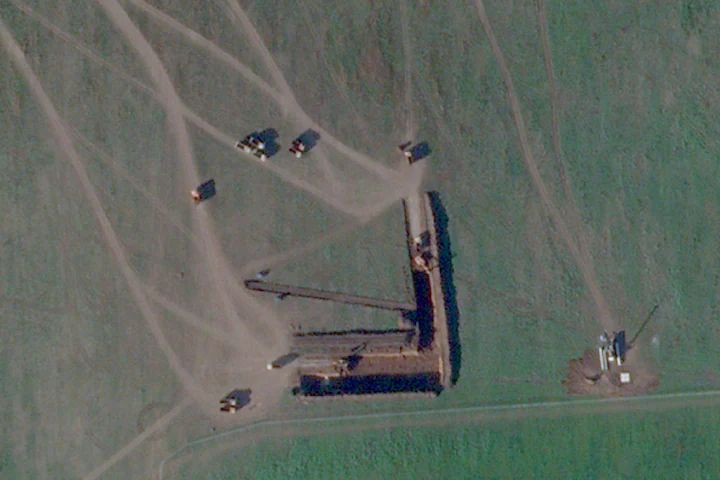
Rob Jordan, programme director at the London-based Royal United Services Institute think-tank, said the concrete pads and two possible take-off rails visible in the imagery appeared consistent with launch tracks for Russian Geran drones.
“This level of construction in this short a time is impressive,” Jordan said.
He added: “This shows the relative faith Russia is putting in its deep strike capability – possibly to the detriment of its conventional land forces.”
Jordan’s assessment points to a potential strategic trade-off as Russia invests in the infrastructure and weapons needed to strike targets at long distances.
Developing more sophisticated drone capabilities could strengthen Russia’s ability to attack Ukrainian cities and infrastructure. However, the resources allocated to such programmes also form part of broader decisions about military priorities.
The facility’s construction does not, by itself, establish how much Russia has diverted from conventional ground forces or what effect the investment may have on battlefield operations.
Nevertheless, the speed of development and the potential capacity of the launch platforms underline the growing importance of unmanned systems in the conflict.
Russia’s expanding drone operations also mean Ukraine and its Western partners must continue adapting their defensive technologies to counter weapons that are becoming faster and more sophisticated.
Satellite Images Reveal Six Weeks of Construction
The transformation of the Millerovo site is documented by commercial satellite images taken between late August and mid-October.
On August 31, imagery showed what appeared to be an empty field containing a few vehicles, with no visible evidence of major construction activity.
Images taken the following morning indicated that work had started, beginning a construction period that produced a large military complex within approximately six weeks.
Further images taken on October 11 and October 14 showed launch rails being installed and additional construction taking place across the site.
The imagery provides visual evidence of the facility’s rapid development, although satellite photographs alone cannot establish every detail of its intended operational role.
Reuters’ analysis, combined with assessments from DroneSec and the Royal United Services Institute, indicates that the installation is consistent with infrastructure designed to launch Russian Geran-series drones.
Russia’s defence ministry had not immediately responded to Reuters’ request for comment on the facility or the country’s jet-powered drone programme.
The absence of an immediate response means the report’s assessment of the site’s intended function relies on satellite imagery and expert analysis rather than an official Russian confirmation.
Even so, the scale and speed of construction suggest that Russia is making a substantial effort to expand infrastructure supporting its drone warfare capabilities.
Read also: Elon Musk says US government controls Starlink restrictions in Ukraine as Zelenskyy feels betrayed by Trump
Russia’s New Drone Launch Base Near Ukraine Could Intensify Attacks
The near-completion of the installation comes at a critical stage of the war, as Ukraine prepares for the possibility of intensified Russian attacks during winter.
A new operational launch site could give Moscow additional options for deploying jet-powered drones while forcing Kyiv to maintain or strengthen its air defences across multiple potential threat directions.
The reported ability of the facility to accommodate eight launch platforms could also provide Russia with infrastructure for expanding its drone operations, although actual launch rates will depend on logistical support and military decisions.
For Ukraine, the central challenge is developing effective and affordable ways to intercept faster drones without exhausting the resources needed to counter other aerial threats.
For NATO, the development reinforces concerns about whether existing counter-drone capabilities are sufficient to address the rapid expansion of unmanned warfare.
The assessments by Monnik and Jordan indicate that the facility could become operational within weeks, potentially adding another significant component to Russia’s attack infrastructure.
While the final operational capacity remains uncertain, the satellite imagery shows that Russia has transformed an apparently empty field into a major drone launch complex in a remarkably short period.
The development illustrates how rapidly military infrastructure can be established to support evolving weapons systems, increasing pressure on Ukraine as it continues defending itself against Russia’s invasion.
About The Author