

Russia-Ukraine attacks Kyiv and Rostov overnight have left multiple dead and injured, while President Volodymyr Zelenskyy emphasized cautious optimism amid ongoing Geneva peace talks between Ukraine and US officials.
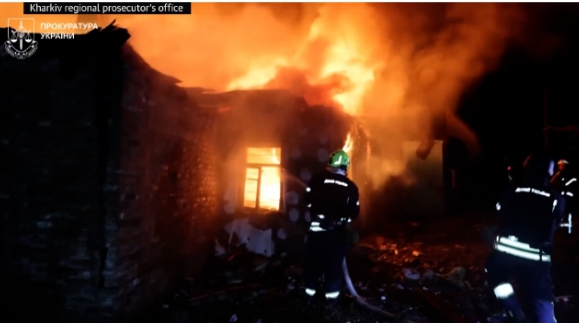
In Kyiv, six civilians were killed and at least six more wounded after overnight drone and missile strikes targeted residential buildings and essential infrastructure, according to Ukraine’s State Emergency Service.
Tymur Tkachenko, head of Kyiv’s military administration, confirmed four deaths in Svyatoshynsky district while two more died in the Dniprovsky quarter, highlighting the human toll of continued Russia-Ukraine attacks.
Vitali Klitschko, Kyiv’s mayor, described the aftermath as “chaotic and terrifying,” saying, “Families have lost their homes, and the city remains under constant threat from further bombardments.”
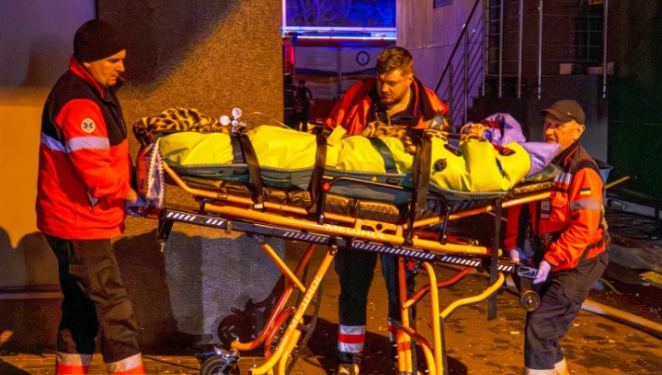
Firefighters and emergency crews worked through the night to evacuate residents, extinguish fires, and provide urgent medical care, demonstrating the enormous pressure on Ukraine’s civil defense services.
Russia reported three civilians killed and ten injured in the Rostov region following a Ukrainian drone attack, marking a rare escalation of cross-border strikes beyond Ukraine’s territory.
Regional governor Yuri Slyusar confirmed that one person died immediately in Taganrog, while two others succumbed to injuries later in hospital, emphasizing the tragic consequences of escalation on both sides.
Russian Defence Ministry said it intercepted 249 Ukrainian drones overnight, claiming partial mitigation of damage. However, the number of casualties and destruction shows the continuing intensity of the conflict.
President Zelenskyy stressed that any settlement must protect Ukraine’s sovereignty, telling reporters, “We will discuss sensitive points of the US peace plan directly with President Trump, ensuring Ukraine’s interests are fully defended.”
European allies have cautiously welcomed Kyiv’s refinement of Washington’s controversial 28-point framework, initially criticized for favoring Moscow, signaling tentative progress in Geneva peace talks between Ukraine and US officials.
The modified proposal now reportedly contains fewer than 28 points and incorporates what Zelenskyy described as “correct elements” that may allow negotiations to proceed without compromising Ukraine’s security or territorial integrity.
Analysts noted that overnight drone and missile strikes continued despite diplomatic discussions, reflecting the disconnect between battlefield realities and international negotiations.
Emergency services in Kyiv rescued 18 people, including three children, from collapsed or burning buildings, highlighting the human cost as Russia-Ukraine attacks Kyiv and Rostov persist without respite.
In Moscow, Kremlin aide Yuri Ushakov dismissed Europe’s proposed peace plan for Ukraine, calling it “entirely unconstructive and unsuitable for us,” underscoring Russia’s reluctance to engage meaningfully in Geneva talks.
Former US officials monitoring the negotiations expressed cautious optimism, pointing out that Zelenskyy’s insistence on security guarantees represents a strong negotiating position that may influence broader European support.
Trump expressed cautious optimism about progress, stating, “Something good just may be happening,” while Zelenskyy prepared to outline sensitive issues requiring direct dialogue on security guarantees and future territorial arrangements.
Ukraine’s European partners emphasized that modified peace proposals must uphold Ukraine’s sovereignty, noting, “Any framework must fully respect Ukraine’s territorial integrity and prevent further Russian aggression.”
The night attacks included strikes on energy infrastructure, prompting temporary power outages in affected Kyiv districts and further complicating humanitarian and emergency response efforts.
Zelenskyy reaffirmed that Ukraine would not trade land for peace without firm security guarantees, signaling a firm stance despite international pressure to accept compromises in Geneva peace talks.
Overnight drone and missile strikes in Rostov, Moscow, and Krasnodar regions showed that Ukraine’s counterattacks are increasingly reaching deep into Russian territory, with regional authorities reporting both casualties and infrastructure damage.
Russian and Ukrainian officials continue to exchange conflicting casualty figures, underscoring the fog of war and the propaganda challenges each side faces while trying to maintain domestic and international credibility.
Observers note that Russia-Ukraine attacks Kyiv and Rostov serve both strategic and psychological objectives, aiming to pressure Kyiv while testing the resilience of Ukraine’s civil defense capabilities during Geneva peace talks between Ukraine and US officials.
The civilian population in Kyiv reported intense psychological strain, as repeated night strikes disrupt sleep, damage homes, and increase uncertainty about essential services like electricity, water, and medical care.
Zelenskyy has emphasized that diplomacy remains the preferred path, stating, “We remain committed to dialogue where sensitive issues can be resolved, ensuring peace is achieved without weakening Ukraine’s defenses or sovereignty.”
International organizations and human rights groups continue to call for an immediate ceasefire, urging both sides to prioritize civilian safety while allowing humanitarian aid to reach affected areas in Kyiv and Rostov.
Ukraine’s military has maintained alert levels nationwide, warning civilians to stay in shelters while emergency services manage fire suppression, medical care, and search-and-rescue operations, reflecting the ongoing toll of overnight drone and missile strikes.
Analysts suggest that Geneva peace talks between Ukraine and US officials are pivotal, as any agreement could set the stage for broader international engagement, potentially involving NATO, the EU, and neighboring states.
Despite ongoing diplomatic efforts, Russia-Ukraine attacks Kyiv and Rostov illustrate the persistent challenge of balancing military operations with high-stakes negotiations in a volatile conflict zone.
Regional governors in Russia described the attacks on Rostov as unprecedented, noting that such strikes on civilian areas raise questions about escalation and the broader implications for cross-border security.
Emergency responders in Kyiv detailed the scale of destruction: collapsed walls, shattered windows, and blocked streets, as city officials coordinated repairs and attempted to restore essential services amid continued threats.
Military analysts argue that both sides are demonstrating strategic signaling, using high-profile drone attacks to showcase capabilities while simultaneously negotiating in Geneva, reflecting a complex interplay of diplomacy and military tactics.
Zelenskyy’s insistence on direct dialogue with Trump regarding sensitive points indicates Ukraine’s desire for a resolution that protects its national interests without conceding territory or weakening defensive positions.
International observers stress that the Geneva peace talks between Ukraine and US officials must succeed in providing a framework for durable peace, as continued Russia-Ukraine attacks Kyiv and Rostov put civilians and infrastructure at ongoing risk.
The continuation of night strikes and drone attacks emphasizes that military realities remain fluid, and any diplomatic agreement will require enforcement mechanisms to prevent renewed escalation.
Zelenskyy and his team continue consultations, aiming to secure a plan that satisfies domestic priorities while advancing Geneva peace talks, keeping alive the prospect of a negotiated resolution while addressing casualties and destruction in Ukraine.
As both sides recalibrate, Russia-Ukraine attacks Kyiv and Rostov highlight the persistent challenges of ending a war where military operations, civilian safety, and international diplomacy intersect in high-stakes, rapidly evolving conditions.


