

Elon Musk Starlink restrictions in Ukraine have triggered fresh tensions after the billionaire suggested that the US government controls decisions affecting military-grade satellite communications, as President Volodymyr Zelenskyy says he feels “betrayed” by Donald Trump.
Musk’s comments have intensified questions about Washington’s influence over technology vital to Ukraine’s defence against Russia, following reports that restrictions on satellite systems could limit Ukrainian forces’ ability to operate key defensive weapons.
The controversy comes amid deteriorating relations between Kyiv and Washington over military support, intelligence sharing and Trump’s reported diesel deal with Russia, which has drawn criticism from European leaders.
In a series of posts on X, Musk distinguished between Starshield, a military-grade satellite system controlled by the US government, and Starlink, the commercial satellite internet service operated by his company, SpaceX.
“Starshield systems are owned and controlled by the US government. Any limits on speed or usage are decided by the US military and ultimately POTUS,” Musk wrote.
He added that Starlink was different because it operated as a commercial service under SpaceX’s control.
“Starlink is a commercial service owned and controlled by SpaceX. Usage of Starlink is limited to civilian or defensive activities and cannot be used for offensive military action, as doing so would be inappropriate for a commercial company.”
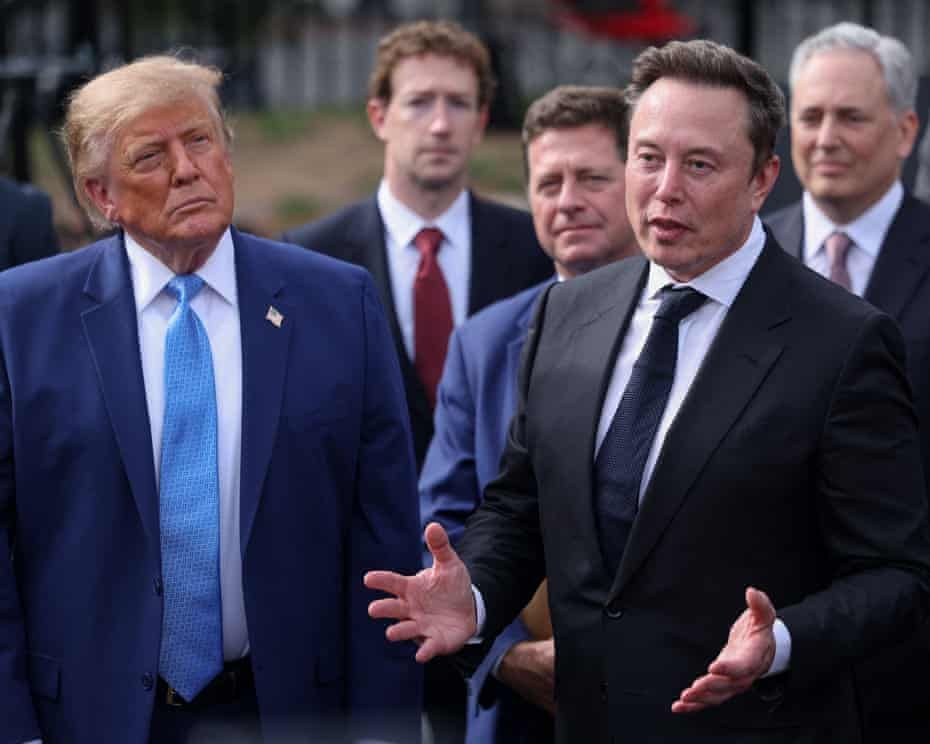
Musk Points to US Government Control Over Starshield
Musk’s statement has drawn attention because of the strategic importance of satellite communications to Ukraine’s military operations. The technology helps frontline forces maintain communications and coordinate activities despite damage to conventional infrastructure.
His remarks suggest that decisions concerning restrictions on Starshield are ultimately made by the US military and the president, rather than independently by SpaceX.
However, Musk’s statement does not, by itself, establish that Trump personally ordered the restrictions currently affecting Ukrainian forces or that the administration directed every limitation reported by Kyiv.
The distinction between Starshield and Starlink is important. Although both systems are associated with SpaceX, Musk described Starshield as government-owned and controlled, while Starlink remains a commercial service operated by his company.
Ukraine has reported difficulties involving satellite systems and restrictions that it says affect its ability to use important defensive weapons. The developments have raised concerns about the country’s dependence on American technology during its war with Russia.
For Ukrainian forces, access to reliable satellite communications can influence battlefield coordination, particularly when conventional communications networks are disrupted by attacks.
The uncertainty surrounding the restrictions has therefore intensified concerns about the extent to which Ukraine’s military capabilities depend on decisions made in Washington.
Musk Tells Zelenskyy It Is ‘Time to Go’
Musk’s intervention extended beyond satellite technology, with the billionaire also criticising Zelenskyy following the Ukrainian president’s remarks about his relationship with Trump.
In subsequent posts on X, Musk appeared to call for Zelenskyy to leave office, declaring that it was “time to go”.
The remark added another dimension to the dispute, placing Musk directly at odds with the Ukrainian leadership at a time when Kyiv is seeking continued Western support against Russia.
Zelenskyy has warned that changes in Washington’s approach could undermine Ukraine’s defence, particularly if American intelligence and technological assistance become less reliable.
His concerns reflect Ukraine’s reliance on the United States for military equipment, intelligence and other forms of support that European allies cannot immediately replace at the same scale.
Musk’s criticism also comes amid wider disagreements over how the war should end, the conditions for negotiations and the future relationship between Ukraine and its Western partners.
Nevertheless, his call for Zelenskyy to leave office represents a political opinion rather than an established conclusion about Ukraine’s leadership or the country’s constitutional arrangements.
The exchange highlights how disagreements involving influential technology executives and political leaders can become intertwined with decisions affecting an ongoing war.
Zelenskyy Says Trump’s Decisions Have Left Him Feeling Betrayed
Speaking in a television interview with Piers Morgan, Zelenskyy said he felt “betrayed” by Trump’s decisions and expressed concern about potentially losing a powerful partner.
The Ukrainian president’s remarks reflected growing anxiety in Kyiv over the reliability of American support as the conflict with Russia continues.
Zelenskyy described the United States as a critical partner in Ukraine’s defence, making any possibility of reduced assistance particularly worrying for his government and military commanders.
His concerns extend beyond Starlink and Starshield to the wider question of whether Washington will continue providing intelligence and other support needed to counter Russian attacks.
The Ukrainian leader’s comments also followed controversy surrounding Trump’s reported diesel deal with Russia, which has prompted criticism from European governments concerned about financial support for Moscow.
For Kyiv, the combination of satellite restrictions, uncertainty over intelligence sharing and tensions surrounding the diesel agreement has created a broader diplomatic challenge.
Ukraine must continue defending its territory while attempting to preserve relationships with allies whose assistance remains strategically important.
Zelenskyy’s description of feeling “betrayed” signals the seriousness of the disagreement, although it does not mean that all American assistance has necessarily been withdrawn.
The immediate concern is whether the reported restrictions and political tensions will translate into a sustained reduction in the capabilities available to Ukrainian forces.
Trump Denies Cutting Intelligence Sharing With Ukraine
Trump has denied that his administration cut intelligence sharing with Ukraine, pushing back against concerns that Washington is withdrawing support from Kyiv.
However, Zelenskyy told US broadcaster NPR, in an interview aired on Wednesday, that military advisers had received threats from the United States that intelligence sharing could be limited in the future.
The distinction between an actual suspension and a warning about possible future restrictions is significant. The available statements do not establish that all intelligence sharing between the two countries has been terminated.
Nevertheless, the possibility of reduced access to American intelligence has alarmed Ukrainian officials because such information can help identify incoming threats and support defensive planning.
The reported difficulties are particularly concerning because Ukraine also relies on American space-based systems for early warnings of Russian ballistic missile attacks.
These capabilities complement satellite communications by helping Ukrainian authorities assess threats and respond to attacks against military positions and civilian infrastructure.
Any sustained disruption could therefore have consequences extending beyond battlefield communications, potentially affecting warning systems and the ability to protect civilians.
The disagreement has placed additional pressure on Washington and Kyiv to clarify the future terms of their security relationship.
For European governments, the uncertainty has reinforced the need to examine whether they can provide more of the military, intelligence and technological support that Ukraine currently receives from the United States.
Europe Confronts Its Dependence on American Satellite Technology
Ukraine’s difficulties have exposed a major weakness in Europe’s ability to provide an immediate technological alternative to American satellite systems.
According to reporting cited by The Guardian, Kyiv has struggled with Starlink-related problems while European countries lack a ready-made replacement that Ukrainian soldiers can readily attach to their drones.
European governments and companies are working on longer-term alternatives, but developing and deploying systems capable of meeting Ukraine’s operational requirements will take time.
The challenge extends beyond satellite internet. Ukraine and its European allies also depend heavily on American space-based infrared sensing, which provides early warnings of ballistic missile launches.
The United States operates the Space-Based Infrared System, a satellite constellation that supports missile-warning capabilities.
This dependence means that replacing American assistance would require more than purchasing additional communications equipment. Europe would need to develop or secure alternative systems capable of providing reliable coverage, rapid information and battlefield integration.
The developments have also attracted investors’ attention. Shares in European satellite operator Eutelsat rose on Wednesday as investors considered whether deteriorating relations between Washington and Kyiv could create opportunities for European providers.
However, higher share prices do not mean that European companies can immediately replace the capabilities supplied by American systems.

The situation has strengthened arguments for greater European investment in strategic technology, defence infrastructure and independent intelligence capabilities.
For Ukraine, the immediate challenge remains maintaining access to the systems it needs while its allies consider longer-term solutions.
European Leaders Rally Behind Ukraine at Brussels Summit
European leaders arriving for a summit in Brussels have expressed support for Ukraine while discussing how the continent should respond to growing uncertainty over its relationship with Washington.
Irish Taoiseach Micheál Martin urged European governments to “re-engage” with the United States, arguing that diplomatic outreach could help overcome disagreements.
“We have had moments in the past when there were challenges and difficulties in respect of this, and it was retrieved by good outreach and engagement from Europe with the US, and I have no doubt that will continue,” Martin said.
However, he also called for practical measures to strengthen Ukraine’s European future, particularly progress towards membership of the European Union.
“I would say to my colleagues across Europe that now is the time to be ambitious over the next number of months to open all clusters in respect of Ukraine and Moldova,” he said.
Martin added that accelerating the process would send a strong signal to Ukrainians facing continued Russian attacks.
“The most fundamental thing we can do in Europe now is to recommit to opening all clusters in respect of Ukraine’s application,” he said.
He also described recent Russian attacks as “appalling and horrific”, arguing that they demonstrated that Russian President Vladimir Putin was not interested in peace.
Martin’s position reflects a broader European effort to maintain dialogue with Washington while strengthening the continent’s independent capacity to support Kyiv.
Sweden and the Netherlands Condemn Russia’s War
Swedish Prime Minister Ulf Kristersson criticised Trump’s reported diesel agreement with Russia, expressing concern that it could provide additional financial support to Moscow.
“We very much regret this agreement on diesel,” Kristersson said.
He acknowledged that the agreement might not represent a major contribution to Russia’s finances but argued that its direction was troubling.
“Every step now to help the Russians to increase their financing of the war is a bad sign,” he said, adding that Sweden stood by Zelenskyy’s position.
Dutch Prime Minister Rob Jetten also voiced strong support for Ukraine, blaming Putin for the continuation of the conflict.
“There is only one reason why this senseless war of aggression is continuing, and that’s because Putin chooses to do so,” Jetten said.
He argued that the Russian president could help end the war by beginning negotiations aimed at achieving a just and lasting peace.
Until that happens, Jetten said, Ukrainians would have to continue defending themselves and European values.
“We stand shoulder to shoulder with the Ukrainians,” he declared.
The Dutch leader also called on European countries to increase their assistance, saying more needed to be done financially, militarily and through non-military support.
“Let’s step up our game and make sure that they can win this senseless war,” he said.
These statements underline Europe’s determination to maintain support for Ukraine even as disagreements with Washington threaten to complicate the alliance.
Read also: Andy Burnham Manchester City hospitality dinners emerge as deleted records fuel transparency controversy
Ukraine’s Future Support Remains Uncertain
The dispute involving Musk, Trump and Zelenskyy has highlighted the strategic risks created by Ukraine’s dependence on foreign technology and intelligence during wartime.
Musk’s explanation places ultimate authority over Starshield restrictions with the US military and president, but it does not establish that Trump personally ordered the specific restrictions reported by Ukraine.
Meanwhile, Zelenskyy’s comments reveal concern that deteriorating relations with Washington could weaken a partnership central to his country’s defence.
European leaders are seeking to preserve cooperation with the United States while exploring ways to increase their own military and technological capabilities.
The coming discussions in Brussels are expected to include Ukraine’s future, with the country’s leadership seeking continued international support against Russian attacks.
For Kyiv, the immediate priorities are maintaining essential communications, securing reliable intelligence and ensuring that political disagreements do not undermine its defensive capabilities.
For Europe, the crisis has renewed questions about whether the continent can become less dependent on American systems while sustaining its commitments to Ukraine.
As the diplomatic dispute continues, the central issue is whether Washington, Kyiv and their European partners can prevent disagreements over technology, trade and political leadership from weakening the collective response to Russia’s invasion.
About The Author


