South African President Cyril Ramaphosa has condemned US President Donald Trump’s decision to boycott the upcoming G20 summit in Johannesburg, saying the move “is their loss.”
Speaking to reporters, Ramaphosa said, “The United States needs to think again whether boycott politics actually works because in my experience it doesn’t work,” highlighting longstanding diplomatic tensions.
Trump announced that no US officials will attend the G20 summit scheduled for November 22-23, citing South Africa’s alleged mistreatment of white farmers, which South Africa denies.
The boycott comes amid Trump’s claims of a “white genocide” in South Africa, a statement repeatedly rejected by Ramaphosa’s government and South African Afrikaner officials as false and misleading.
“This decision by the United States is unfortunate,” Ramaphosa said outside Parliament. “The G20 will go on. All other heads of state will be here. Their absence is their loss.”
The US president has also criticized South Africa for pursuing a case against Israel at the International Court of Justice regarding alleged genocide in Gaza, part of ongoing tensions.
Since returning to the White House in January, Trump has consistently accused South Africa of racial persecution, framing affirmative action policies as evidence of systemic discrimination against white citizens.
Ramaphosa stressed South Africa’s commitment to international law, saying the country’s genocide case against Israel will continue despite the Gaza ceasefire, emphasizing justice over political pressure from the US.
South Africa submitted 500 pages of evidence to the ICJ in October 2024, with Israel’s counterarguments expected by January 12. Oral hearings are planned for 2027, with judgement likely in 2027 or 2028.
“The United States by not being at the G20, one must never think that we are not going to go on with the G20,” Ramaphosa added, asserting South Africa’s independence.
He accused the US of relinquishing a critical role in global decision-making. “They are giving up the very important role they should be playing as the biggest economy in the world.”
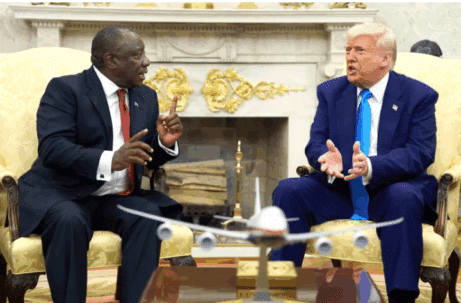
Trump previously confronted Ramaphosa at the White House in May, presenting videos and claims that Afrikaner farmers were under attack, urging the South African leader to address the alleged violence.
Ramaphosa used that meeting to lobby for US attendance at the G20, emphasizing that the summit’s presence in Africa would strengthen ties and boost global economic cooperation.
The G20 was formed in 1999 to unite developed and developing nations to address global economic and development issues, with permanent members including the US, China, Russia, and the European Union.
The US is scheduled to take over the G20 rotating presidency from South Africa at the end of the year, making Trump’s boycott a symbolic snub with broader economic implications.
Trump’s claims regarding anti-white violence echo narratives promoted by conservative media in the US since 2018, reflecting misinformation and a lack of understanding about South Africa’s policies and history.
South African officials have repeatedly refuted the allegations, asserting that affirmative action policies aim to address historical oppression of the Black majority during apartheid and do not constitute racial persecution.
Trump has also criticized the South African government for its role in international diplomacy, including its legal challenge against Israel, framing these moves as anti-US or anti-Western initiatives.
Ramaphosa underscored that South Africa will continue pursuing justice at the ICJ, noting that temporary ceasefires in Gaza will not derail the country’s broader commitment to human rights advocacy.
He stressed that global gatherings like the G20 provide a platform for all nations to make fundamental decisions, irrespective of the participation of the US or any single powerful country.
“This is not a loss for South Africa,” Ramaphosa said. “It is a loss for the United States if they do not engage, because dialogue and cooperation are critical for global progress.”
Relations between the US and South Africa have deteriorated since apartheid, reaching new lows this year with the expulsion of South Africa’s ambassador from Washington in March following controversial comments about Trump.
Ramaphosa’s office reiterated that Trump’s claims are based on misinformation and a lack of factual grounding, stressing the country’s commitment to transparency, international law, and equitable policies for all citizens.
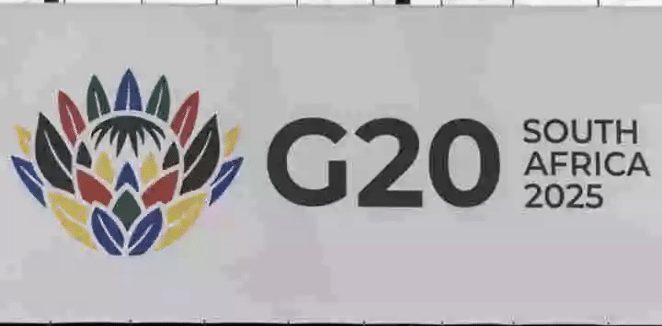
The G20 summit in Johannesburg marks the first time the gathering will be held in Africa, highlighting the continent’s increasing influence in global economic and political affairs, despite US absence.
Trump’s boycott has sparked criticism from both international and domestic commentators, who argue that engagement is more effective than isolation in addressing alleged human rights or diplomatic issues.
South African leaders maintain that the G20 will succeed regardless of the US absence, with decisions on global finance, development, and climate change expected to proceed as scheduled.
Ramaphosa emphasized that South Africa’s stance demonstrates leadership and resilience, signaling that the nation will continue to participate actively in global governance and assert its priorities on the international stage.
“This boycott should not be interpreted as a setback,” Ramaphosa said. “South Africa remains committed to the principles of dialogue, cooperation, and international law.”
Observers note that Trump’s actions reflect a broader pattern of unilateral decision-making and skepticism toward multilateral forums, contrasting sharply with South Africa’s approach to collective diplomacy.
The boycott also underscores tensions within US foreign policy circles, where some officials have expressed concern about the impact on long-term alliances and credibility in Africa and beyond.
Ramaphosa concluded by asserting that South Africa’s vision for the G20 is inclusive and forward-looking, demonstrating that global cooperation and leadership are not dependent on a single nation’s presence.
About The Author