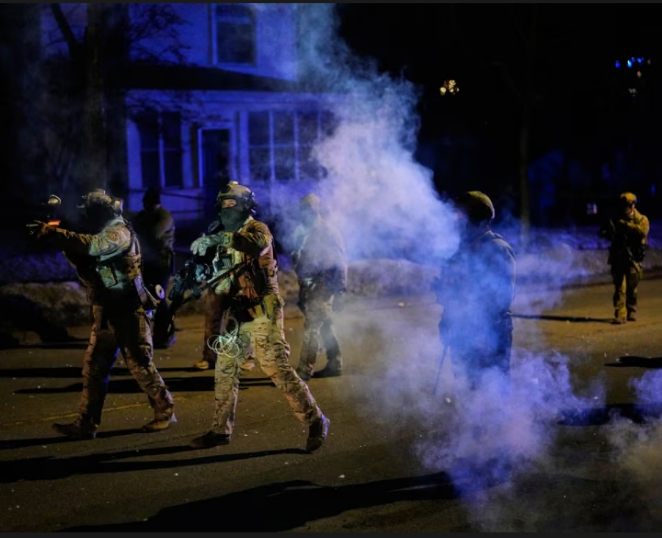
France has confirmed the deployment of military personnel to Greenland, following urgent discussions on Arctic security triggered by statements from US President Donald Trump.
The move comes amid mounting global attention to Greenland’s strategic importance and growing concern over potential Russian and Chinese interest in the region.
French President Emmanuel Macron convened an emergency defence cabinet early Thursday to address the situation, which included both Greenland’s security and ongoing tensions in Iran.
Macron confirmed that the first group of French soldiers had already departed for Greenland to participate in joint military exercises organised alongside Denmark and the semi-autonomous territory.
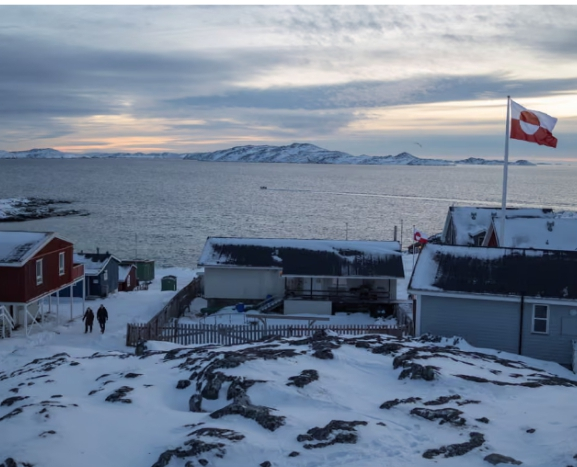
“At Denmark’s request, France will join the joint exercises in Greenland,” Macron stated via social media, highlighting that additional troops would follow in the coming days.
These deployments are part of a broader effort by European nations to demonstrate readiness and military cooperation in the Arctic.
Macron is also expected to address the French armed forces later this week in his traditional new year’s speech, likely providing further details on the exercises.
Greenland’s deputy prime minister, Múte B. Egede, indicated that more soldiers, military aircraft, and ships are anticipated as part of the operation.
The initiative, informally dubbed “Operation Convince Trump” or “Operation Arctic Endurance,” seeks to assure the US that European allies are committed to defending Arctic interests and capable of responding to potential threats.
Despite these efforts, President Trump’s initial public reaction suggested that he remains cautious about Greenland’s security situation.
Speaking from the Oval Office shortly after high-level meetings with Danish and Greenlandic officials, Trump reiterated that Greenland is “very important” for US national security.
He added that while Denmark has limited capacity to respond to potential actions by Russia or China, the United States maintains the ability to act decisively if necessary.
The strategic focus on Greenland reflects broader geopolitical shifts in the Arctic, where melting ice has opened new shipping routes, resource exploration, and military considerations.
NATO members are increasingly attentive to the potential for Russian military presence and Chinese commercial expansion in the region.
Analysts note that the European deployments also serve to strengthen transatlantic relations and demonstrate NATO’s commitment to collective defense.
France’s participation marks a significant step, joining prior commitments from Denmark and other European allies.
Military exercises include a mix of ground forces, naval units, and aerial operations designed to improve coordination and readiness in Arctic conditions.
European officials emphasize that these exercises are defensive in nature, intended to deter any potential aggression and reinforce regional stability.
The situation in Greenland is further complicated by the territory’s semi-autonomous status. While Denmark is responsible for foreign policy and defense, local authorities, including Egede’s administration, play a vital role in logistical coordination and hosting foreign forces.
Greenland’s population has expressed mixed feelings about increased military presence, balancing concerns over sovereignty with the perceived benefits of enhanced security and international attention.
Beyond Greenland, the emergency defence discussions in France also considered the ongoing situation in Iran.
Macron’s cabinet meeting highlighted the interconnected nature of global security challenges, where conflicts in one region can influence military posture and strategic priorities elsewhere.
French officials stressed that NATO exercises in Greenland are part of a broader framework aimed at strengthening European defense capabilities while maintaining alignment with US strategic interests.
The US has historically maintained strategic bases in Greenland, recognizing its location as crucial for monitoring the Arctic and North Atlantic.
Trump’s remarks underscore the enduring importance Washington places on Greenland, particularly in the context of growing competition with Russia and China.
Analysts observe that NATO’s enhanced presence may act as both reassurance and a subtle signal to these powers regarding the West’s commitment to Arctic security.
Operation Convince Trump has already begun with initial deployments, and European officials anticipate further troop rotations, joint exercises, and military flights over the coming days.
Coordination with Denmark remains central, ensuring that exercises align with both NATO standards and Greenlandic logistical capabilities.
The operation’s speed and scope reflect the urgency perceived by European governments to address strategic vulnerabilities before they can be exploited by global rivals.
Observers highlight that this episode illustrates the increasingly complex balance between national security, alliance obligations, and regional autonomy.
Greenland’s unique position requires delicate diplomacy, ensuring that local authorities are consulted and that foreign military activities do not provoke local resistance.
Experts note that continued engagement and transparent communication are essential to maintaining both operational effectiveness and public support.
The developments in Greenland also serve as a reminder of the Arctic’s growing geopolitical significance. Melting ice, new shipping lanes, and access to natural resources are transforming the region into a potential hotspot for international competition.
NATO members, particularly European powers, are now more active in Arctic planning and deployments, signaling that defense commitments extend beyond traditional European borders to emerging strategic frontiers.
In parallel with military planning, diplomatic efforts are ongoing. European officials are engaging with US counterparts to clarify objectives, coordinate joint exercises, and ensure that NATO’s Arctic strategy is both cohesive and responsive to changing circumstances.
These efforts reflect a recognition that Greenland’s security is not only a bilateral concern between Denmark and the US but also a matter of alliance-wide strategic interest.
The situation remains fluid, with additional troop movements and military exercises expected to be announced in the coming days.
European allies, including France, are seeking to strike a balance between demonstrating resolve, reassuring the United States, and respecting Greenlandic autonomy.

Analysts predict that the next several weeks will be critical in determining whether these deployments successfully reinforce Arctic security or provoke further diplomatic tensions.
In conclusion, the French deployment to Greenland highlights the intersection of global strategy, Arctic geopolitics, and transatlantic alliance management. It underscores the importance of proactive defense planning, international coordination, and strategic messaging in responding to emerging security challenges.
For the US and its European partners, Greenland is not just a remote island but a central element in ensuring Arctic stability and deterrence against potential adversaries.
Read also:US Gaza plan phase two launched as Washington pushes post-war transition
About The Author