The Ukraine-Russia war latest developments reveal early cracks in proposed peace efforts as Donald Trump confirmed offering Kyiv limited security guarantees during high-level talks with President Volodymyr Zelensky.
Washington projected cautious optimism after intensive discussions in Florida, but unresolved disputes over territory, duration of guarantees, and enforcement mechanisms continue complicating efforts to end the war.
Zelensky disclosed that Ukraine requested fifty years of firm security assurances, arguing anything less would fail to deter future Russian aggression and expose Kyiv to renewed military threats.
Instead, Trump’s proposal reportedly outlined security guarantees lasting fifteen years, a sharp contrast Zelensky privately described as insufficient for Ukraine’s long-term national survival.
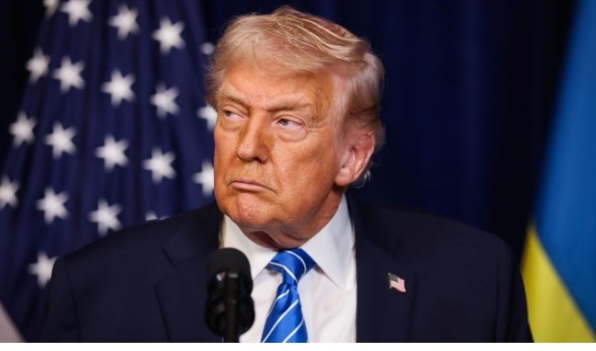
“Ukraine cannot afford temporary promises,” Zelensky said, stressing that past agreements failed to prevent Moscow’s invasion and warning against repeating strategic mistakes.
Trump, however, insisted progress had been made, telling reporters security guarantees were “95 per cent finalised,” while acknowledging several “thorny issues” remained unresolved.
Among those unresolved matters, control of eastern Ukraine’s Donbas region continues to dominate negotiations, with Russia refusing to relinquish territory seized during the prolonged conflict.
Zelensky countered claims of limited progress, stating security guarantees between Ukraine and the United States were “100 per cent agreed,” though European participation was still under negotiation.
“The framework is clear, but final details must be secured,” Zelensky told journalists, emphasizing Ukraine’s insistence on enforceable, multinational commitments rather than political assurances.
European leaders have been closely monitoring the talks, with several governments pushing for a coalition-backed peacekeeping presence supported logistically by the United States.
Trump has repeatedly dismissed deploying Nato peacekeepers directly, citing Russia’s firm opposition and the risk of escalating tensions with Moscow.
A Kremlin spokesperson confirmed that Vladimir Putin rejects any temporary ceasefire, arguing a full agreement must reflect “realities on the ground,” including Russia’s territorial gains.
“Ukraine continues to lose territory,” the spokesperson said, signaling Moscow’s unwillingness to compromise on regions it currently occupies.
Despite these hardened positions, Trump maintained that Putin was serious about peace, claiming ongoing dialogue had reduced the risk of further escalation.
“President Putin wants stability,” Trump said. “But peace must be realistic, durable, and accepted by all parties involved.”
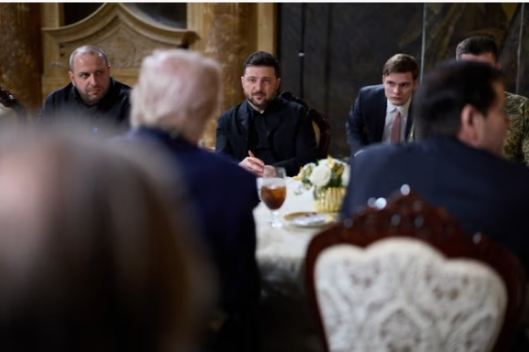
The Florida meeting between Trump and Zelensky reportedly lasted over two hours, covering security arrangements, territorial disputes, and post-war economic recovery plans.
Zelensky revealed discussions included a proposed prosperity package, potentially involving a free trade agreement between Ukraine and the United States.
Such economic incentives, Ukrainian officials argue, could stabilize the country while attracting foreign investment needed to rebuild war-damaged infrastructure.
However, critics warn economic promises cannot substitute binding military guarantees, especially given Russia’s repeated violations of previous agreements.
Ukraine’s leadership also proposed a 20-point peace plan requiring signatures from Ukraine, Russia, the United States, and European partners.
Zelensky insisted the agreement should ultimately be approved through a national referendum, ensuring democratic legitimacy for any territorial or political concessions.
“This war has cost too much for decisions to be made behind closed doors,” Zelensky said, emphasizing public accountability.
Meanwhile, Russian military activity continued unabated, underscoring the fragility of diplomatic progress made during negotiations.
Ukraine’s air force confirmed Russia launched 25 drones during the Florida talks, targeting northern and eastern regions including Chernihiv and Donetsk.
Most drones were intercepted, but officials warned the attacks demonstrated Moscow’s readiness to apply pressure even amid peace discussions.
“It shows Russia negotiates with one hand while attacking with the other,” a Ukrainian military spokesperson said.
The renewed strikes followed a massive aerial bombardment days earlier, which damaged residential buildings in Kyiv and caused civilian casualties.
International observers noted the timing of attacks appeared designed to strengthen Russia’s negotiating position by maintaining battlefield momentum.
Trump acknowledged the contradiction but argued continued dialogue remained the only viable path to ending the conflict.
“Wars don’t end without talking,” Trump said. “Even when fighting continues, diplomacy must keep moving forward.”
Another unresolved issue concerns the nature of proposed “Nato-style” guarantees for Ukraine, which remain vaguely defined.
US officials suggested safeguards modeled on Nato’s Article 5, allowing collective defense responses if Ukraine were attacked again.
Read also:China launches drills around Taiwan as Beijing issues stern warning to external forces
However, details regarding the scale, speed, and military obligations of such guarantees remain unclear.
European diplomats privately expressed concern that ambiguous commitments could leave Ukraine exposed if Russia violated future agreements.
Russia has categorically rejected any Nato-linked security arrangements, calling them unacceptable and destabilizing.
Moscow insists Ukraine must abandon Nato ambitions, reduce its military capacity, and accept territorial losses as conditions for peace.
Kyiv has repeatedly rejected these demands, stating sovereignty and territorial integrity are non-negotiable.
Trump confirmed he plans another call with Putin, hoping to bridge remaining gaps before talks collapse.
“Time is critical,” Trump warned, adding unresolved issues could derail progress within weeks.
Despite disagreements, Trump praised the tone of talks with Zelensky, describing them as “terrific” and “constructive.”
Zelensky responded cautiously, acknowledging dialogue progress while warning against premature declarations of success.
“Peace requires precision, not optimism alone,” Zelensky said.
European leaders echoed the sentiment, urging transparency and coordination to avoid fractures among Ukraine’s allies.
The Kremlin indicated another Trump-Putin call was expected soon, though no direct talks between Putin and Zelensky are planned.
As negotiations continue, analysts warn that narrowing timelines, battlefield realities, and political pressures could quickly unravel fragile progress.
For Ukraine, the central question remains whether peace will provide lasting security or merely pause a conflict likely to resume.