Millions of Americans are voting in the 2026 US midterm elections, with contests for Congress, governorships and state legislatures offering a nationwide assessment of President Donald Trump’s second-term agenda.
The outcome of the congressional races will determine whether Republicans retain control of both chambers or Democrats gain the power to challenge the president’s legislative priorities during the final two years of his current term.
Although Trump is not personally seeking election, his policies, popularity and handling of major national and international issues have become central to the campaign.
Polling stations began opening across the country on Tuesday, November 3, following months of campaigning and an unusually intense political contest.
More than 58 million Americans had already voted before election day, according to an analysis by the University of Florida, highlighting the scale of early participation.
The elections are taking place against a background of economic dissatisfaction, rising fuel costs, immigration controversies and concerns about the administration’s expanding executive authority.
Control of Congress hangs on closely contested races
The battle for Congress is the most consequential part of the election because the results will determine which party controls the legislative agenda in Washington.
All 435 voting seats in the House of Representatives are being contested, with Republicans defending a narrow majority.
Democrats need a net gain of four seats to take control of the chamber, giving them the opportunity to influence legislation, congressional investigations and oversight of the Trump administration.
The Senate contest is equally important, although only 35 of its 100 seats are involved this year.
Thirty-three seats are part of the regular election cycle, while special elections are taking place in Florida and Ohio to fill positions vacated before the end of their terms.
Republicans currently hold 53 Senate seats, compared with 47 held by Democrats and independent senators who caucus with them.
Democrats need to gain four seats to secure a majority.
The results will determine whether Trump’s party can continue advancing its legislative priorities with control of both chambers or face a Congress dominated, wholly or partly, by the opposition.
Governorships and state legislatures also at stake
Beyond Washington, voters are choosing governors in 36 states and three US territories, bringing the total number of governorships being contested to 39.
Thousands of state legislative positions are also on the ballot, alongside local government offices, judicial contests and public votes on specific policy questions.
These elections could influence decisions affecting education, taxation, reproductive rights and the administration of elections.
State-level results are particularly important because governors and lawmakers exercise considerable authority over policies that directly affect residents.
Consequently, the outcome will shape political decision-making at both federal and state levels.
Trump’s policies dominate election debate
The midterm elections have become a major test of public attitudes towards Trump’s second presidency.
The president has encouraged voters to treat the contest as a judgement on his administration, even though his name does not appear on the ballot.
Republicans are seeking to maintain their congressional advantage, while Democrats are attempting to turn dissatisfaction with the administration into electoral gains.
The president’s handling of the economy has emerged as one of the most important campaign issues.
During his 2024 campaign, Trump promised to address affordability concerns, but the cost of everyday necessities remains a major source of frustration among voters.
Food, petrol, housing, healthcare and childcare expenses have featured prominently in campaign discussions.
The administration’s tariff policies have also attracted criticism over their potential contribution to inflation and the cost of imported goods.
The conflict involving the United States, Israel and Iran has added another dimension to the economic debate.
Iran’s closure of the Strait of Hormuz has driven up fuel prices, increasing pressure on American motorists and businesses.
The military confrontation has also raised questions about Trump’s earlier promises to avoid prolonged foreign wars.
Immigration and federal enforcement remain contentious
Immigration is another major issue shaping the political contest.
Trump has repeatedly presented tighter border controls and increased enforcement as major achievements of his administration.
However, federal immigration operations in several Democrat-led cities have generated considerable opposition.
The administration’s enforcement campaign has been accompanied by violent confrontations, with two Americans reportedly killed during incidents earlier this year.
The government’s deportation programme has also attracted criticism from opponents who have raised concerns about its methods and humanitarian consequences.
These disagreements have become part of the wider debate over the president’s approach to executive power and federal authority.
Other controversial areas include reductions in federal agencies, cuts to Medicaid funding and efforts supporting restrictions on abortion rights in several states.
Key Senate contests attract national attention
Several closely watched Senate races could influence the balance of power in the upper chamber.
Read also: UK and European peacekeepers in Ukraine could return fire if attacked by Russia
In Michigan, Democrat Abdul El-Sayed is facing Republican Mike Rogers in a contest complicated by divisions within the Democratic Party.
Democratic congresswoman Haley Stevens, who lost the party’s Senate primary to El-Sayed, endorsed Rogers shortly before election day.
The decision triggered strong criticism from Democrats, including Senate minority leader Chuck Schumer, who described the endorsement as “a despicable betrayal”.
The disagreement followed tensions involving an outside campaign advertisement that blamed the high cost of living partly on American support for Israel.
El-Sayed addressed supporters in Royal Oak on Monday, saying: “Whatever they’re trying to distract you, it’s because they’re picking your pocket.”
In Georgia, Democratic senator Jon Ossoff is facing Republican challenger Mike Collins.
Maine is another important battleground, where Republican senator Susan Collins is defending her seat against Democrat Troy Jackson.
Ohio is also attracting attention as Democrat Sherrod Brown attempts to return to the Senate against Republican Jon Husted.
Texas and Alaska contests draw scrutiny
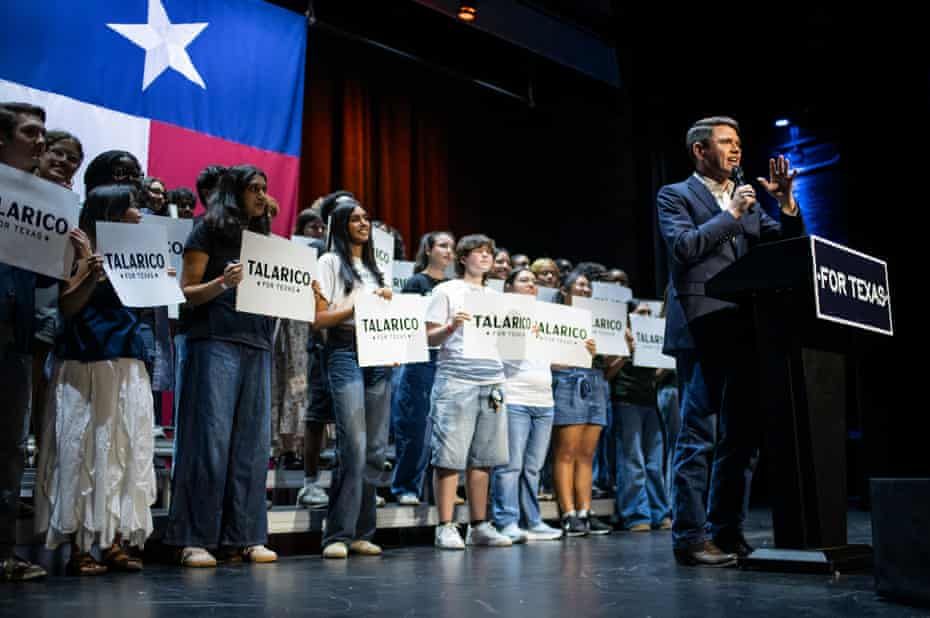
Texas has emerged as another closely watched state, with Democrat James Talarico challenging Republican Ken Paxton.
Republicans have reportedly spent approximately $210 million supporting Paxton, whose campaign has faced controversy.
The contest is significant because no Democrat has won a statewide election in Texas since 1994, while Trump carried the state by nearly 14 percentage points in 2024.
Alaska has also witnessed controversy surrounding Democrat Mary Peltola’s challenge to Republican senator Dan Sullivan.
Reports suggested that Peltola’s campaign was connected to an effort to recruit a candidate with a name similar to Sullivan’s, potentially creating confusion among voters.
Peltola has denied knowing about any such scheme.
The Department of Justice had separately filed a lawsuit seeking to prevent certification of Alaska’s Senate results if Sullivan lost, citing possible voter confusion.
A judge subsequently dismissed the lawsuit.
Other contests in Kansas, Iowa, North Carolina and New Hampshire could also influence the Senate’s composition.
If the chamber is divided equally between the parties, Vice-President JD Vance would hold the deciding vote.
Economic concerns and Iran war influence voters
The economy remains a central concern for Americans casting their ballots.
Rising prices have become a defining campaign issue, particularly as households continue to face pressure from grocery bills, fuel expenses and housing costs.
The war involving Iran has intensified these concerns following the closure of the Strait of Hormuz and its impact on global energy supplies.
The United States reportedly conducted strikes against Iran’s Qeshm Island on Monday, a day before the midterm elections.
Officials described the attacks as defensive operations targeting surface-to-air missile systems being used against American assets.
The strikes were first reported by the Wall Street Journal, with Reuters and the Associated Press also reporting the official explanation.
Trump told journalists that the United States had already won the conflict, saying: “We had a war with Iran. We won.”
He added: “I don’t know if you even call it a war because we haven’t been doing any fighting for months.”
However, reports indicated that American forces had continued conducting smaller attacks against Iran in recent weeks without publicly announcing them.
Vice-President JD Vance also spoke about diplomatic contacts with Tehran, saying there had been “a number of good conversations with the Iranians”.
He expressed optimism about the possibility of a “negotiated settlement”.
Nevertheless, Iran has continued enforcing its closure of the Strait of Hormuz, while Trump has suggested that military action could resume after the elections.
The developments have made foreign policy an important consideration for voters already concerned about rising living costs.
Iowa campaign exposes divisions between parties
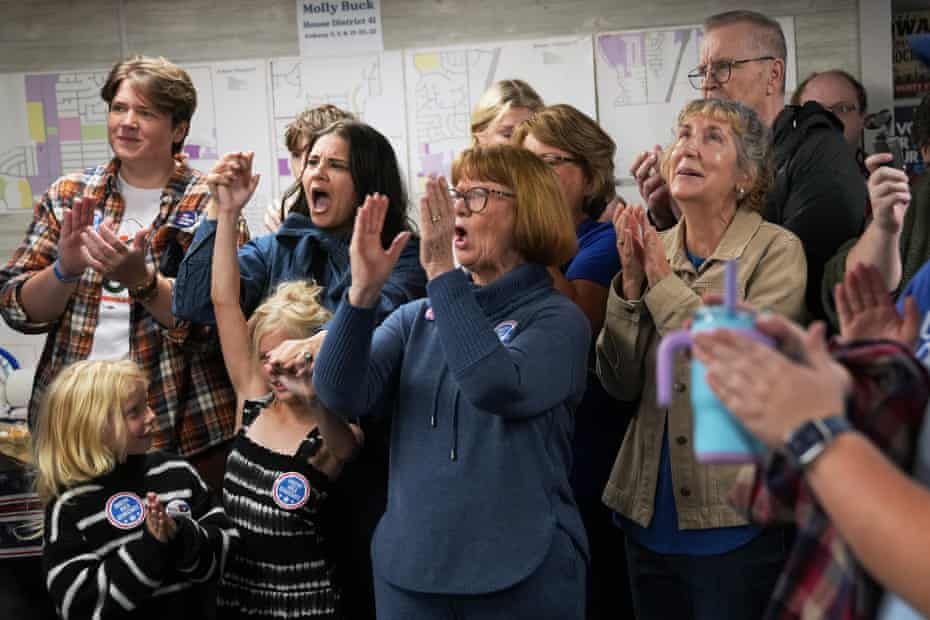
Campaign activities in Iowa on Monday offered an indication of the competing political messages being presented to voters.
Democratic gubernatorial candidate Rob Sand held a town hall in Waverly, where he encouraged supporters to demonstrate unity across political affiliations.
He asked attendees which parties they belonged to before inviting them to clap for supporters of different political groups.
The gathering subsequently joined in singing “America the Beautiful”.
Sand’s campaign message sought to appeal to voters beyond traditional Democratic supporters, including people considering crossing party lines.
He described his approach as “not redder or bluer, but better and truer”.
Speaking to the Guardian, Sand said he had noticed a “yearning” among voters for politicians to work together despite widespread public frustration.
He argued that political anger should be directed towards what he described as a broken two-party system.
“We need to focus that anger and point it at where it ought to be pointed, which is at a broken two-choice political system that is too easily abused to allow elected officials to be corrupt and to be lazy and still hold power,” he said.
He also warned that some politicians encouraged hostility between ordinary Americans.
Republicans held their own campaign gathering in Des Moines, where senator Chuck Grassley criticised Democratic candidates and defended the Republican administration’s approach.
Grassley described Democrats as “outlandish socialists” and urged voters to support Republican Senate candidate Ashley Hinson.
Hinson also attacked her Democratic opponent, Zach Turek, calling him “Too Liberal Turek”.
Election results may take days to become clear
Although voting is taking place on Tuesday, the final outcome may not be known immediately.
Closely contested races, different state procedures for counting early and postal ballots, recounts and possible legal challenges could delay the announcement of results.
The first results are expected after polling stations begin closing, but some contests could take hours or even days before a winner is officially established.
The elections also carry significance beyond the immediate struggle for congressional control.
The outcome will influence the political environment surrounding Trump’s administration as both parties prepare for the next presidential election cycle in 2028.
Historically, midterm elections have often resulted in losses for the party occupying the White House.
The president’s party has lost seats in the House in 18 of the previous 20 midterm elections dating back to 1946.
That historical pattern forms part of the political context surrounding Tuesday’s voting, although the results of individual contests will depend on their own candidates, campaigns and local circumstances.
With Republicans defending narrow majorities and Democrats seeking to expand their congressional representation, the 2026 US midterm elections will shape the balance of power in Washington and influence the direction of American policymaking for the remainder of Trump’s second term
About The Author