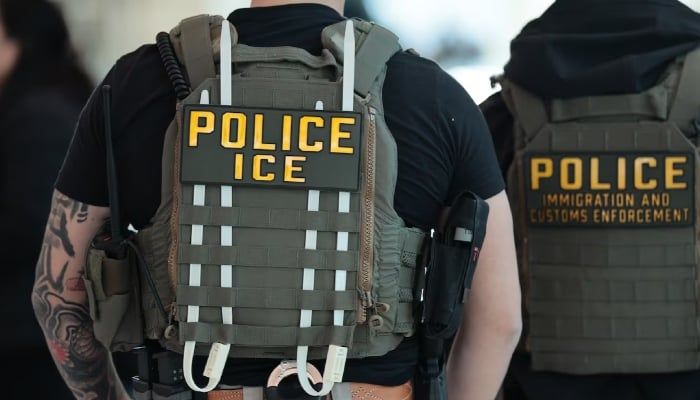
The California ballot dispute has suffered a major setback for President Donald Trump after the US Supreme Court rejected his administration’s attempt to force election officials to separate and withhold approximately 20,000 ballots from people the Justice Department alleges are non-citizens.
The decision, delivered on Monday, followed several legal defeats for the administration, which had argued that California should prevent the disputed ballots from being counted until the individuals identified by federal authorities could establish their citizenship.
The Supreme Court did not provide an explanation for its decision, which is customary when it handles emergency applications. No justice recorded a dissent.
The ruling represents another victory for California officials, who maintained that the federal government was attempting to interfere with the state’s constitutional authority to administer elections.
Dispute began with Justice Department’s voter list
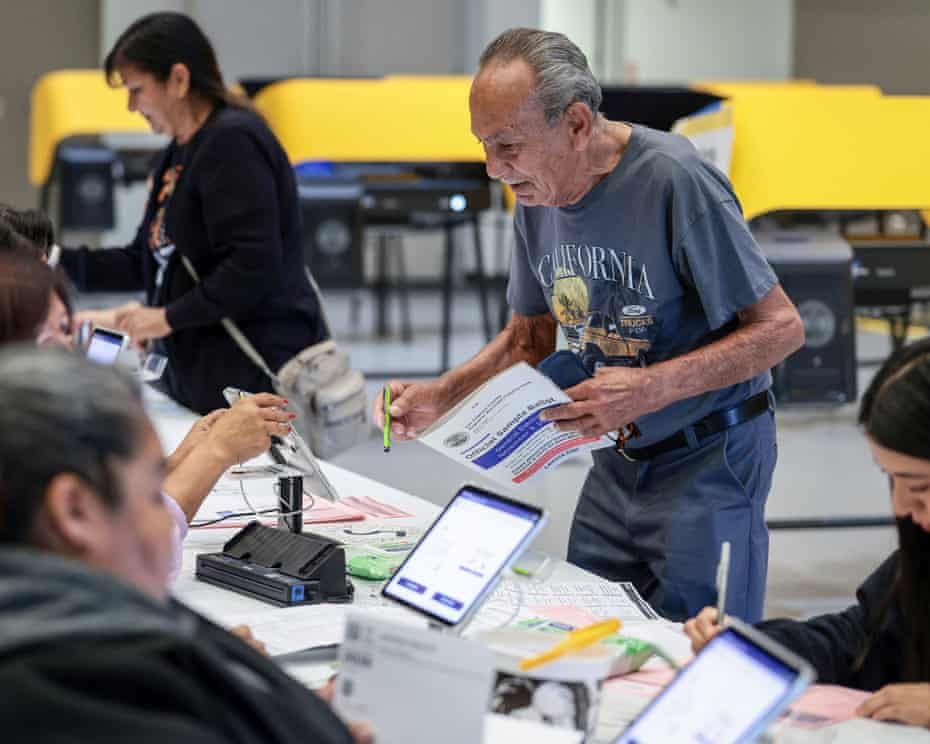
The confrontation intensified in mid-October after the Justice Department claimed that approximately 20,000 non-citizens appeared on California’s voter registration records.
Federal officials delivered a USB drive containing the names to election authorities in Los Angeles and Sacramento, giving them only 48 hours to examine the information.
The department demanded that officials separate the ballots associated with the listed individuals and prevent them from being counted until their citizenship status could be verified.
It also threatened legal action if California refused to comply. State election officials rejected the demand, triggering a series of courtroom battles.
California authorities and voting rights organisations questioned the accuracy of the federal government’s information, arguing that the Justice Department had failed to explain how it compiled the list.
The department also declined to provide detailed information about its methodology, while investigations by election officials reportedly identified numerous indications that the records contained inaccuracies.
Dean Logan, Los Angeles County clerk and recorder, criticised the federal government’s approach after receiving the list.
“The Department of Justice has not provided the underlying evidence, source, or methodology supporting its assertions that individuals identified in its records are ineligible to vote,” Logan said.
Newsom and Bonta welcome Supreme Court decision
California Governor Gavin Newsom welcomed the Supreme Court’s decision, describing it as a rejection of the Trump administration’s attempt to interfere with the state’s electoral process.
“After repeatedly losing in the lower courts, the highest court in the land firmly slapped down the Trump DoJ’s baseless attack on California’s electoral process – not even entertaining it,” Newsom said in a statement.
State Attorney General Rob Bonta also praised the ruling but warned that the legal confrontation was not necessarily over.
“This latest decision should put an end to the administration’s attempt to disrupt California’s elections through emergency court orders. But our work is not over,” Bonta said.
The Justice Department did not immediately respond to a request for comment following the Supreme Court’s decision.
The administration had previously threatened to prosecute California election officials who counted ballots from people identified on its list.
However, a federal judge blocked the government from making such threats against election officials on Friday, adding another obstacle to the administration’s efforts.
Federal judges repeatedly reject Trump’s demands
The Supreme Court’s decision followed earlier setbacks in lower courts, where judges questioned the legality of the administration’s attempt to influence how California handled its election records.
US District Judge David Carter rejected the government’s request to separate the disputed ballots in a ruling delivered on October 28.
Carter, who was nominated to the bench by former President Bill Clinton, described the administration’s intervention as unusual and extreme.
“Never before in American history has the federal government, on the eve of an election, sought to coerce a state and local government to abandon their own Constitutional elections procedures and bend to the will of the Executive Branch,” Carter wrote.
The US Court of Appeals for the Ninth Circuit subsequently rejected the administration’s efforts over the weekend.
These decisions established a series of judicial obstacles to the federal government’s attempt to force California election officials to follow its demands.
The latest Supreme Court ruling has now further weakened the administration’s legal position in the dispute.
Arrests of alleged non-citizen voters raise further questions
While pursuing its claims against California’s voter registration system, the Trump administration also publicised the arrests of dozens of non-citizens accused of registering and voting illegally in federal elections.
Media representatives were present during some of the arrests, while photographs and videos of the operations were circulated publicly.
However, several individuals charged in the cases were legal permanent residents who had lived in the United States for decades.
Some reportedly said they were unaware that they were ineligible to vote.
Omar Muñoz, one of the individuals arrested, accused authorities of using his case to create a public spectacle.
“It was staged and I’m the patsy … They wanted to make a scene,” Muñoz told The Guardian last month.
The cases have intensified debate about the administration’s approach to alleged electoral fraud and whether its enforcement actions are proportionate to the evidence.
Voting rights advocates have also questioned whether the government is using isolated cases to justify broader intervention in state election administration.
Trump administration expands voter fraud investigations
The California ballot dispute forms part of a wider effort by the Trump administration to increase federal involvement in election oversight and pursue allegations of non-citizen voting.
The Justice Department has made a similar demand in Washington state, seeking to have certain ballots separated over claims involving non-citizen voters.
It has also filed criminal charges against 28 green card holders in California whom it accuses of fraudulently registering to vote and casting illegal ballots.
In addition, federal authorities have opened a criminal investigation into alleged non-citizen voting in California and begun issuing subpoenas to election officials.
The administration has threatened further prosecutions against officials who process ballots it considers ineligible, although legal experts have questioned whether such threats have a proper legal foundation.
President Trump has also made vague promises to offer a $1m reward to anyone whose information about voter fraud leads to an arrest or conviction.
However, available research suggests that non-citizen voting remains extremely uncommon in American elections.
An Associated Press report cited experts who said the number of arrests linked to allegations of non-citizen voting demonstrated how rare the practice was, rather than evidence of widespread electoral fraud.
Wider implications for state election authority
The Supreme Court’s intervention marks an important moment in the continuing confrontation between the Trump administration and California over election administration.
At the centre of the disagreement is the balance between federal enforcement powers and the constitutional authority of states to establish and administer their own election procedures.
California officials have maintained that the federal government cannot simply compel them to withhold ballots based on an unverified list of alleged non-citizens.
The administration, meanwhile, has continued to pursue investigations and legal actions intended to address what it describes as electoral fraud.
Read also: Immigration detention: Lawyers accuse ICE of undermining court-ordered releases
With the Supreme Court rejecting its latest emergency request, the administration has suffered another significant setback in its campaign to have California separate the disputed ballots.
The decision also strengthens the position of state officials who argue that election procedures must be governed by established legal standards rather than last-minute federal demands.
About The Author