A recent appeals court decision allowing President Donald Trump to deploy federalized troops to Portland may be reconsidered, intensifying the debate over Trump national guard deployment Portland authority.
On Monday, a three-judge panel lifted a lower court block preventing Trump from sending Oregon national guard members, voting 2-1 in his favor, sparking immediate legal and political controversy.
Hours after the ruling, dissenting Judge Susan Graber requested an en banc vote, asking whether the full Ninth Circuit should rehear the case involving Trump national guard deployment to Portland.
Governor Tina Kotek criticized the panel’s decision, stressing there is no insurrection or immediate threat in Portland. “Send all the national guard members home,” she urged reporters forcefully.
Oregon Attorney General Dan Rayfield echoed concerns, arguing the decision would grant Trump near-unilateral authority. “We are on a dangerous path in America,” Rayfield warned, highlighting state sovereignty issues.
The legal dispute centers on Trump’s claim to deploy federalized troops, citing statutes authorizing National Guard federalization when regular forces are insufficient, emphasizing Trump national guard deployment Portland rationale.
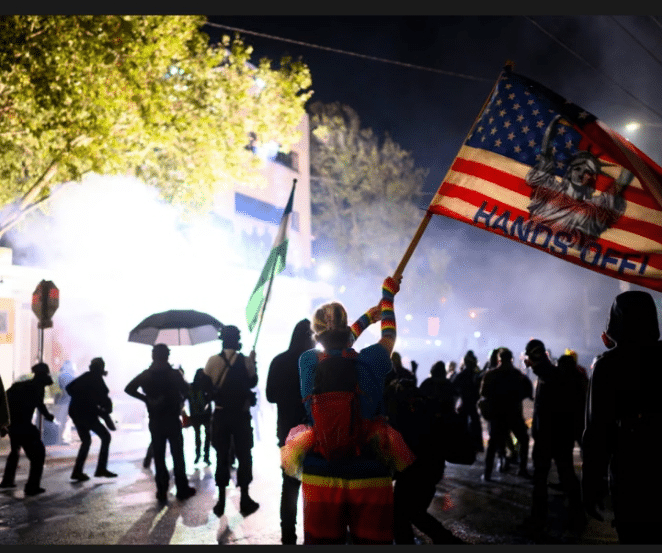
Judge Graber described the initial ruling as lacking “legal or factual justification,” dismissing claims that Portland was a war zone, mocking exaggerated descriptions of minor protests and costumes.
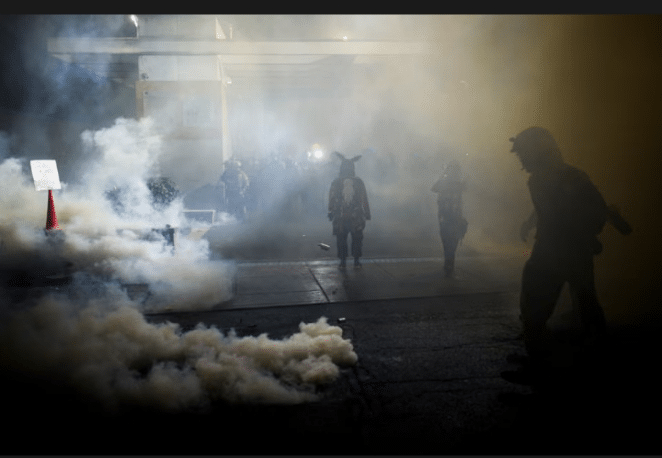
Observers noted Portland civil unrest largely involves peaceful demonstrations, often creative or humorous, including inflatable costumes, underscoring local authorities’ capacity to manage events without federal troop deployment.
Secretary of Defense Pete Hegseth authorized 200 Oregon guardsmen to federal service for 60 days after Trump demanded deployment, intensifying controversy over Trump national guard deployment Portland legality.
Trump supporters defend intervention as protecting federal property and personnel, arguing the president’s authority under law, while critics contend the move violates constitutional limits and undermines local governance.
If the en banc vote occurs, 29 active Ninth Circuit judges may decide, including 16 Democratic appointees, affecting US military intervention precedent and the broader interpretation of presidential power.
The dispute illustrates tension between federal authority and state control, highlighting West Coast security concerns, as Kotek and Rayfield insist local law enforcement can manage Portland demonstrations effectively.
Kotek emphasized, “We have free speech demonstrations near federal facilities, and our police manage them. When people cross the line, unlawful activity is addressed swiftly and fairly.”
Rayfield warned unilateral troop deployment could set precedent allowing presidents to override state militia control, reinforcing constitutional concerns regarding Trump national guard deployment to Portland and civil liberties nationwide.
Trump-appointed judges Ryan Nelson and Bridget Bade voted in favor of deployment, citing statutory authority, while Clinton appointee Graber dissented, illustrating judicial interpretations’ impact on executive power and state rights.
Graber argued, “The majority’s decision erodes core constitutional principles, including states’ control over their militias and First Amendment rights to assemble and object to government policies.”
Legal analysts contend the case will influence domestic federal intervention, emphasizing Portland protests as minor and manageable, and questioning the necessity of federal troops, highlighting civil liberties and security balance.
Past federal deployments show courts scrutinize executive authority carefully, from Little Rock in 1957 to modern incidents, informing concerns that national guard deployment to Portland may exceed lawful boundaries.
Vladeck noted, “This litigation is pivotal for determining presidential authority limits regarding state militias, especially when local demonstrations are peaceful or exaggerated in government reports.”
The case’s outcome could shape future interpretations of law enforcement and military powers, determining how presidents deploy troops domestically, particularly when balancing national guard deployment with civil rights.
Public opinion in Portland divides between safety concerns and opposition to federal overreach, illustrating societal tensions and highlighting local leaders’ insistence that state authorities retain operational control.
Even as legal briefs are submitted for potential en banc review, ordinary Portland life continues mostly unaffected, showing that minor protests are managed, questioning the necessity of Trump national guard deployment.
Trump frames deployment as protecting federal property, while Oregon officials insist state resources suffice, stressing federal intervention is unnecessary and politically motivated, raising questions about executive versus local authority.
Written briefs by both sides exemplify judicial procedural care in evaluating executive authority, civil liberties, and public safety, with en banc review representing a critical moment for Trump national guard deployment to the state.
Scholars warn that allowing unchecked federal troop deployment could threaten democratic principles, emphasizing the importance of judicial review to maintain balance between executive power and state sovereignty nationwide.
Judge Immergut’s prior orders had blocked Trump from deploying Oregon troops, citing lack of factual basis, highlighting that Trump national guard deployment actions may conflict with judicial determinations.
Legal commentary notes the en banc decision will likely influence broader interpretations of presidential authority and could affect other West Coast security issues, while highlighting civil liberties concerns during domestic deployments.
The Ninth Circuit’s review, including potential participation of all eligible judges, may confirm or overturn the initial ruling, ultimately deciding the legality and constitutionality of national guard deployment.
Observers emphasize that precedent from this case could shape future domestic military interventions, balancing federal oversight with state authority, Portland protests management, and civil rights protection across the United States.
If the case is reheard, both state and federal authorities will present extensive arguments, potentially clarifying limits of executive authority, ensuring Trump national guard deployment to Portland remains within legal and constitutional boundaries.
The outcome will be closely watched nationwide, as courts may define presidential powers in domestic security contexts, reinforcing civil liberties while examining the legitimacy of federal troop deployment in local jurisdictions.
Kotek and Rayfield continue to advocate for state control, emphasizing that local enforcement suffices for West Coast security, ensuring that Trump national guard deployment Portland does not undermine constitutional protections for citizens.

Civil rights organizations stress the case’s implications for First Amendment rights, warning that unchecked federal deployments could suppress lawful assembly, highlighting the intersection of law, politics, and Trump national guard deployment Portland authority.
Public discourse continues as Portland residents weigh safety against civil liberties, reflecting nationwide debate about federal authority, executive power, and state sovereignty, with Trump national guard deployment Portland remaining central.
Experts conclude that Ninth Circuit decisions will shape future interpretations of military authority, presidential power, and civil liberties, making the Trump national guard deployment Portland case a defining moment for domestic legal precedent.
About The Author