The Trump midterm election push is prompting state and local election officials across the United States to prepare for potential disputes, federal intervention, misinformation, cyberattacks and threats of violence ahead of November’s elections.
With just two months before Americans vote in midterm elections that could determine control of Congress, election officials are rehearsing for scenarios that were once considered unthinkable, including the possibility that President Donald Trump could use federal power to influence the outcome.
Reuters interviewed more than 50 state and local election officials from both Republican and Democratic areas, including 12 secretaries of state. Nearly all said they were adopting new strategies to prepare for political interference, misinformation, cyberattacks and possible violence.
The preparations reflect growing concern among election officials that the greatest threat to the November elections could come from the Trump administration itself as it seeks to expand the federal government’s role in elections traditionally administered by states and local authorities.
Trump Midterm Election Strategy Raises Concern
In California, election officials have considered what they would do if Trump sent federal agents to polling places, potentially intimidating voters or suppressing turnout.
In Michigan, state officials are advising local election clerks on how to respond if federal authorities demand access to voting machines or election records.
Across the country, officials are also preparing for legal battles involving ballot seizures, voter-fraud investigations and disputed election results.
The White House has rejected concerns that federal actions could disrupt the elections, arguing that the administration is enforcing election laws and protecting confidence in the voting system.
White House spokesperson Lauren Bis said, “The distrust in our elections is caused by extreme Democrats.”
She also defended the administration’s pursuit of voter-fraud allegations, saying it had good reason to pursue them “despite the media and Democrats denying it for decades”.
Reuters reported, however, that independent studies and its own investigation have found voting by noncitizens to be extraordinarily rare and unlikely to affect election outcomes.
Trump Calls for Changes to US Voting System
Under the US Constitution, elections are administered by states and localities rather than the president. But Trump has urged Republicans to “nationalize” voting in at least 15 places.
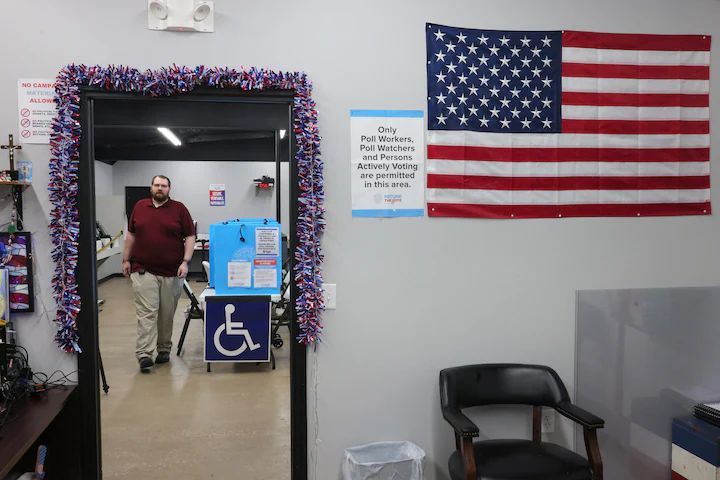
His administration has also directed federal law enforcement to pursue voter-fraud claims that have been debunked, sought restrictions on mail-in voting and launched investigations involving election officials and offices in Wisconsin, Georgia and elsewhere.
Trump’s push to redraw congressional maps before the midterms has also triggered a nationwide redistricting battle that is expected to provide Republicans with a net advantage in House races.
The president has sued states that refused to provide federal agencies with confidential voter information, including birthdates, driver’s licence numbers and partial Social Security numbers.
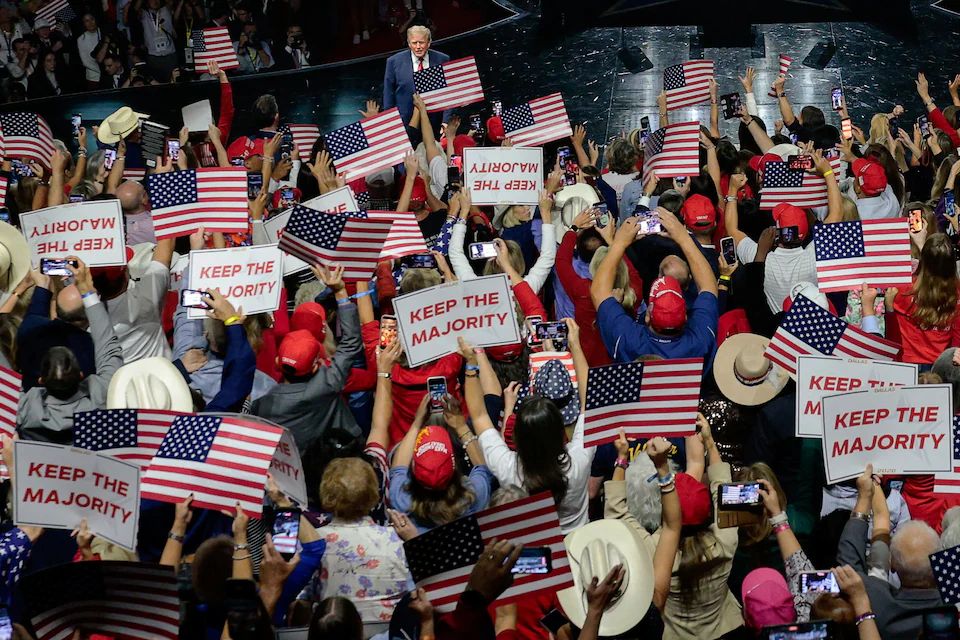
At the Republican Party’s midterm convention in Dallas last week, Trump urged supporters to “cheat like hell” and vote whether they were “registered or not” in the midterms.
The comments have heightened concerns among election officials already preparing for possible challenges to the voting process.
“Election officials are concerned about the role the federal government is going to play,” said Bill Gates, a Republican lawyer and former Maricopa County official who now advises and trains election officials.
He described the mood among election officials as one of “apprehension”, rather than the close cooperation that had previously characterised election cycles.
Election Officials Prepare Legal Defences
More than a dozen state and local election officials told Reuters they were hiring outside lawyers or seeking legal training in preparation for possible demands from the Trump administration involving sensitive voting records or election equipment.
Nearly twice that number said they were expanding public outreach and social media campaigns to counter misinformation.
Officials are particularly concerned about false claims that voting machines are unreliable and that mail-in voting is inherently corrupt.
In Dane County, Wisconsin, attorneys have begun drafting court filings to challenge any attempt by the Trump administration to seize voting equipment or election records.
Democratic county clerk Scott McDonell said officials were also preparing for the possibility of federal immigration agents appearing at polling places.
“It’s going to be a matter of speed,” McDonell said when discussing the county’s planned legal response.
The county is also preparing for potential protests following disputed election results.
Georgia Raid Becomes a Warning
The January FBI raid on election operations in Georgia’s Fulton County has become a major warning for officials elsewhere.
Federal agents seized about 650 boxes of 2020 election records as part of an investigation into voter-fraud allegations that had previously been rejected by courts and audits.
Fulton County Commissioner Dana Barrett said the raid exposed a vulnerability local governments had not anticipated.
“The only thing that would have been nice is if we had already had those people on board,” Barrett said. “But how could you know?”
A federal judge ruled in May that prosecutors could retain the records while their investigation continued.
Wisconsin officials have faced similar pressure. FBI agents sought to question at least eight current and former Milwaukee city and county employees in May about the 2020 election.
The visits prompted Milwaukee city and county leaders to obtain legal representation.
In Michigan, Deputy Secretary of State Aghogho Edevbie said officials were ready to defend local election administrators.
“We’re prepared,” Edevbie told Reuters.
He added: “We do have counsel on standby for any local election official that needs it.”
Mail Voting Battle Forces Contingency Plans
The Trump midterm election strategy has also involved an effort to change mail-in voting rules.
The Supreme Court blocked Trump’s mail-voting plan on Monday from taking effect before the November elections. However, the legal battle had already forced election officials to prepare for disruptions that could have affected millions of voters.
Under the proposed system, states would have been required to provide the US Postal Service with lists of mail-ballot recipients and use USPS-approved ballot envelopes.
A Postal Service whistleblower had warned Congress that the requirements could wrongly delay or reject thousands of legitimate ballots.
In Philadelphia, officials prepared contingency measures, including satellite election offices where voters could collect ballots.
Republican Philadelphia Board of Elections member Seth Bluestein said officials had worked with the city solicitor to develop a response.
“We’ve worked with our city solicitor to have a plan in place for how to respond,” Bluestein said.
Election Workers Fortify Offices
Election officials are also increasing physical security because of years of false claims about election fraud and the resulting threats against election workers.
In Durham County, North Carolina, elections director Derek Bowens said he was acquiring his first firearm to protect himself and his family.
“My perspective has changed,” Bowens said.
“I’m very conscious now of my surroundings. I tend to go home immediately after work. I don’t spend a lot of time outside of the house.”
His office has added ballistic doors, bulletproof glass, panic buttons and armed guards.
The county’s mailroom also has a dedicated exhaust system for potentially contaminated packages and stocks Narcan in case of accidental exposure to dangerous substances.
At each of Durham County’s 68 polling places, the chief election coordinator will carry a tracker-equipped badge capable of summoning law enforcement to their precise location.
The measures follow an incident during the 2024 primary election when a man entered a polling place after voting had ended and threatened to “vote with a bullet” if he could not cast a ballot.
In Detroit, City Clerk Janice Winfrey now has around-the-clock police protection after receiving death threats following Trump’s false fraud claims in 2020.
“I long for the days when elections were just boring,” Winfrey said. “It absolutely makes me sad that this is what democracy has come to.”
The concern is not limited to Democratic areas.
In heavily Republican Irwin County, Georgia, Election Supervisor Ethan Compton is providing poll workers with panic buttons capable of transmitting photographs and GPS coordinates to election headquarters, the sheriff’s office and 911.
The devices, he said, “give them peace of mind.”
Misinformation Becomes Major Election Threat
Election officials say another major threat is the spread of false information about the voting process.
They fear scenarios involving fabricated videos showing election workers destroying ballots, AI-generated stories claiming polling places have changed and false messages alleging that voting machines have been compromised.
Artificial intelligence has made false information cheaper to create, harder to identify and easier to distribute.
Colorado’s Mesa County provides an example of the challenge.
Republican clerk Bobbie Gross inherited a crisis of public confidence after her predecessor, Tina Peters, allowed pro-Trump election-fraud conspiracy theorists to access county voting equipment following the 2020 election.
Peters was later convicted on felony charges after sensitive voting-machine data was posted online.
A judge said Peters had caused “immeasurable damage” to confidence in elections.
Gross responded by inviting sceptics, activist groups and students to observe elections, using social media to explain the voting process and making ballot images available online for public inspection.
She said confidence in local elections had “gotten significantly better”, although some voters remained convinced that the system was rigged.
Cybersecurity Support Cutbacks Raise Alarm
Election officials are also concerned about reductions in federal cybersecurity support.
For years, states relied on the Cybersecurity and Infrastructure Security Agency, known as CISA, to help protect elections from foreign influence operations and cyber threats.
CISA tracked foreign influence campaigns, shared intelligence about emerging threats and warned state and local officials about malicious cyber activity.
Read also: Lucy Letby inquiry: Report examines how killer nurse was able to commit crimes
But after Trump’s return to office in 2025, his administration dismantled much of the agency’s infrastructure, cutting nearly 1,000 workers, or about 30% of its workforce.
Election officials from both parties said they were losing an important source of expertise.
Pennsylvania Republican Secretary of State Al Schmidt warned of “serious consequences” from the reduction in CISA’s election-security work.
Some states are now turning to private cybersecurity specialists and partnerships with other jurisdictions to fill the gap.
But Joseph Kirk, election supervisor in heavily Republican Bartow County, Georgia, said local governments could struggle to defend themselves against sophisticated foreign attacks.
“My IT director’s great,” Kirk said. “But he can’t fight a nation-state. It takes a nation-state to fight a nation-state.”
As the November midterms approach, election officials across the political divide are therefore preparing for a difficult election season, strengthening legal teams, cybersecurity systems, public-information campaigns and physical security.
The outcome of the Trump midterm election push could determine whether Republicans retain control of Congress and whether Trump’s legislative and judicial priorities continue without major Democratic obstruction.
But beyond the partisan battle, officials are preparing for disputes that could test the resilience of America’s election machinery and public confidence in the democratic process.
About The Author