

The Obama midterm campaign has become a major feature of the Democrats’ final push ahead of the 2026 US elections, with the former president delivering forceful speeches to rally supporters, promote candidates and challenge President Donald Trump’s administration.
Barack Obama has returned to the political spotlight with appearances across several states, using his popularity and oratorical skills to energise Democratic voters ahead of elections that could reshape the balance of power in Congress.
His speeches have combined sharp criticism of Trump with calls for greater political accountability, while his support for a new generation of Democratic candidates has attracted enthusiasm from established party figures and progressive activists.
With voting approaching, Democrats hope the former president’s influence will encourage participation among younger voters, Black Americans and other groups considered important to their electoral prospects.
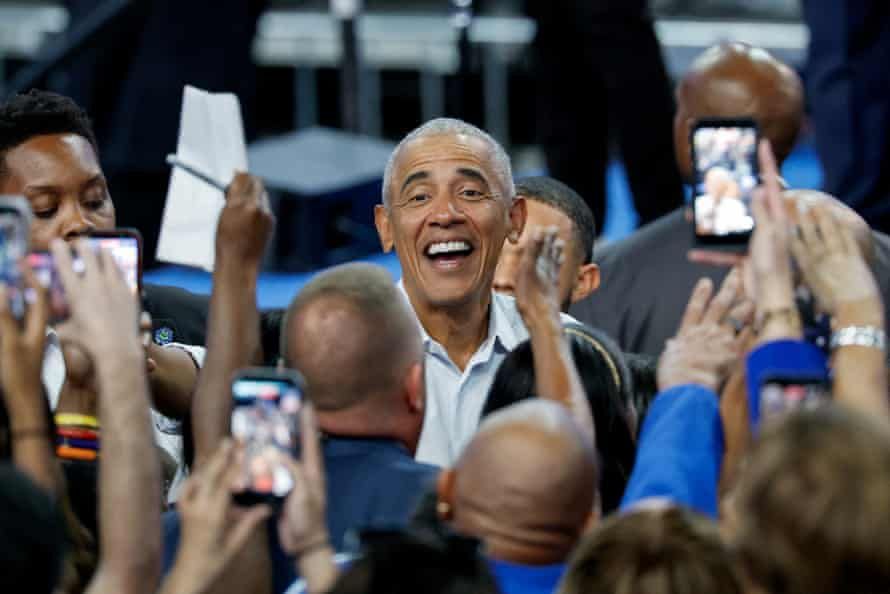
Obama calls the midterms a chance to check Trump’s power
Obama has presented the upcoming elections as an opportunity for Americans to constrain the president’s political agenda and challenge decisions he believes have harmed the country.
Addressing supporters in Georgia, the former president urged voters to use their ballots to change the political balance in Washington.
“This election is our last, best chance of at least reining him in, reining in some of the foolishness of this administration,” Obama said. “It’s the circuit-breaker in the system, and we need to flip it.”
The remarks reflect the Democrats’ strategy of making congressional control a central issue in the campaign. The party hopes to persuade voters that changing the composition of Congress could provide a stronger check on the White House.
Obama has also criticised Trump’s approach to foreign policy, including American military involvement in the Middle East, while mocking what he sees as the president’s autocratic tendencies.
His return has given Democrats a nationally recognised figure capable of attracting large crowds and generating attention during the final days of campaigning.
White House renovation joke triggers Republican backlash
Obama’s criticism of Trump has not been limited to policy. He has also used humour to challenge the president’s public image.
At a rally in Cleveland, Ohio, Obama compared Trump’s gold-encrusted White House renovations to a situation in which “Saddam Hussein opened a Cheesecake Factory”.
The remark triggered a reaction from right-wing commentators and prompted Trump to defend his renovations while accusing his predecessor of elitism.
Trump waved his arms to mimic a lettuce leaf and said: “Every piece of lettuce he eats has to be perfect, and I’m not that choosy.”
Treasury Secretary Scott Bessent also staged a public appearance outside a Cheesecake Factory restaurant in Washington, where he ordered a French-dip cheeseburger in what appeared to be a response to the controversy.
Obama subsequently argued that the administration had devoted excessive attention to answering a joke instead of addressing economic difficulties affecting American households.
“They mobilised a whole-of-government response to a joke, not to inflation, but to a joke,” he said in Atlanta. “They don’t have solutions to actual problems, so they’d rather have the media and you talking about the Cheesecake Factory.”
The exchange has provided Democrats with another opportunity to question the administration’s priorities as voters remain concerned about the cost of living.
Why Democrats want Obama on the campaign trail
The timing of Obama’s return has been deliberate. Democratic strategists allowed candidates to develop their own identities before bringing in the former president to provide additional visibility during the campaign’s closing stages.
David Litt, a former Obama White House speechwriter, said the strategy enabled emerging Democratic leaders to establish themselves before receiving support from the former president.
“What you’re seeing is him coming in to support a new generation of Democratic leaders who have emerged organically, rather than trying to be involved from day one,” Litt said.
He argued that Obama retained the credibility and political appeal necessary to help candidates in competitive races.
“He still has both a credibility and an ability to drive turnout that, if you’re a candidate in a close race, you can absolutely benefit from – especially among young voters and Black voters,” Litt added.
Obama has campaigned for candidates including Abdul El-Sayed in Michigan and Jon Ossoff in Georgia, helping them attract attention in the final stretch.
His involvement also gives Democratic candidates access to a speaker whose national recognition extends beyond individual states and congressional districts.
Obama’s support helps bridge Democratic divisions
Although Obama remains popular among many Democrats, his presidency has never been universally embraced by the party’s progressive wing.
Some activists who became politically engaged through Bernie Sanders’ campaigns believe Obama failed to deliver sufficiently ambitious reforms during his time in office.
Their criticisms include his foreign policy, approach to the conflict in Palestine, military involvement in Afghanistan and the persistence of economic inequality.
Norman Solomon, co-founder of the progressive organisation RootsAction, argued that the former president’s record looked less impressive under close examination.
“If you look too close at Obama’s record – the collapse on peacemaking in Palestine, tripling troops in Afghanistan, presiding over the greatest upward transfer of wealth in anybody’s lifetime – it does not look so great,” Solomon said.
He also criticised the former president’s post-presidency lifestyle, arguing that it did not reflect solidarity with ordinary Americans.
Nevertheless, Solomon acknowledged that Obama could be useful to Democrats in the current political climate, particularly in Michigan, where tensions have existed between African American and Arab American communities.
Other progressives have welcomed Obama’s involvement, viewing it as evidence that the Democratic establishment increasingly recognises the influence of movements demanding more ambitious policies.
Progressive leaders welcome Obama’s endorsement
Joseph Geevarghese, executive director of Our Revolution, an organisation that emerged from Sanders’ 2016 presidential campaign, described Obama’s participation as beneficial to Democratic candidates.
“Obama hitting the campaign trail is a net positive because it’s strategic. He helps pull in key demographics including African American voters,” Geevarghese said.
He also argued that Obama’s support for progressive candidates showed how far the party’s political centre had shifted.
“He is the epitome of the establishment, and he is out there pounding the pavement for progressives, saying our agenda isn’t radical – it’s mainstream,” he said.
Geevarghese pointed to Obama’s appearance alongside Abdul El-Sayed in Michigan, where the candidate has faced attacks concerning his background and identity.
He argued that the former president’s own experience overcoming political attacks about his identity could help reassure voters about candidates facing similar challenges.
Ashik Siddique, co-chair of the Democratic Socialists of America, also said Obama’s presence alongside progressive candidates reflected a growing demand for alternatives to the political conditions that helped Trump rise to power.
The Democratic Socialists of America has expanded substantially since 2016 and has achieved high-profile electoral successes, including Zohran Mamdani’s rise in New York.
For some progressives, Obama’s willingness to campaign for candidates from the party’s left represents an acknowledgement that their movement has become an increasingly important force in Democratic politics.
Obama remains influential after Trump’s 2024 victory
Obama has continued to participate in election campaigns since leaving the White House, supporting Democratic candidates in presidential, congressional and state contests.
During the 2024 presidential campaign, he backed Kamala Harris in the final stretch, although Trump ultimately won the election.
Former vice-president Harris has also participated in the current midterm effort, while former president Bill Clinton has campaigned alongside David Jolly, who is running for governor of Florida.
Obama’s involvement, however, remains particularly significant because of his ability to draw media attention and connect with different generations of Democratic voters.
His political influence has endured despite disagreements over his presidential record and the emergence of younger leaders seeking to redefine the party.
The opening of his presidential centre in Chicago in June 2026 also brought renewed attention to his continuing public role.
Democrats hope enthusiasm translates into votes
Nina Turner, a former Ohio state senator and prominent progressive, said Obama continued to possess a rare ability to appeal to different parts of the Democratic coalition.
“He is still an extraordinarily positive figure among the Democratic base,” Turner said.
She acknowledged that some progressives remained disappointed by aspects of his presidency, including drone warfare and the gap between his promise of hope and change and the reforms ultimately achieved.
However, she maintained that the optimism associated with his political rise remained an important part of his appeal.
“The critique of President Obama is he was very much establishment: he ran on hope and change, but didn’t make a whole lot of change,” Turner said.
“People were hopeful, though, and it’s the hopeful portion of his candidacy that still looms large – even as people critique his presidency, particularly on the progressive side of the ledger. Overall him being out there will be good for Democrats of all generations.”
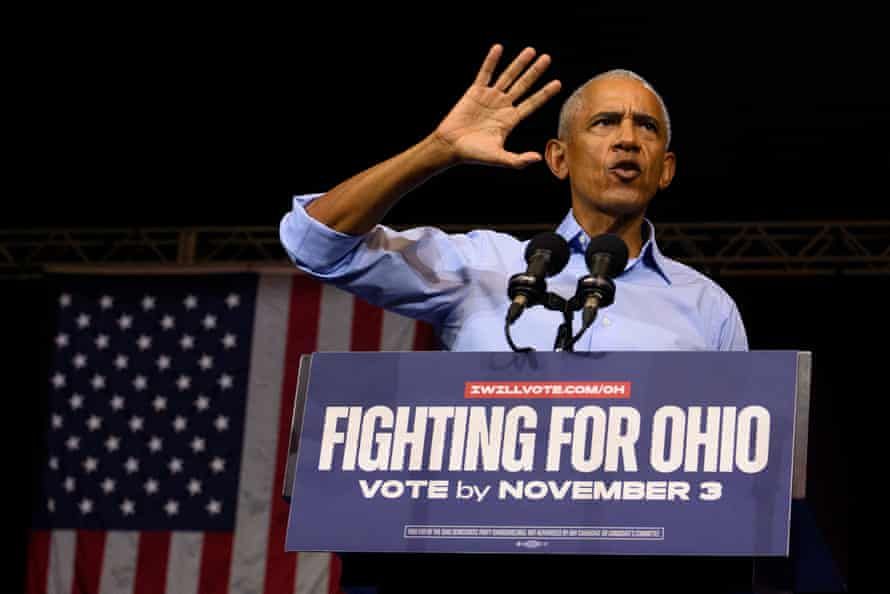
For Democrats, the central question is whether the enthusiasm generated by Obama’s appearances will translate into votes. His popularity may strengthen campaign efforts, but electoral outcomes will also depend on local issues, candidates and voters’ assessments of Trump’s administration.
Nevertheless, the Obama midterm campaign has given Democrats a prominent voice to challenge the president, support emerging leaders and encourage participation in a consequential election.
About The Author


