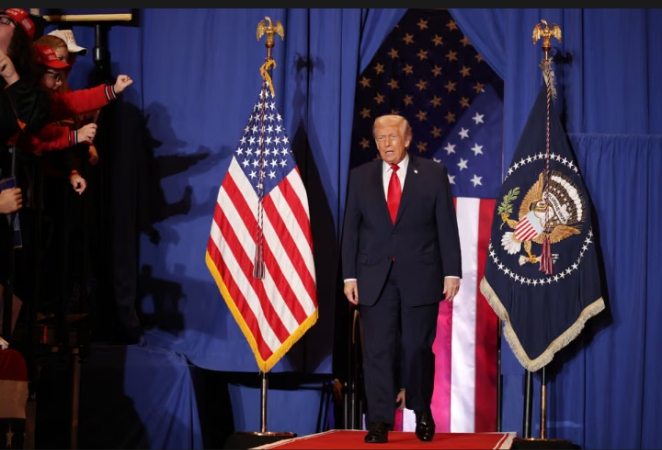
Trump sued by preservation group over White House ballroom project has escalated into a major legal confrontation, highlighting tensions between presidential redevelopment ambitions and long-standing federal historic preservation protections nationwide.
The lawsuit, filed by the National Trust for Historic Preservation, challenges plans for a massive White House ballroom addition proposed during Donald Trump’s presidency and revived recently.
According to court filings, the preservation group argues federal agencies failed to complete mandatory oversight reviews before approving construction within one of America’s most protected historic sites.
At the center of the dispute is a proposed 90,000-square-foot ballroom complex designed to host large state functions and diplomatic receptions on White House grounds.
Preservationists contend the project threatens the architectural integrity, historical symbolism, and cultural value of the White House, which has evolved carefully over more than two centuries.

The National Trust filed the complaint in the US District Court for the District of Columbia, seeking immediate judicial intervention to halt ongoing construction preparations.
Specifically, the organization is requesting a temporary restraining order preventing further work until compliance with federal preservation and environmental laws is demonstrated.
Legal experts describe the case as the most significant challenge yet to presidential authority over alterations to the White House complex.
The White House is designated a National Historic Landmark, subjecting any major modification to strict review under federal preservation statutes.
Among these is the National Historic Preservation Act, which requires consultation with preservation authorities before changes affecting historic properties proceed.
The lawsuit alleges these consultations were either bypassed or inadequately conducted during the approval process for the ballroom project.
Preservation advocates argue such omissions undermine decades of bipartisan consensus protecting historically significant federal buildings.
They warn that allowing the project to proceed unchecked could set a precedent enabling future administrations to bypass preservation safeguards.
Supporters of the ballroom project argue the White House needs modernized facilities capable of hosting large-scale events without external venues.
They claim the proposed structure would enhance security, efficiency, and ceremonial capacity while respecting the site’s historic character.
Trump has long expressed admiration for grand ballrooms, frequently referencing their prominence in European palaces and historic American hotels.
During his presidency, Trump publicly criticized existing White House event spaces as inadequate for modern diplomatic needs.
He reportedly offered private funding for portions of the ballroom construction, framing the project as a gift to the nation.
Critics counter that private financing does not exempt federally owned landmarks from statutory preservation requirements.
They emphasize that the White House is not merely a residence or office, but a national symbol belonging to the American public.
The National Trust argues the project’s scale alone warrants extensive public input and transparent federal review processes.
Architectural historians have also raised concerns about the ballroom’s compatibility with the White House’s neoclassical design language.
They caution that even sympathetic design elements could permanently alter sightlines and spatial relationships within the historic complex.
The lawsuit further contends environmental assessments were insufficient, particularly regarding construction impact on surrounding grounds and infrastructure.
Federal law typically mandates environmental reviews for major construction projects on public land, especially within historic districts.
Failure to complete such assessments, the plaintiffs argue, represents a clear procedural violation requiring judicial correction.
The case arrives amid renewed national debates over executive authority and the limits of presidential discretion.
Legal scholars note courts have historically been willing to restrain executive actions that conflict with statutory preservation mandates.
Previous administrations have modified the White House, but usually through incremental changes following extensive consultation and review.
Major expansions have been rare, precisely because of the site’s symbolic and historical sensitivity.
Public reaction to the lawsuit has been sharply divided along political and cultural lines.
Supporters of preservation view the legal action as a necessary defense of national heritage against personal architectural ambitions.
Opponents accuse preservation groups of obstructing modernization and politicizing design decisions tied to presidential preference.
The Biden administration has so far declined detailed comment, citing ongoing litigation and respect for judicial processes.
However, federal agencies named in the lawsuit may be required to produce documentation detailing their approval procedures.
If the court grants a temporary restraining order, construction could be delayed for months or even years.
Read also: US navy intercepts China-bound vessel en route to Iran in rare maritime raid
Such a delay would likely force a comprehensive reevaluation of the project’s scope, design, and legal compliance.
Conversely, a ruling favoring the project could significantly expand presidential latitude over White House alterations.
Preservation organizations nationwide are closely monitoring the case for its broader legal implications.
They fear an adverse ruling could weaken enforcement of historic preservation laws across federal properties.
For now, Trump sued by preservation group over White House ballroom project remains a defining test of how America balances heritage protection with evolving executive visions.
The court’s decision will likely shape not only the White House’s physical future, but also the strength of preservation oversight nationwide.
About The Author