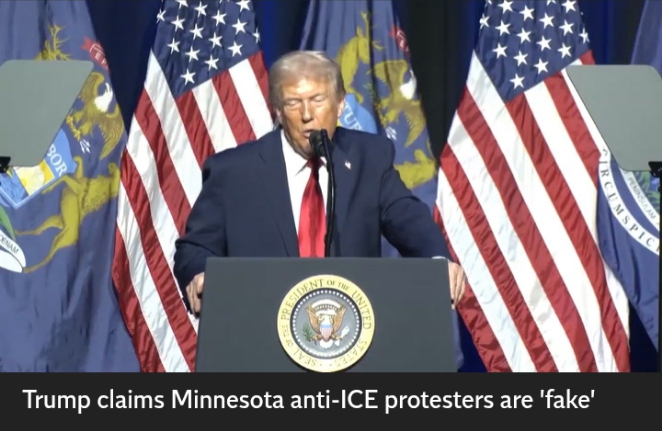
US President Donald Trump has warned he may invoke the Insurrection Act in Minnesota if state officials fail to halt escalating protests against Immigration and Customs Enforcement (ICE), marking a dramatic escalation in his administration’s response to civil unrest.
In a post published on his Truth Social platform on Thursday, Trump accused Minnesota officials of allowing what he described as “professional agitators and insurrectionists” to attack federal immigration officers. He insisted that ICE agents were “patriots” simply carrying out their duties and blamed Democratic leaders for failing to restore order.
“If the corrupt politicians of Minnesota don’t obey the law and stop the attacks on the Patriots of I.C.E., I will institute the INSURRECTION ACT,” Trump wrote, adding that previous presidents had used the law to restore stability.
The remarks have triggered renewed debate over presidential power, civil liberties and the use of the US military on American streets.
The protests erupted after a fatal confrontation between an ICE agent and 37-year-old Renee Good, a Minneapolis mother who was shot and killed during an enforcement operation.
The Trump administration has defended the officer’s actions, claiming Good attempted to flee and struck the agent with her vehicle.
Public anger intensified days later when another ICE officer shot a migrant in the leg during what officials described as a violent altercation while attempting an arrest.
These incidents sparked days of demonstrations in Minneapolis and other major US cities, with protesters accusing federal agents of excessive force and racial profiling.
While many demonstrations were peaceful, tensions escalated as clashes broke out between protesters and federal officers, leading to Trump’s warning of extraordinary federal intervention.
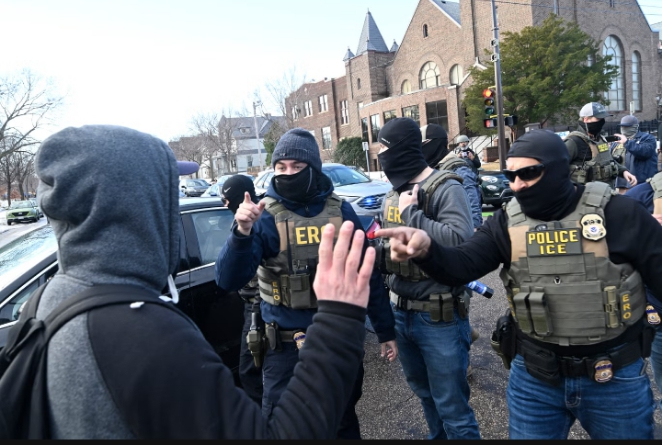
As protests spread, the Trump administration deployed thousands of ICE and Border Patrol officers to Minneapolis, the largest city in Minnesota.
Agents have reportedly been operating in unmarked vehicles, conducting street-level enforcement actions and arresting individuals suspected of being in the country illegally.
Civil rights groups and local officials say the tactics amount to intimidation and collective punishment. Critics argue that federal agents have aggressively questioned residents, surveilled protest organizers and disproportionately targeted members of the Somali-American community.
Minnesota officials have condemned the operation as an “occupation,” accusing the White House of deliberately inflaming tensions to justify harsher crackdowns.
The Insurrection Act of 1807 is a rarely used federal law that allows the US president to deploy active-duty military forces or federalise the National Guard within states to suppress civil unrest, rebellion or obstruction of federal law.
Although Trump claimed that “many” presidents have invoked the act, its use has been limited and controversial.
The most notable modern example occurred in 1992, when President George H.W. Bush sent US Army troops to Los Angeles to quell riots following the acquittal of police officers involved in the beating of Rodney King.

Earlier presidents, including Lyndon Johnson, John F. Kennedy and Dwight Eisenhower, invoked the law during the civil rights era to enforce desegregation orders—often reluctantly and, in some cases, against the wishes of state governors.
Under normal circumstances, US law prohibits the military from performing domestic law enforcement duties. Invoking the Insurrection Act bypasses these restrictions, granting the president sweeping authority to deploy troops in American cities.
Legal experts warn that such a move in Minnesota would represent a significant expansion of executive power and could set a dangerous precedent.
“Using active-duty troops against civilian protesters should always be a last resort,” said one constitutional law scholar. “The risk of escalation, misuse of force and erosion of democratic norms is extremely high.”
Trump’s interest in the Insurrection Act dates back to his first term. During the nationwide protests following the killing of George Floyd in Minneapolis in 2020, Trump reportedly urged advisers to deploy troops to suppress demonstrations.
According to accounts later published by journalists, Trump suggested using overwhelming force against protesters, including aggressive tactics that senior military leaders resisted.
Former officials said the president frequently clashed with advisers over the limits of military involvement in domestic affairs.
Since returning to office, Trump has repeatedly threatened to invoke the act in Democratic-led cities such as Los Angeles, Portland and Chicago, often framing unrest as evidence of local leadership failure.
State and local leaders in Minnesota have rejected Trump’s accusations, insisting they are capable of maintaining public order without federal military intervention.
Read also:Trump set to meet Venezuelan opposition leader at White House today
Officials argue that the president’s rhetoric risks further inflaming tensions and undermining efforts to de-escalate protests.
They also warn that federal actions could violate states’ rights and deepen mistrust between immigrant communities and law enforcement.
“This is not about restoring order,” one Minnesota official said. “This is about political theatre and using fear to justify extreme measures.”
Trump’s threat has reverberated across the country, with civil liberties organisations, Democratic lawmakers and even some conservatives expressing alarm.
Opponents argue that invoking the Insurrection Act against protest movements—rather than armed rebellion or widespread collapse of governance—could undermine constitutional protections and normalize military force in civilian life.
Supporters of the president, however, say decisive action is necessary to protect federal agents and enforce immigration law, accusing critics of prioritizing politics over public safety.
As protests continue in Minneapolis, all eyes remain on the White House and Minnesota’s response. Legal challenges are expected if Trump moves forward with invoking the Insurrection Act, potentially setting up a major constitutional showdown.
For now, the threat alone has intensified national debate over immigration enforcement, protest rights and the limits of presidential power—issues that are likely to dominate US politics in the months ahead.
About The Author