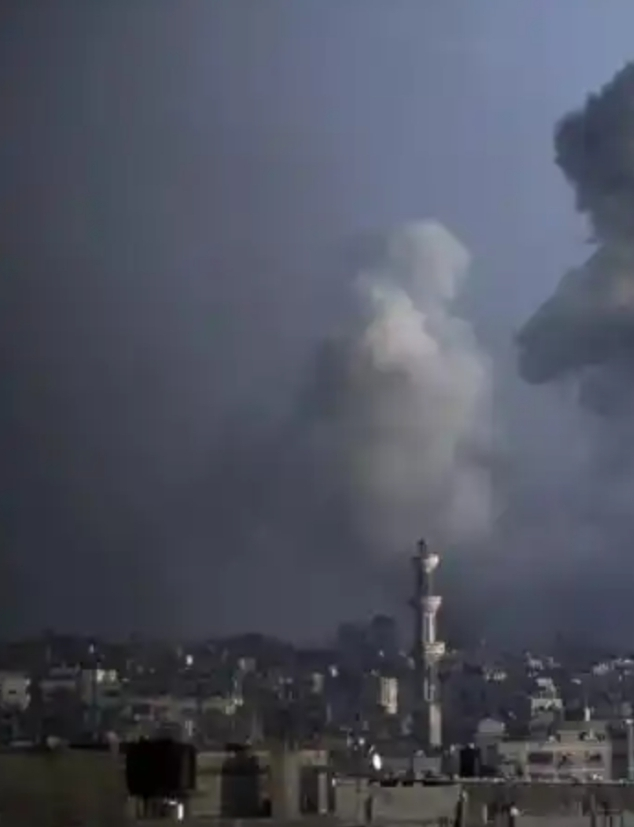
Israel has breached the United States-brokered Gaza ceasefire at least 497 times since its implementation on 10 October, killing hundreds of Palestinians in relentless attacks.
According to the Gaza Government Media Office, 342 civilians have been killed during these violations, with women, children, and the elderly constituting the majority of casualties.
In its statement on Saturday, the Gaza office condemned Israel’s continued serious and systematic violations of the truce, describing them as clear breaches of international law.
The office added that 27 violations occurred on Saturday alone, resulting in 24 deaths and 87 wounded, emphasizing Israel’s accountability for humanitarian and security consequences.
Israel’s restrictions on aid flow into Gaza continue, obstructing vital medical supplies, food, and fuel despite explicit ceasefire terms mandating full humanitarian access.
On Saturday, Israel’s military launched a series of airstrikes across Gaza, killing at least 24 Palestinians, including children, marking the sixth-week-old truce’s latest violation.
Israeli Prime Minister Benjamin Netanyahu’s office stated that the attacks were in response to a Hamas fighter targeting Israeli soldiers inside Gaza’s “yellow line” territory.

The Israeli military claimed five senior Hamas fighters were killed in retaliation, framing the attacks as defensive actions against ongoing threats.
Hamas demanded Israel disclose the identity of the fighter allegedly attacking Israeli troops, accusing Israel of fabricating pretexts to undermine the ceasefire agreement.
Izzat al-Risheq, senior Hamas political bureau member, called on the US and other mediators to pressure Israel to uphold the truce and provide proof of its claims.
Al-Risheq further stated that Israel daily violates the agreement, turning what should be a humanitarian pause into a sustained campaign of aggression and intimidation.
Reports suggesting Hamas had ended the ceasefire were dismissed, with Palestinian authorities insisting that Israel’s actions are the primary cause of renewed violence.
Correspondents described the Gaza truce as a ceasefire only “in name,” noting ongoing Israeli airstrikes across populated areas.
These strikes have shattered Palestinian civilians’ sense of security, reinforcing the perception that Israel treats the deal as a tactical maneuver rather than a binding agreement.
Dozens of families in northern Gaza remain effectively besieged as Israeli forces reposition deeper within the enclave, violating the terms set out in the ceasefire.
The ceasefire agreement had defined the “yellow line” as an unmarked boundary, which Israel now routinely crosses, maintaining control over more than half of Gaza’s coastal territory.
Hamas accused Israel of deliberately violating the truce under “fabricated pretexts” and urged mediators including the US, Egypt, and Qatar to intervene immediately.
Israel’s westward push beyond the yellow line has significantly altered the agreed boundary, raising concerns that the truce’s original intent is being undermined.
Airstrikes have targeted Palestinians in homes, vehicles, and shelters, leaving residents traumatized and deepening humanitarian needs in Gaza, already devastated by prior conflicts.
Medical facilities report being overwhelmed with casualties, while shortages of supplies exacerbate the suffering, highlighting the critical consequences of Israel’s continued blockade on essential resources.
Palestinian health authorities say hospitals face critical shortages of medicine, fuel for generators, and medical equipment, leaving doctors and nurses struggling to save lives under extreme conditions.
International observers warn that repeated violations of the ceasefire increase the likelihood of renewed large-scale conflict, further destabilizing Gaza and undermining any prospects for long-term peace.
Ceasefire mediators have expressed alarm at Israel’s actions, emphasizing that accountability and adherence to the agreement are essential to prevent further civilian casualties and humanitarian collapse.
Al-Risheq called on the international community to pressure Israel to implement the agreement fully, warning that otherwise, Gaza could descend into another cycle of intensified violence.
The humanitarian situation in Gaza remains dire, with civilians trapped in conflict zones, electricity shortages, and insufficient water supplies adding to the population’s vulnerability.
Despite global calls for restraint, Israel continues air operations, justifying attacks as countermeasures, while Palestinians endure daily threats to life, property, and basic human needs.
The international community has criticized Israel’s systematic breaches, noting that violations of humanitarian law risk exacerbating regional tensions and drawing condemnation from human rights organizations worldwide.
Observers note that while the truce offers a temporary pause in hostilities, Israel’s continued military operations demonstrate that its strategic objectives may prioritize territorial control over humanitarian considerations.
Hamas asserts that any sustainable peace must involve respect for the ceasefire and full humanitarian access, warning that violations threaten the agreement’s legitimacy and effectiveness.
Reports indicate that children constitute a significant portion of casualties, highlighting the profound social and psychological impact of sustained conflict on Gaza’s youngest residents.
Aid agencies warn that repeated breaches of the ceasefire jeopardize ongoing relief efforts, with restricted access to food, medicine, and shelter severely compromising humanitarian operations.
The United States and other mediators continue to urge compliance, emphasizing that unilateral actions undermine negotiations and prolong civilian suffering in Gaza’s war-torn environment.
Communities living near the yellow line face heightened risk, with constant surveillance, shelling, and airstrikes creating a pervasive climate of fear for civilians and emergency responders alike.
Israeli military drones have conducted targeted strikes in densely populated areas, killing individuals and destroying infrastructure, further straining already overburdened public services in Gaza.
Hamas leaders continue to document violations meticulously, aiming to hold Israel accountable in international forums and to pressure mediators to enforce compliance with the ceasefire agreement.
Local authorities report that the cumulative effect of repeated strikes has displaced hundreds of families, forcing them into overcrowded shelters and temporary accommodations with inadequate facilities.
Civil society organizations emphasize that children and the elderly are disproportionately affected, facing trauma, malnutrition, and limited access to essential healthcare, worsening Gaza’s humanitarian crisis.
Analysts argue that Israel’s pattern of violations could undermine broader regional stability, risking escalation into more extensive military confrontations and complicating future peace negotiations.
The Gaza ceasefire agreement, though hailed initially as a diplomatic breakthrough, remains fragile, with repeated violations illustrating the challenges of maintaining peace under persistent military and political pressures.
Hamas has reiterated that any deviation by Israel from the truce terms constitutes a serious breach of international law, holding the occupying power responsible for civilian suffering.