
Iran US talks are back in the spotlight after Donald Trump said Tehran has a “last chance” to sign a peace deal, even as Iranian officials publicly denied any negotiations were happening.
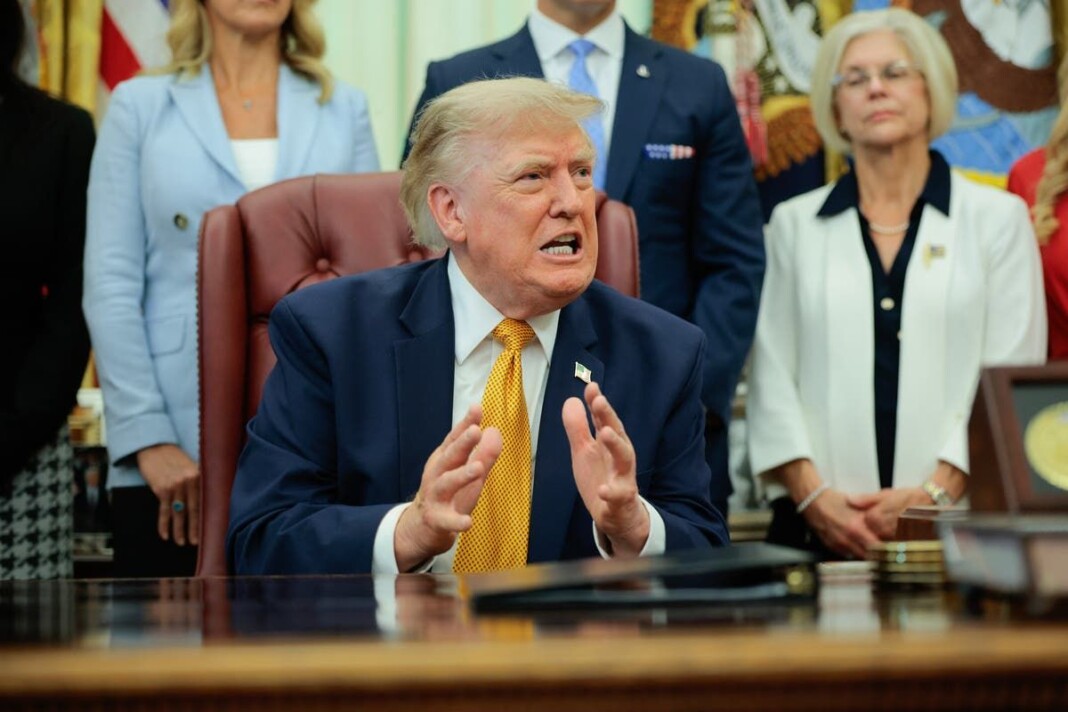
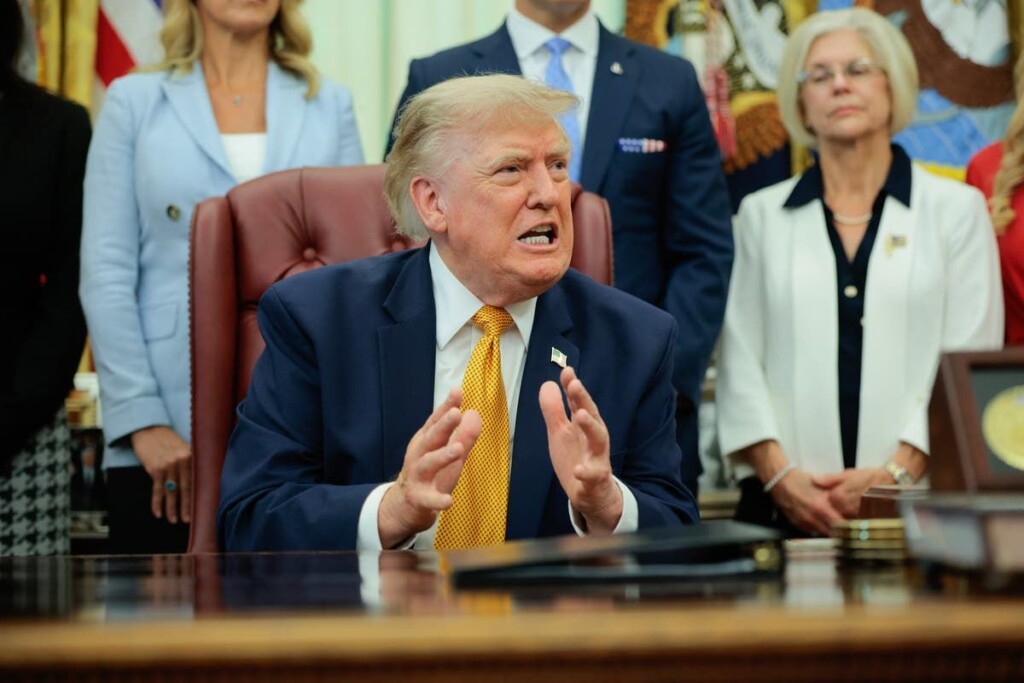
Speaking from the Oval Office on Monday, the US president claimed discussions were ongoing “right now” to end a five-month stand-off that has roiled oil markets and security in the Gulf.
“This is a last chance for them to sign a good document,” Trump told reporters. “The talks are going on, they’re going on right now.”
He added that Iran had “begged” for negotiations, despite Tehran’s public statements to the contrary.
The president also made a striking claim about maritime security: “The Strait of Hormuz could be open literally by tomorrow.”
According to Trump, the first phase of any agreement would be reopening the waterway, followed by “denuclearisation,” which he said “will take a little while.”
Strait Of Hormuz Opening Becomes Central Bargaining Chip
The Strait of Hormuz opening has become the immediate focus of diplomacy, given that a fifth of the world’s oil and gas passes through the narrow channel.
A cargo ship reported being “hit by an unknown projectile” at 2am local time, 37km northeast of Al Khasab in Oman, according to the UK Maritime Trade Operations Center.
The UKMTO did not identify the vessel or its cargo, but noted the incident occurred near the mouth of the Persian Gulf.
Iran’s foreign ministry spokesperson Esmaeil Baghaei flatly denied Trump’s account, saying Tehran is “not currently holding any talks with Washington.”
Baghaei said Iran is instead discussing with Oman a “temporary safe route” through the strait, not a formal deal with the US.
The contradiction highlights the fragile state of Iran nuclear negotiations, where public messaging and back-channel diplomacy rarely align.
Iranian President Masoud Pezeshkian struck a different tone on Tuesday, saying Tehran does not seek to expand the war.
“Conflict, whether in a neighbourhood, a city, a country or between countries, is a disease that has emerged,” he said, per state media.
“We will defend our boundaries, but we are not seeking to expand the war or continue it,” Pezeshkian added.
Trump Tehran Last Chance Rhetoric Escalates Pressure
Trump’s “last chance” framing signals frustration after months of failed attempts to restart direct dialogue.
“For some reason, when they’re talking, they don’t like saying that they’re talking,” he said. “So I say, ‘We’re in talks’. Big deal, we’re in talks.”
He claimed Iran requested talks after the US planned what would have been the biggest attack “since WWII.”
The White House has not provided evidence of those planned strikes, and officials declined to elaborate on timing or targets.
The rhetoric comes as the US military reportedly seeks new options to pressure Tehran.
According to CNN, a senior officer at US Central Command’s intelligence branch asked analysts for “creative and unconventional” ways to “punish” Iran last Wednesday.
The request reflects growing impatience in Washington over the deadlock, five months into what many describe as an unpopular conflict.
Iran responded with warnings of its own. Military adviser Mohsen Rezaei wrote on X that “if the blockade continues, American vessels and forces will face serious risks and casualties.”
“The US must change its behaviour – or we will not tolerate this. We will never permit the opening of a second corridor in the Strait of Hormuz,” Rezaei stated.
Oil markets reacted quickly, with prices climbing to $84 a barrel amid fears of disruption.
Analysts say any closure of Hormuz would trigger a global energy shock, which is why both sides are using it as leverage.
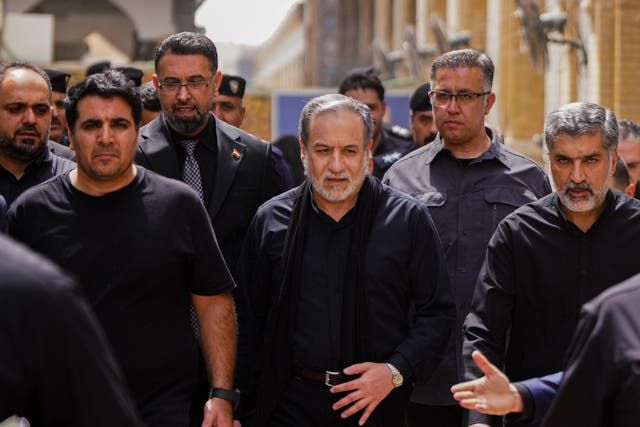
Iranian Foreign Minister Abbas Araghchi traveled to Iraq’s Najaf for Arbaeen commemorations, in a trip seen as balancing ties with Baghdad and Washington.
Meanwhile, Iran’s industry minister Mohammad Atabak headed to Pakistan to discuss easing transit bottlenecks for Iranian containers.
The moves suggest Tehran is preparing for a prolonged confrontation while keeping diplomatic channels with regional partners open.
In Washington, critics accused Trump of politicizing intelligence. Democrat John Garamendi wrote on X that “Trump is the biggest liar on the Iran war.”
“When he wants to tell the truth he usually gives updates to Congress in classified hearings,” Garamendi said. “That way members of Congress aren’t allowed to share the truth.”
The administration has not confirmed whether classified briefings have been held on Iran in recent days.
Syrian interim president Ahmad al-Sharaa and Iraq’s Kurdish leader Nechirvan Barzani met in Damascus to discuss regional security.
Their talks came amid drone strikes by Iranian-backed militias targeting US interests in Iraq, including the Kurdish region.
Syrian state media also reported a thwarted weapons smuggling attempt at the Iraq border in June, allegedly linked to Hezbollah.
Hezbollah denied the allegations, but the incident underscores how the Iran-US standoff is spilling across borders.
In Gaza, Nikolay Mladenov, high representative for Gaza on the Board of Peace, met Benjamin Netanyahu to urge a halt to attacks.
An Israeli strike on Gaza City killed two men, Shifa Hospital reported, while weekend attacks left at least 17 dead, including children.
The broader Middle East remains on edge as the US Iran war tensions show no sign of easing.
Trump insisted Monday that a deal is close, but offered no timeline beyond the Hormuz claim.
“[The talks] are going on, they’re going on right now,” he repeated, despite Iran’s denials.
Diplomats in Oman, who have mediated past US-Iran contacts, have not confirmed any meetings this week.
Regional experts say the most likely scenario is limited maritime de-escalation, not a full nuclear agreement.
Read also:Ukraine Nato membership: Former top commander says Kyiv has no chance of joining
For now, the world is watching whether the Strait of Hormuz opening happens “tomorrow,” as Trump promised, or remains blocked by mutual distrust.
The stakes are clear: oil flows, shipping safety, and the risk of a wider war all hinge on the next 48 hours.
As Pezeshkian put it, “We must work under these circumstances to build a healthy society so that the enemy is not tempted to enter it.”
Whether that means compromise or confrontation will depend on whether Iran US talks move from public sparring to private agreement.