


Iran tightens control of Strait of Hormuz with checkpoints, ship vetting and passage deals as the world’s most important oil corridor rapidly transforms into a tightly controlled maritime pressure point under Tehran’s growing influence.
What was once regarded as an internationally governed commercial waterway is increasingly operating through Iranian military oversight, diplomatic clearances and vessel screening systems that are reshaping global shipping norms and alarming energy markets worldwide.
A sweeping Reuters investigation revealed how Iran has developed a sophisticated multi-layered mechanism involving the Islamic Revolutionary Guard Corps, maritime authorities and political channels that now determine which vessels may safely cross the strait and which remain stranded inside Gulf waters.
Iran’s expanding maritime control alarms global energy markets
The Strait of Hormuz remains the single most critical artery for global energy trade, carrying roughly one-fifth of the world’s oil supply. But amid escalating regional conflict and mounting military tensions, shipping traffic through the corridor has slowed dramatically as commercial operators confront a dangerous new reality.
According to Reuters, fewer than 60 ships crossed the strait during parts of early May, a sharp decline from the typical daily average of between 120 and 140 vessels before the crisis escalated.
The consequences are already rippling through international markets. Commercial oil reserves are tightening while shipping insurance costs are soaring and governments dependent on Gulf energy exports are being forced into urgent diplomatic manoeuvres.
Fatih Birol warned that the crisis risks becoming the “world’s worst ever energy crisis,” reflecting growing fears that prolonged disruption in Hormuz could destabilise global fuel supplies for months.
Agios Fanourios I becomes symbol of new Hormuz reality
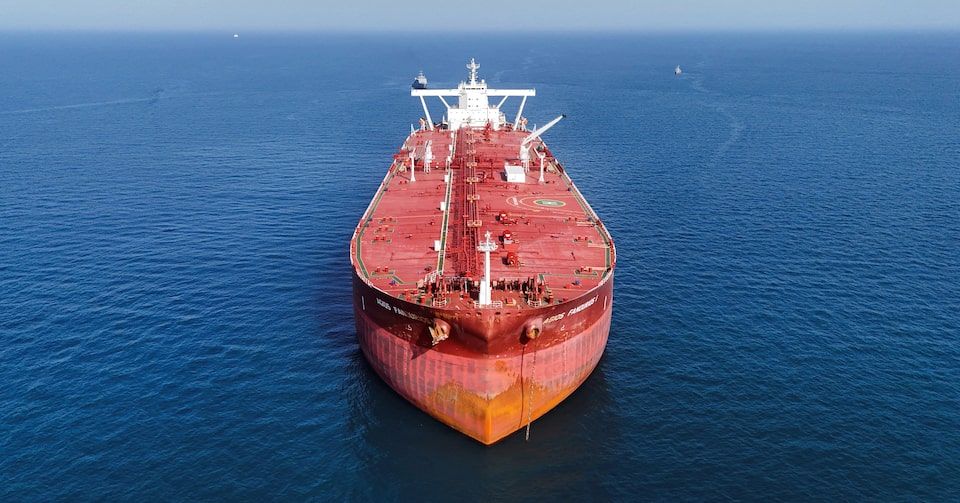
The Malta-flagged tanker Agios Fanourios I has emerged as one of the clearest examples of the new maritime order taking shape in the Gulf.
Loaded with Iraqi crude oil and bound for Vietnam, the vessel reportedly remained trapped near Dubai for days before Iraq negotiated directly with Iran to secure clearance for passage through the Strait of Hormuz.
Reuters reported that the arrangement was overseen by Iraqi Prime Minister Mohammed Shia al-Sudani as Baghdad sought to move critical oil exports through increasingly militarised waters.
The tanker eventually entered the strait under Iranian instructions, navigating routes hugging the coastline while crossing multiple island checkpoints controlled by Iranian forces.
But the passage quickly turned tense.
Near Hormuz Island, Islamic Revolutionary Guard Corps speedboats intercepted the vessel after suspicions reportedly emerged regarding possible smuggled cargo onboard. Iranian officials later determined the concerns were unfounded, but the stop transformed what should have been a five-hour crossing into a two-day ordeal.
“Once we were informed Agios passed Hormuz, we breathed a sigh of relief,” one individual monitoring the tanker’s progress told Reuters.
The incident underscored how Tehran’s expanding maritime authority is no longer merely strategic rhetoric but an operational reality shaping global shipping movements in real time.
IRGC inspections and affiliation checks redefine shipping access
At the centre of the emerging system is the Islamic Revolutionary Guard Corps, which Reuters reported now plays a major role in reviewing and approving vessel movements through the strait.
Shipping operators seeking passage are reportedly required to submit detailed affiliation documents containing sensitive information about cargo ownership, crew nationalities, destinations and management structures.

“The affiliation check is to identify if the vessel has any connection to the U.S. or Israel,” a European shipping source told Reuters.
The vetting process can reportedly take days and may involve physical inspections by Iranian personnel before authorisation is granted.
Documents reviewed by Reuters showed that Iran’s newly created Persian Gulf Strait Authority coordinates aspects of the approval process alongside maritime agencies, security institutions and the Supreme National Security Council.
The investigation also revealed that vessels linked to countries maintaining closer relations with Tehran, including China, Russia and India, appear to receive preferential treatment under the evolving system.
Claims of shipping fees intensify sanctions concerns
Reuters also uncovered allegations that some vessels are paying substantial sums to Iranian authorities in exchange for safe passage through the strait.
Two European shipping sources reportedly said some operators have paid more than $150,000 to secure transit approvals.
Iranian officials told Reuters that certain “security and navigation fees” may apply depending on cargo type and operational requirements, although Reuters said it could not independently verify the total amounts involved.
The issue has sparked major sanctions concerns internationally.
The U.S. Treasury Department warned that companies engaging in transactions with Iranian authorities risk violating sanctions regulations and could face severe penalties.
“The department is prepared to take action against any foreign company supporting illicit Iranian commerce,” the Treasury Department said in response to Reuters’ findings.
Maritime insurance specialists also warned that any payments benefiting the IRGC could invalidate vessel insurance protections because the organisation is designated as a terrorist entity by several Western governments.
Governments seek direct arrangements with Tehran
As conditions deteriorate inside the Gulf, governments are increasingly turning to diplomatic channels to secure passage for vessels and crews.
Reuters reported that India has established direct communication mechanisms involving its embassy in Tehran, the Iranian navy and the IRGC to coordinate vessel movements.
“The Indian navy also told us that if the Iranians ask you to stop, then you should stop,” an Indian shipping industry source told Reuters.
Indian authorities reportedly provide captains with designated routes after Iranian clearance is obtained, while ships are instructed to limit communications and follow precise navigation instructions during transit.
Other countries including Iraq, Vietnam and Pakistan are also believed to be negotiating separate arrangements with Tehran to avoid prolonged shipping disruptions.
China’s Foreign Ministry called for future Hormuz arrangements to comply with international law while recognising “the legitimate security concerns of coastal states.”
The growing wave of bilateral negotiations illustrates how Iran’s expanding influence over the strait is becoming deeply embedded in regional diplomacy.
Shipping crews describe fear inside the Gulf
For many sailors navigating the Strait of Hormuz, the crisis has become intensely personal.
Reuters interviewed seafarers who described terrifying encounters involving armed patrol boats, military checkpoints and fears of missile or gunfire attacks.
“These ships don’t have armour or anything of that sort,” one Indian shipping industry source said. “The bullets pierce through.”
An Indian sailor who successfully crossed the strait said Iranian naval forces instructed the vessel to steer carefully because of fears surrounding sea mines in the area.
“It was a frightening sight,” the sailor told Reuters. “Even in my wildest dreams, I cannot imagine going to sea again during a war.”
The testimonies reflect the growing dangers facing thousands of sailors still trapped in Gulf waters as geopolitical tensions continue escalating.
U.S. blockade creates another layer of confrontation
Even vessels that secure Iranian approval remain vulnerable to American enforcement measures in the region.
After exiting Iranian-controlled waters, the Agios Fanourios I was reportedly intercepted again during U.S. naval blockade operations targeting Iranian-linked maritime activity.
According to U.S. Central Command spokesperson Capt. Tim Hawkins, American forces ordered the tanker to halt while documentation was reviewed.
The vessel was later released and resumed its journey to Vietnam carrying approximately two million barrels of Iraqi crude oil.
The incident highlights the impossible balancing act now confronting global shipping operators. Compliance with Iranian procedures may trigger scrutiny from Washington, while refusing Iranian directives could prevent vessels from leaving the Gulf entirely.
A geopolitical transformation with global consequences
Security analysts increasingly believe the Strait of Hormuz is entering a fundamentally new phase where military influence, energy security and geopolitical bargaining are converging at unprecedented levels.
Read also: UK eases Russian oil sanctions amid Iran war fuel shock, sparking backlash against Labour Government
Danny Citrinowicz said the evolving system reflects Iran’s growing ability to determine who gains access to the waterway and under what conditions.
“The straits will be blocked or opened up only by the approval of the Iranian regime,” he said.
“Some will get through because of political alliances, others will have to pay, others will be turned back. This is the new norm.”
Those warnings now carry profound significance for global energy markets already under strain from conflict, inflation and supply uncertainty.
Iran tightens control of Strait of Hormuz with checkpoints, ship vetting and passage deals is no longer simply a regional security development. It is rapidly becoming one of the defining geopolitical and economic challenges confronting the global economy in 2026.
About The Author
