


Iran Strikes Kuwait International Airport in a dramatic escalation of tensions across the Gulf, leaving at least one person dead and several others injured after a drone and missile attack on a passenger terminal.
The strike came hours after US forces launched a missile attack on a tanker in the Strait of Hormuz, triggering a new round of military exchanges that have pushed hopes for a ceasefire further out of reach.
The attack marks one of the most significant spillovers of the ongoing US-Iran confrontation into neighboring Gulf states. Analysts warn that the widening battlefield could threaten regional stability, disrupt global energy markets, and draw more countries into a conflict that has already spread beyond Iran’s borders.
Kuwait Airport Attack Sparks Regional Alarm
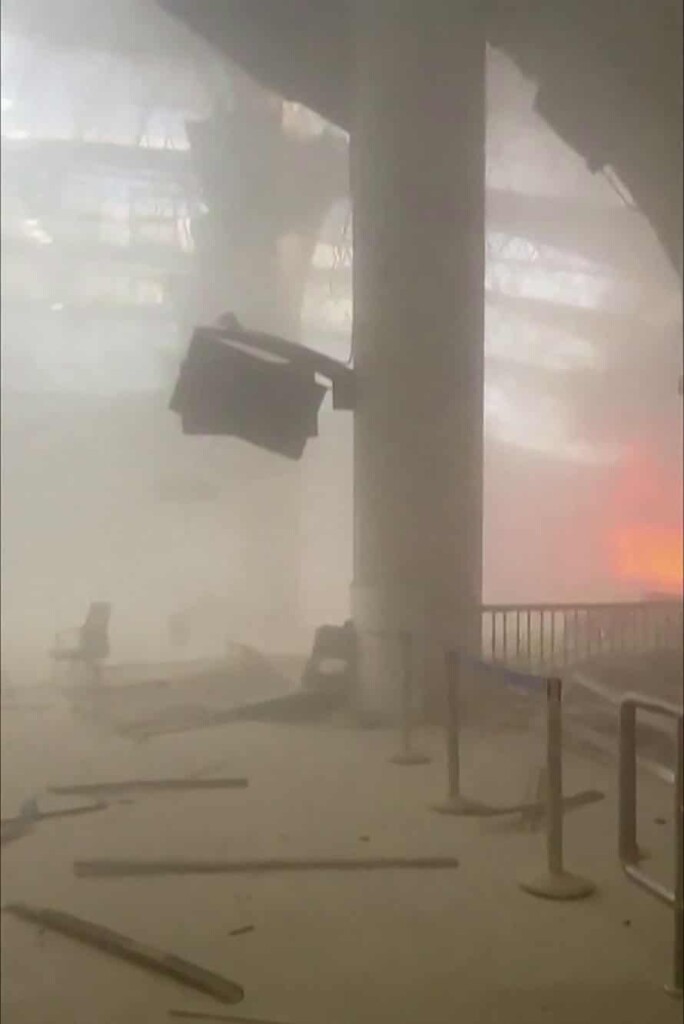
Kuwait’s military confirmed that Iranian strikes caused substantial damage to facilities at Kuwait International Airport. Emergency responders rushed to the scene after explosions rocked the airport complex, forcing authorities to suspend flight operations and redirect incoming aircraft.
Kuwaiti defence ministry spokesperson Brigadier General Saud Abdulaziz Al-Atwan described the incident as a “criminal Iranian aggression” that caused significant material destruction and multiple casualties.
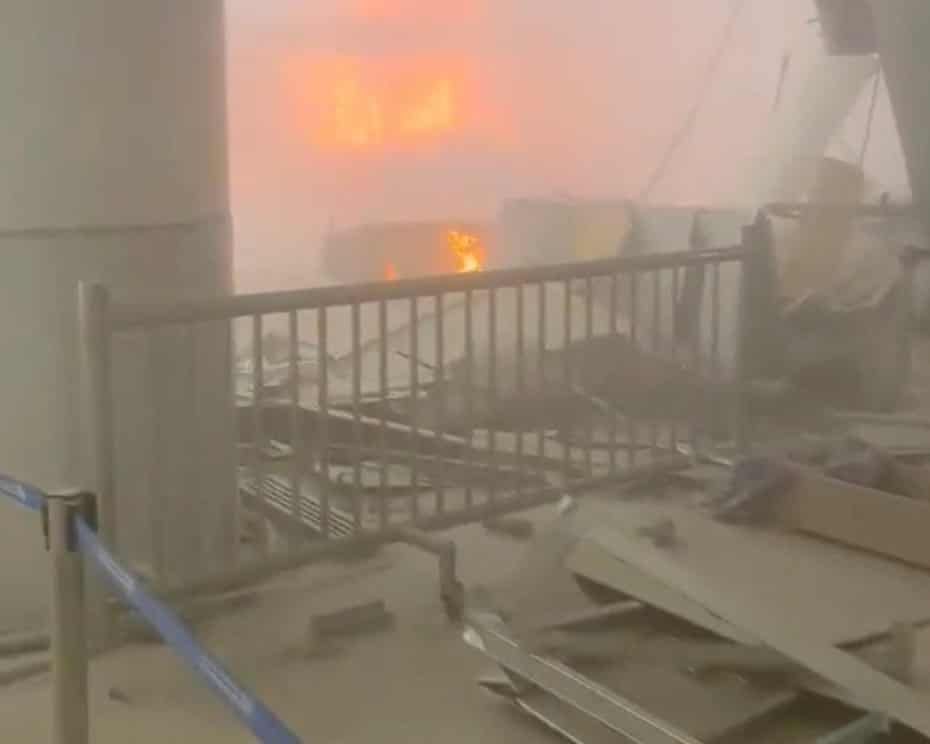
Images circulating online showed smoke rising from damaged sections of the airport terminal as emergency crews battled fires and evacuated affected areas.
The attack has heightened fears that strategic civilian infrastructure across the Gulf could become targets if hostilities continue to escalate.
How the Latest Escalation Began
The latest confrontation began when US Central Command announced that American forces had disabled a tanker identified as the Botswana-flagged M/T Lexie.
According to US officials, the vessel ignored repeated warnings while attempting to move through waters near Iran’s Kharg Island despite an ongoing American naval blockade.
A Hellfire missile reportedly struck the tanker’s engine compartment, rendering the vessel inoperable.
US military officials said the operation was intended to enforce maritime restrictions and prevent violations of the blockade imposed against Iran.
Iran, however, viewed the action as a direct attack and quickly launched retaliatory operations across the region.
Iran Vows Retaliation
Iran’s Islamic Revolutionary Guard Corps claimed responsibility for multiple retaliatory actions following the US strike.
The IRGC said it targeted military-related facilities connected to American operations and warned that further attacks would follow if Washington continued its military campaign.
In a statement, the organization declared:
“These responses should serve as a lesson.”
Iranian officials also accused neighboring Gulf governments of allowing their territories to be used for operations against Iran.
Tehran’s foreign ministry argued that countries hosting US military assets share responsibility for actions launched from their soil.
The statement significantly raised diplomatic tensions between Iran and several Gulf states already concerned about being dragged deeper into the conflict.
Strait of Hormuz Remains the World’s Most Dangerous Flashpoint
The Strait of Hormuz remains at the center of the crisis.

The narrow waterway handles a significant portion of the world’s oil exports, making any military confrontation there a matter of global concern.
Since April, US forces have intensified efforts to prevent vessels from supporting Iranian maritime activities. American officials say more than 120 ships have either been redirected or monitored under expanded enforcement measures.
Energy analysts warn that any prolonged disruption in the area could send oil prices soaring and place additional strain on already fragile global supply chains.
The latest military exchange demonstrates how quickly incidents in the Strait of Hormuz can trigger wider regional consequences.
Ceasefire Hopes Fade
The renewed violence comes despite ongoing diplomatic efforts aimed at securing a ceasefire between the United States and Iran.
US Secretary of State Marco Rubio recently suggested that progress had been made in negotiations and claimed that Tehran was showing greater willingness to discuss aspects of its nuclear programme.
However, events on the ground tell a different story.
Iranian Foreign Minister Abbas Araghchi accused both the United States and Israel of undermining ceasefire efforts through continued military actions.
Araghchi stated:
“The ceasefire between Iran and the US is unequivocally a ceasefire on all fronts.”
He added:
“Its violation on one front is a violation of the ceasefire on all fronts.”
The remarks indicate growing frustration within Tehran and raise doubts about whether meaningful diplomatic progress can still be achieved.
Lebanon Crisis Adds Fuel to the Conflict
Complicating matters further are ongoing military operations in Lebanon.
Iran has repeatedly pointed to Israeli strikes in southern Lebanon as evidence that ceasefire commitments are not being respected.
Lebanese authorities reported dozens of Israeli airstrikes across southern regions during the past several days.
Rescue workers recovered multiple victims from damaged residential areas, including members of the same family.
The developments have strengthened Iran’s position that regional hostilities remain interconnected and cannot be separated from broader negotiations involving Washington and Tehran.
Military Threats Intensify
Iranian military leaders are increasingly adopting stronger rhetoric.
Mohsen Rezaee, a senior adviser to Iran’s supreme leader, issued a direct warning to Washington.
“Every shot fired and every attack will be met with a deluge of missiles and drones.”
The statement underscores the risk of further escalation and suggests Iran is prepared to continue retaliatory operations if additional military action occurs.
US military officials have meanwhile reported intercepting several Iranian drones aimed at maritime targets, highlighting how rapidly the conflict is expanding beyond traditional battlefields.
What Happens Next?
The attack on Kuwait International Airport represents more than a single retaliatory strike.
It signals a dangerous shift in the conflict, where strategic civilian infrastructure and neighboring states increasingly find themselves caught between Washington and Tehran.
The growing frequency of attacks, counterattacks, and military threats suggests that both sides are testing each other’s limits while diplomatic efforts struggle to keep pace.
For Gulf nations, the latest violence reinforces concerns that their territory could become an active arena in a broader regional confrontation.
For global markets, the instability surrounding the Strait of Hormuz threatens one of the world’s most critical energy corridors.
Read also: 2026 midterm elections: Democrats target key seats as crucial primary results shape November battles
And for diplomats seeking peace, the attack demonstrates how fragile ceasefire discussions have become.
As missiles, drones, and military operations continue across multiple fronts, the Middle East once again finds itself facing the possibility of a much wider and more dangerous conflict.
About The Author
