Iran threatens seven Gulf countries with strikes on oil facilities and AI data centres if the United States and Israel launch another military assault, as Tehran warns that any renewed war could spread across the region and extend far beyond conventional military targets.
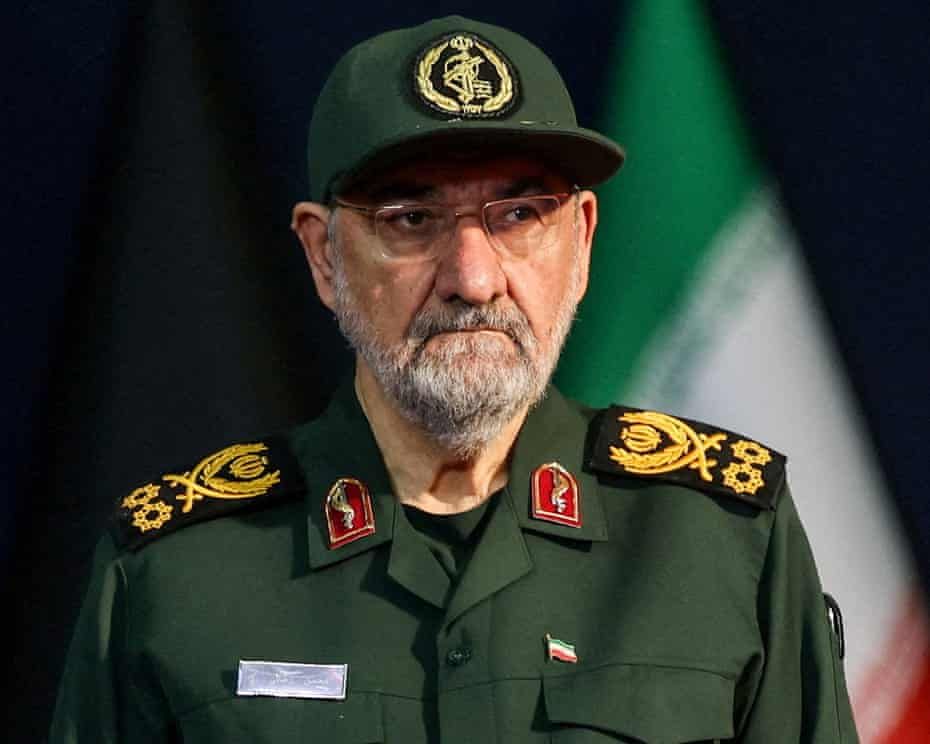
Mohsen Rezaei, secretary of Iran’s Supreme National Security Council, has warned that critical economic and technological infrastructure could be targeted if Washington and Tel Aviv resume attacks. The threatened targets include oil installations, undersea cables, data centres and artificial intelligence facilities.
The warning signals a potentially broader confrontation in which Iran could seek to impose severe economic costs on the United States, Israel and countries across the Gulf. Iranian officials have also suggested that a future conflict would have fewer restrictions on the targets and geographical areas involved.
Mehdi Mohammadi, an adviser to Iranian parliamentary speaker Mohammad Ghalibaf, alleged that US President Donald Trump and Israeli Prime Minister Benjamin Netanyahu had agreed in principle to launch another attack. The claim has not been independently established.
Iran Warns of ‘Zero Red Lines’ in Another War
Mohammadi said Tehran viewed another major confrontation as an existential threat, arguing that a third war within two years would place Iran’s continued existence at risk.
“We see the next conflict as an existential threat. The third war in two years means a threat to existence. Our strategy is ‘zero red lines’.”
He warned that Iran would seek to expand the conflict beyond the geographical and temporal limits its opponents might anticipate.
“We break the temporal and spatial dimensions of the conflict. The war will continue longer and in a wider geographical area than the enemy anticipates.”
The statements suggest that Iranian military planners could pursue a strategy designed to make another US-Israeli campaign more costly and difficult to contain.
Rather than limiting retaliation to military installations, Tehran has threatened infrastructure supporting regional economies and modern digital services. Oil production, electricity supplies, communications networks and computing facilities could all become part of the confrontation if the threats are carried out.
Iranian media reported Rezaei’s warning that undersea cables, data centres and artificial intelligence infrastructure could also be targeted during another war.
“In the event of a war, cables, datacentres and artificial intelligence facilities could also be targeted. If the conflict breaks out again, we will have a broader plan.”
Rezaei argued that Iran would not accept a situation in which its own economic infrastructure was attacked while the systems supporting its adversaries remained protected.
“There can be no arrangement in which Iran’s economic lifelines come under attack while the economic architecture enabling those attacks is considered untouched and immune.”
Oil Infrastructure and AI Facilities Become Potential Targets
Iran’s threat to target oil facilities across the Gulf could have consequences extending well beyond the immediate battlefield.
The Gulf remains central to international energy supplies, while the Strait of Hormuz is a crucial route for oil shipments. Any sustained disruption to shipping, production or export infrastructure could push energy prices higher and intensify pressure on importing countries.
The inclusion of data centres, artificial intelligence facilities and undersea cables adds another dimension to Tehran’s warning.
These systems support digital communications, financial transactions, cloud computing and other services relied upon by governments and businesses. Damage to critical facilities or communication links could therefore produce consequences extending beyond the physical locations struck.
Iran has not publicly demonstrated in the report that it could successfully carry out every threatened operation. Its ability to execute such attacks, including whether it might receive unofficial assistance from China or Russia, could be an important consideration for US decision-makers.
Nevertheless, the threats indicate that Tehran wants Washington and its regional partners to consider the wider economic and technological consequences of restarting the conflict.
A campaign intended to weaken Iran’s military capabilities could, under the scenario described by Iranian officials, trigger retaliation against infrastructure supporting trade, energy supplies and digital economies across multiple countries.
Trump Administration Weighs Possible Renewed Military Campaign
The escalating rhetoric comes amid reports that US military advisers have prepared potential targets for another joint operation against Iran.
According to recent US media reports cited by The Guardian, planners have drawn up a detailed list of possible targets for an assault that could take place after the US midterm elections scheduled for 3 November.
The reported preparations come after Trump repeatedly stepped back from striking Iran again during the previous four months. However, the deadlock in diplomatic negotiations has reportedly prompted US officials to discuss the possibility of a renewed military campaign.
Potential targets under consideration have reportedly included missile installations, oil facilities and nuclear sites.
The developments have raised fears that the diplomatic stalemate could give way to another round of direct military confrontation, despite the risks of regional escalation.
US and Israeli forces have also conducted extended joint training exercises, including practice runs over Iraq. The news site Axios reported that dozens of Israeli aircraft flew close to Iran’s border earlier in the week.
A major fire at an aluminium factory in Arak, central Iran, has also raised questions about possible sabotage inside the country. However, the available report does not establish the cause of the fire or confirm that it was connected to any covert operation.
These developments have contributed to an atmosphere of heightened tension, with both sides signalling military preparedness while negotiations remain unresolved.
Netanyahu Discusses Attack Timing With US Defence Secretary
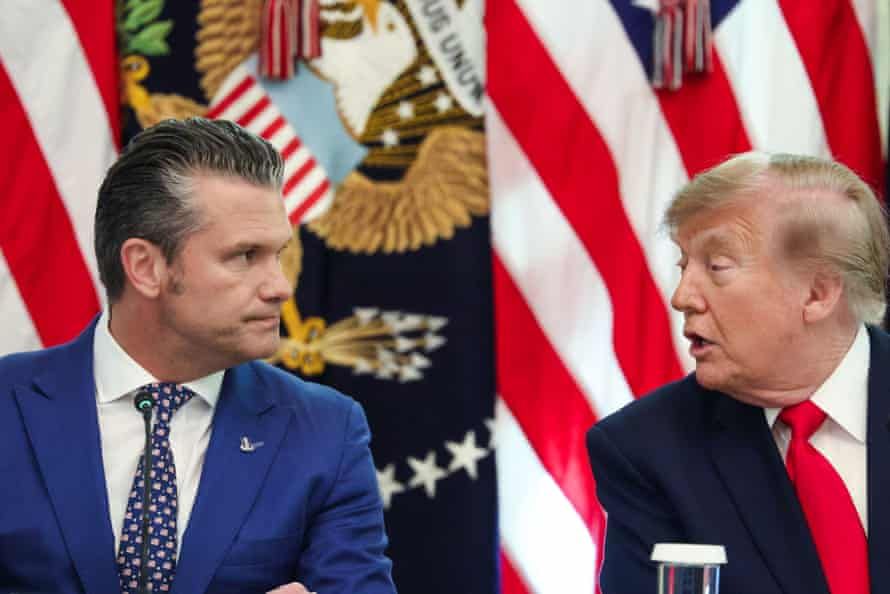
Israeli Prime Minister Benjamin Netanyahu met US Defence Secretary Pete Hegseth in Israel on Monday to discuss the timing and purpose of a possible joint attack on Iran.
The discussions reportedly included the potential political implications for Netanyahu’s chances of re-election.
According to the report, Netanyahu would prefer Iran to strike first, potentially strengthening the argument for a subsequent military response.
Meanwhile, Washington is expected to complete a substantial military buildup in the Middle East by early November, ahead of a possible shift in the balance of power in Congress when newly elected lawmakers take their seats in January.
Trump intends to have three aircraft carriers, thousands of Marines, fighter aircraft and special operations forces stationed in the region by November, according to the report.
Such a deployment would provide Washington with substantial military capabilities, but it would also increase the significance of decisions about whether to resume hostilities.
A new attack could trigger Iranian retaliation against US interests, Israel and infrastructure elsewhere in the region. Tehran’s latest statements suggest that Iranian officials want those potential consequences to form a central part of Washington’s calculations.
Iran Threatens Wider Regional Devastation
Reza Nasri, an international lawyer close to Iran’s foreign ministry, warned that another wave of fighting could spread across the region and threaten civilian infrastructure.
“A third wave of war would not stay contained. Power grids, desalination plants, refineries and ports across the region would burn. Tens of millions would be left without water or electricity, and a massive wave of refugees would move from Arab countries towards Europe.”
Nasri also predicted that a complete closure of the Strait of Hormuz would send oil prices soaring and risk pushing the global economy into recession.
“Hormuz would close completely, oil would spike, and the global economy would tip into recession. Israel’s economy, already bled by mobilisation and missile fire, would not survive a prolonged war of attrition. And Trump would be trapped in a crisis that consumes the rest of his presidency and leaves a wreck for his successors,” Nasri said.
His statements describe a worst-case scenario rather than a confirmed outcome. However, the warning highlights the potential consequences of a conflict involving energy infrastructure, maritime routes and essential services across the Middle East.
Attacks on desalination plants could be particularly serious for Gulf countries that depend heavily on desalinated seawater for drinking water. Damage to electricity networks, refineries and ports could also disrupt daily life, industrial production and international trade.
The possibility of large-scale displacement would add a humanitarian dimension to the economic and military consequences.
Iran Signals Political Targets Could Also Be Attacked
Iran’s threats have extended beyond infrastructure to include political targets under certain circumstances.
Fars news agency, which is close to Iran’s Islamic Revolutionary Guard Corps, reported that military and operational units had received instructions outlining how Tehran might respond to another widespread war.
According to the agency, the directives stated that if a new conflict involved the assassination of Iranian officials and the killing of civilians, Iran’s response would not be restricted to military installations.
The report said political targets could also be included.
The warning suggests that Iranian officials are considering a broader retaliation strategy if they believe a renewed campaign threatens the country’s leadership and civilian population.
However, the precise targets and operational plans have not been independently verified. The reported directives also do not establish that Iran has already carried out attacks against every category of target mentioned in its warnings.
The statements nevertheless increase concerns that another confrontation could expand beyond the battlefield and expose a wider range of people, institutions and infrastructure to danger.
Strait of Hormuz Crisis Drives Oil Prices Higher
Maritime tensions have already added to concerns about the stability of international energy supplies.
Iran’s Islamic Revolutionary Guard Corps naval forces claimed to have struck four commercial ships attempting to navigate through the Strait of Hormuz on Wednesday. The vessels were reportedly transferring oil from one ship to another.
The IRGC also claimed that three additional ships had been struck after hitting mines in the strait.
The Guardian reported that there was no independent verification of the number of ships allegedly hit.
Brent crude oil was trading at $113.40 per barrel, a recent high, amid reports in the United States about preparations for a possible renewed joint military assault on Iran.
The claims of maritime attacks and the prospect of further fighting have intensified concerns about shipping security in one of the world’s most strategically important waterways.
A prolonged disruption could affect oil exports, increase transportation costs and place additional pressure on economies already exposed to energy-price volatility.
The consequences would not be confined to Gulf producers. Countries dependent on imported fuel could face higher costs for transport, electricity generation and industrial operations if global crude prices rise further.
Diplomatic Efforts Continue Despite Threats
Despite the growing military rhetoric, diplomatic contacts have continued in an attempt to prevent another escalation.
Mediators from Iran and Pakistan reportedly explored revised ceasefire proposals during the week. The discussions included possible arrangements under which Iran could receive billions of dollars in frozen assets in exchange for lifting its blockade of the Strait of Hormuz.
Other proposals reportedly involved allowing United Nations weapons inspectors to examine Iran’s bombed nuclear sites and transferring its stockpile of highly enriched uranium to a third country.
Iran has offered to end the Hormuz blockade within seven days and begin talks on its nuclear programme, but only if its preconditions are met.
Those conditions include the lifting of US sanctions, leaving the two sides facing major disagreements over the terms of any settlement.
The diplomatic challenge is complicated by the possibility that Washington and Tehran are preparing for another confrontation even as intermediaries continue searching for a ceasefire arrangement.
Foreign ministers from three European countries, alongside representatives from Turkey, Saudi Arabia, Pakistan and Egypt, are due to meet in Istanbul to discuss the connected Iranian, Yemeni and Palestinian crises.
The meeting reflects wider regional concern that a new war could destabilise countries far beyond Iran and Israel.
What Iran’s Warning Means for the Gulf and Global Economy
Iran’s threat to strike oil installations, data centres, undersea cables and AI facilities across seven Gulf countries signals a potential expansion of the conflict into the economic and technological systems underpinning the region.
If another US-Israeli attack takes place, the danger would extend beyond military exchanges to energy exports, maritime transport, communications infrastructure and essential public services.
The most immediate international concern would be the Strait of Hormuz, where sustained disruption could reduce the flow of oil and drive prices higher. Damage to water and electricity infrastructure could also create severe humanitarian consequences for affected populations.
At the same time, Tehran’s threats remain distinct from confirmed military action. The extent of Iran’s capabilities, the likelihood of attacks on the facilities mentioned and the eventual response from Washington and its allies remain uncertain.
What is clear is that the diplomatic impasse is unfolding alongside military preparations and increasingly expansive warnings from Iranian officials.
Whether the parties return to negotiations or move towards another confrontation could determine not only the future of the conflict but also the security of energy supplies and critical infrastructure across the Gulf.
About The Author