Who is Iran’s Mohsen Rezaei, the veteran Revolutionary Guards commander appointed to a powerful national security position as Tehran faces continuing tensions with the United States and uncertainty over the wider regional conflict?
Who Is Iran’s Mohsen Rezaei?
Mohsen Rezaei is a veteran Iranian military and political figure who has spent decades at the centre of the country’s security establishment.
Iran appointed the 71-year-old hardliner as secretary of the Supreme National Security Council, replacing Mohammad Baqer Zolqadr.
The appointment places Rezaei in one of Iran’s most important security positions at a particularly sensitive moment.
The Supreme National Security Council coordinates major aspects of Iran’s security and foreign policy. It is chaired by President Masoud Pezeshkian, while Rezaei will serve as its secretary.
Reuters reported that the appointment also strengthens Rezaei’s position within the inner circle of Supreme Leader Ayatollah Mojtaba Khamenei, to whom he has recently served as a military adviser.
From Revolutionary Guard Commander To Security Official
Rezaei joined the Islamic Revolutionary Guard Corps shortly after Iran’s 1979 Islamic Revolution.
He rose rapidly through the organisation and became its commander in 1981 at just 27 years old.
He remained at the helm of the IRGC for 16 years, including most of the Iran-Iraq war between 1980 and 1988.
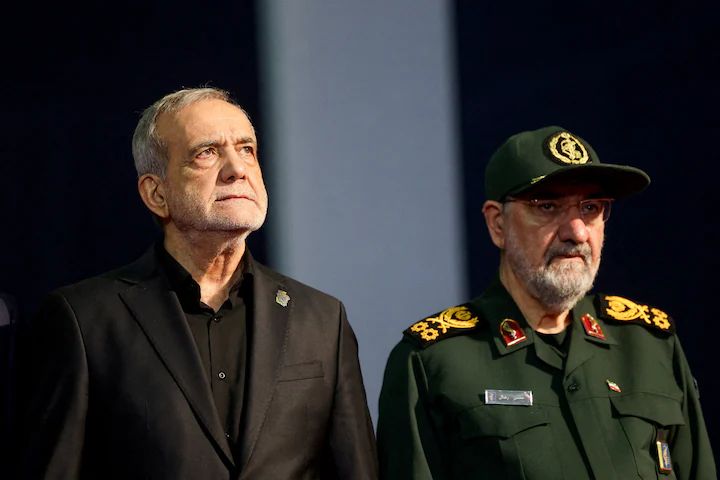
During that period, he oversaw the development of the Guards’ ground, naval and air capabilities, helping transform the organisation into one of the most influential military institutions in Iran.
His long tenure made him one of the most recognisable figures from the generation of Revolutionary Guard commanders who emerged after the revolution.
Rezaei’s Political Career
Presidential Ambitions
After leaving his position as IRGC commander, Rezaei remained deeply involved in Iran’s political and security establishment.
He repeatedly contested Iran’s presidential elections, establishing himself as a prominent conservative political figure.
His political career eventually took him into government.
Between 2021 and 2023, he served as vice president for economic affairs under the administration of hardline President Ebrahim Raisi.
Rezaei also holds a doctorate in economics from the University of Tehran, giving his career an unusual combination of military, political and economic credentials.
His latest appointment, however, returns him firmly to the centre of Iran’s national security machinery.
Close Ties To Mojtaba Khamenei
Military Adviser To The Supreme Leader
Rezaei was appointed military adviser to Mojtaba Khamenei in March, after Mojtaba succeeded his father, the late Ayatollah Ali Khamenei, as Iran’s Supreme Leader.
That relationship is important in understanding the significance of his latest promotion.
On Sunday, Mojtaba Khamenei issued a decree appointing Rezaei as his representative on the Supreme National Security Council.
The Supreme Leader cited Rezaei’s “valuable experience”, particularly his long military career, as part of the reason for the appointment.
The move signals the importance Tehran places on military experience as it navigates its confrontation with Washington and the broader security challenges facing the country.
Rezaei’s Hardline Position On The US
Vocal Critic Of Negotiations
Rezaei has repeatedly expressed scepticism about negotiations with the United States.
During the current conflict, he has issued statements taking a particularly uncompromising position toward Washington.
In April, he suggested that a US ground invasion could benefit Iran by creating opportunities to capture American personnel.
“I am not in favour of extending the ceasefire at all,” Rezaei said at the time, stressing that the position was his personal view.
His comments demonstrate the hardline approach that has characterised much of his public messaging during the conflict.
That stance could become increasingly significant as Iran and the United States continue to navigate a fragile diplomatic environment.

Role In Iran-US Tensions
Dispute Over The June Agreement
Rezaei also criticised aspects of the memorandum of understanding intended to help end the conflict in June.
Before Iran signed the agreement on June 17, he argued that parts of the arrangement remained unclear and required further clarification.
Days later, he accused Washington of violating the agreement by escalating tensions around the Strait of Hormuz.
His position places him firmly among Iranian officials who have questioned whether the United States can be trusted to honour diplomatic commitments.
The appointment could therefore give a prominent hardliner greater influence over Iran’s security discussions at a time when Tehran is weighing military pressure against diplomatic engagement.
Rezaei’s Revolutionary Background
Opposition To The Shah
Rezaei’s political involvement began before the Islamic Republic was established.
As a teenager, he participated in opposition activities against Iran’s Pahlavi monarchy.
He was arrested by SAVAK, the Shah’s security service, in 1973 and imprisoned.
He later helped establish and develop the Mansouroun militant organisation, which operated against the monarchy during the 1970s.
Several members of that organisation who were imprisoned alongside Rezaei would later become important figures within the Revolutionary Guard.
His early involvement in the revolutionary movement helped establish the credentials that eventually propelled him into Iran’s post-revolution security establishment.
Controversial Iran-Iraq War Record
Questions Over Operation Karbala-4
Rezaei’s military record has also generated controversy in Iran.
Critics have questioned his role in several costly operations during the Iran-Iraq war, including Operation Karbala-4 in December 1986.
The operation was intended to break through Iraqi defences and advance towards Basra but suffered heavy Iranian losses.
The controversy resurfaced in 2018 after Rezaei wrote that Karbala-4 had been conducted as a deception operation before another offensive.
He later clarified that the operation had initially been intended as a genuine military assault and that Iran subsequently used its failure as part of a deception strategy ahead of Operation Karbala-5.
The explanation did not end the controversy.
Veterans, families of those killed and senior political figures criticised his comments, reopening debate about one of the most painful episodes of the Iran-Iraq war.
Why Rezaei’s Appointment Matters
Mohsen Rezaei’s promotion comes at a critical moment for Iran.
The country is confronting military pressure from the United States and Israel while simultaneously dealing with diplomatic disputes over sanctions, regional security and the Strait of Hormuz.
Read also: India seizes thousands of Diageo bottles in safety crackdown
His decades of experience inside the Revolutionary Guard and his close relationship with Mojtaba Khamenei give him considerable weight within the security establishment.
At the same time, his record of scepticism toward negotiations suggests that Tehran’s security policy may continue to reflect a firm approach toward Washington.
The appointment does not necessarily mean Iran has abandoned diplomacy, but it places a highly experienced military hardliner at the heart of the institution responsible for coordinating national security and foreign policy.
For Iran, the decision represents the elevation of a figure whose career has been closely intertwined with the country’s revolutionary, military and political establishment.
For the United States and other regional powers, Rezaei’s return to a top security role will likely be closely watched as Tehran navigates its next phase of confrontation and diplomacy.