Trump’s Asia summit diplomacy is facing significant challenges as the US president travels to the Philippines and China for high-level meetings involving regional allies, trade disputes, tensions over Taiwan and an anticipated encounter with Chinese President Xi Jinping and Russian President Vladimir Putin.
Donald Trump is expected in Manila for the Association of Southeast Asian Nations (Asean) summit before travelling to Shenzhen for the Asia-Pacific Economic Cooperation (Apec) leaders’ meeting. His Asian tour also includes a meeting with leaders of the Quad, comprising the United States, India, Japan and Australia.
The diplomatic engagements come at a sensitive moment for Washington. Trump’s Republican Party is facing a loss of control of Congress from January following the midterm elections, while his administration is dealing with disagreements over trade, advanced technology and America’s position in the region.
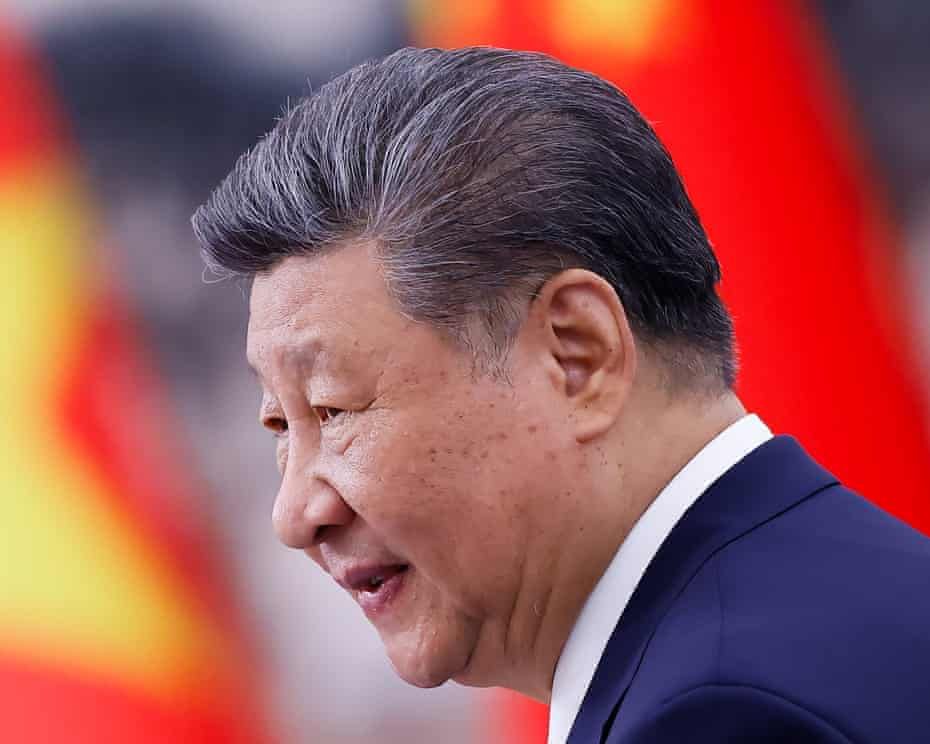
The Guardian’s live coverage highlighted the competing interests surrounding the meetings, including protests against Trump’s visit, China’s growing diplomatic activity and concerns about the implications of placing Putin alongside other world leaders at the Apec gathering.
Trump faces protests and diplomatic pressure in Manila
The US president’s arrival in Manila is taking place amid demonstrations linked to opposition to his policies and the reported scrapping of the US-led Pax Silica initiative.
His visit is part of a wider diplomatic programme intended to strengthen American relationships across Asia at a time when China is expanding its influence.
Trump is also scheduled to meet the leaders of India, Japan and Australia in the first Quad leaders’ meeting of his second presidential term.
The Quad is a strategic partnership broadly intended to counterbalance China’s growing regional influence. Its members have increasingly coordinated on security, economic cooperation and maintaining stability in the Indo-Pacific.
The discussions will be particularly important as Washington attempts to reassure its partners about its regional commitments while managing its complicated relationship with Beijing.
However, the president’s domestic political difficulties could affect how other governments approach negotiations with him.
A year earlier, Trump had used an Asian diplomatic tour to reach a trade truce with China and secure investment commitments from Japan and South Korea. His current visit comes under different political circumstances, with attention already shifting towards potential candidates for the 2028 US presidential election.
Kurt Campbell, a former deputy secretary of state under Joe Biden, observed that American presidents have sometimes used international engagements to demonstrate leadership when facing domestic political difficulties.
He cited previous examples involving Barack Obama and George W. Bush, who travelled to international meetings shortly after their parties suffered significant electoral setbacks.
Xi prepares to host Trump and Putin in historic meeting
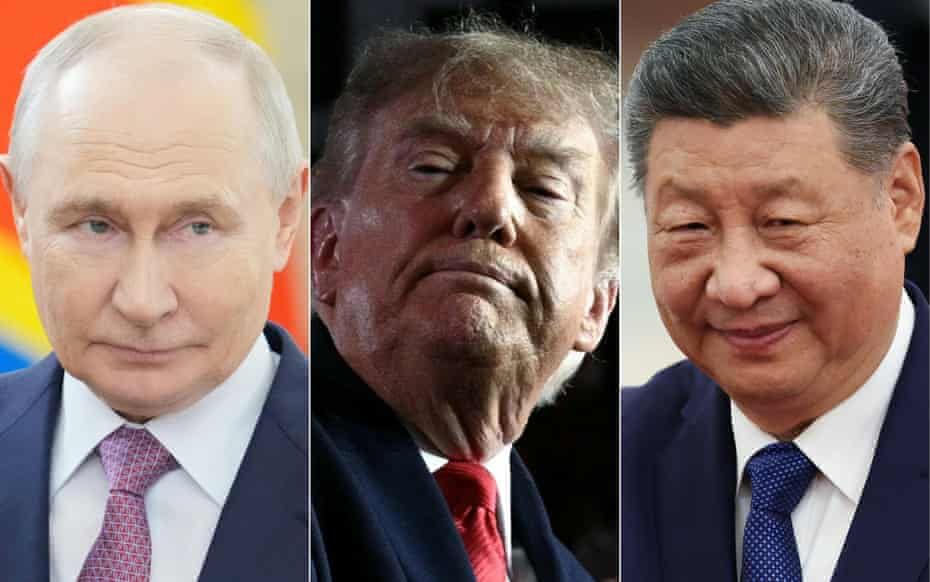
One of the most significant events expected during the diplomatic week is the planned meeting involving Trump, Xi and Putin in Shenzhen.
The gathering, scheduled on the sidelines of the Apec leaders’ meeting, is attracting international attention because it will bring together the leaders of three major powers amid tensions over trade, security and global conflicts.
However, analysts are divided over whether the encounter will produce meaningful agreements or mainly serve as a symbolic demonstration of diplomatic engagement.
Some observers believe Putin could emerge as one of the biggest beneficiaries because his participation places him alongside the leaders of the United States and China despite Russia’s international isolation over its invasion of Ukraine.
Lyle Goldstein, a China specialist at Brown University, expressed doubts that the meeting would produce major geopolitical breakthroughs.
He argued that the gathering was unlikely to result in an arrangement comparable to the historic agreements associated with the Yalta conference.
Jonathan Czin of the Brookings Institution also questioned whether Xi and Putin would be willing to enter long-term agreements with Trump, given the approaching end of his presidential term.
Czin suggested that both leaders could calculate that Trump’s political influence would diminish as attention shifts towards the next American administration.
That uncertainty could make them reluctant to commit to arrangements whose implementation might depend on a future US president.
Putin’s presence raises questions over Apec unity
The planned gathering has also revived concerns about whether all participating leaders will be comfortable appearing alongside Putin in official photographs.
At the G20 foreign ministers’ meeting in the United States last month, the traditional group photograph was cancelled after several countries, including the United Kingdom and Australia, refused to appear beside Russia’s foreign minister, Sergei Lavrov.
A similar disagreement could emerge at the Apec summit if Putin participates in the official leaders’ photograph.
Australian Prime Minister Anthony Albanese has welcomed the proposed Trump-Xi-Putin meeting despite reservations expressed by some European leaders.
When asked whether he would participate in a group photograph alongside Putin, Albanese said he would consider China’s wishes as the host nation.
However, he made clear that Russia should understand Australia’s opposition to the invasion of Ukraine.
Albanese is expected to attend the Quad meeting in Manila before travelling to China for the Apec summit.
The issue presents a diplomatic challenge for the Chinese government, which wants to host a successful international gathering while managing the differing positions of participating countries towards Russia.
Japan proposes regional oil security cooperation
Energy security has emerged as another important issue at the Asean meetings, with Japan proposing a regional initiative to coordinate oil stockpiling and emergency supplies.
Japanese Prime Minister Sanae Takaichi announced plans for a task force that would improve cooperation among Asian countries during supply disruptions.
The proposal would allow neighbouring countries to make use of available oil storage capacity in Japan when emergencies arise.
Takaichi said the initiative would work alongside a Philippine-led joint oil stockpiling scheme and could eventually serve as an Asian equivalent of the International Energy Agency.
She also introduced a proposed Power Gulf Initiative intended to strengthen cooperation between Middle Eastern oil-producing countries and Asian energy consumers.
The proposals come as several Southeast Asian countries face tighter supplies of crude oil and petroleum products, including naphtha, an important raw material used in plastics manufacturing.
Countries participating in the Asia Zero Emission Community initiative include Australia, Brunei, Cambodia, Indonesia, Japan, Laos, Malaysia, the Philippines, Singapore, Thailand and Vietnam.
The initiative reflects growing concern that energy supply disruptions could affect industrial production and economic stability across the region.
Papua New Guinea backs China’s position on Taiwan
China’s diplomatic engagement in Shenzhen has also produced significant developments concerning Taiwan.
During a meeting with Xi, Papua New Guinea’s Prime Minister, James Marape, expressed support for China’s position on what Beijing describes as the island’s reunification with the mainland.
Marape said Taiwan no longer operated in Papua New Guinea and indicated that his country supported China’s position.
His remarks are significant because Taiwan is a self-governing island that China claims as part of its territory and has not ruled out using force to bring under its control.
Marape acknowledged that the decision to shift away from Taiwan had faced internal challenges because Papua New Guinea maintains relationships with several countries.
He nevertheless reaffirmed his government’s position on respecting China’s sovereignty.
Xi responded by expressing China’s willingness to strengthen political trust and expand cooperation with Papua New Guinea.
The development follows Taiwan’s decision earlier in November to close its representative office in Papua New Guinea and stop purchasing liquefied natural gas from the country, blaming pressure from Beijing.
Papua New Guinea briefly maintained diplomatic relations with Taipei in 1999 before restoring ties with China.
China and Canada agree on additional tariff reductions
Xi’s diplomatic engagements have also included discussions with Canadian Prime Minister Mark Carney, resulting in an agreement on further tariff relief.
China has agreed to provide additional tariff concessions covering approximately C$400m, equivalent to around US$280m, in Canadian exports.
The concessions cover frozen pork products worth C$116m and fish and seafood exports valued at C$285m.
Both countries also agreed to extend existing tariff remission arrangements for certain Chinese steel and aluminium products by two years.
The agreement represents another development in efforts to manage trade tensions between the two countries.
Carney’s meeting with Xi demonstrates how the Apec gathering is providing an opportunity for governments to pursue economic agreements alongside broader diplomatic discussions.
Nvidia controversy complicates US-China relations
The diplomatic programme is also unfolding against the background of a controversy involving Nvidia and allegations of Chinese espionage.
The controversy followed revelations involving a woman suspected of being a Chinese spy and her alleged relationship with Nvidia’s then chief executive, Jensen Huang, who subsequently resigned.
The allegations have generated national security concerns in Washington and increased pressure on the US administration to address the issue with Beijing.
However, Trump has indicated that he does not intend to raise the controversy during his meeting with Xi.
American officials have said the discussions will concentrate on implementing a trade agreement between the two economic powers.
The dispute is also connected to wider tensions over advanced semiconductor technology.
Washington has tightened restrictions on Chinese access to advanced American chips, including measures targeting attempts to obtain the technology remotely through overseas data centres.
The restrictions affect access routes involving countries such as Malaysia, Singapore, Thailand, Indonesia and Brazil.
Chinese state media have dismissed the espionage allegations as baseless, while some Chinese suppliers have said their operations have not been disrupted.
The controversy nevertheless adds another sensitive issue to an already complicated relationship between Washington and Beijing.
Trump raises possibility of meeting North Korea’s Kim
Another possible development surrounding the Apec summit is a meeting between Trump and North Korean leader Kim Jong-un.
Trump has hinted that Kim could make a surprise appearance at the gathering, although no confirmed meeting has been announced.
Victor Cha, head of the Korea programme at the Center for Strategic and International Studies, suggested that Trump’s comments could indicate that he had asked Xi to invite the North Korean leader.
A meeting involving Kim, Trump, Xi and Putin would carry considerable diplomatic significance, particularly because North Korea has continued expanding its nuclear and missile capabilities while strengthening ties with Moscow and Beijing.
READ ALSO: Brexit’s impact on Britain’s global standing comes under scrutiny as Burnham signals closer EU ties
Trump and Kim previously met three times during the US president’s first term, in Singapore in June 2018, Hanoi in February 2019 and at the Korean border village of Panmunjom in June 2019.
Their last major negotiations ended without an agreement after both sides failed to reconcile nuclear disarmament with sanctions relief.
Although speculation about another meeting has resurfaced, previous suggestions of renewed talks have not always resulted in an encounter.
About The Author