

North Korea fires ballistic missiles early Wednesday morning, marking its first launch in months, raising tensions ahead of the Asia-Pacific Economic Cooperation (APEC) summit in South Korea.
Seoul’s military reported that North Korea fires ballistic missiles toward the East Sea, confirming the projectiles were short-range missiles aimed in a direction that alarmed regional security officials.
The missiles reportedly traveled roughly 350 kilometers and unexpectedly landed inland, contradicting earlier predictions they would fall into international waters, increasing concerns about regional security and stability.
“Our military remains on high alert after North Korea fires ballistic missiles, coordinating intelligence with the United States and Japan, and monitoring for potential further launches in the area,” officials said.

Analysts warn North Korea’s intention to assert its nuclear-armed status internationally, using provocative tests to influence discussions among global leaders attending the APEC summit in Gyeongju.
This is the first launch under South Korea’s new president, Lee Jae Myung, who assumed office in June, highlighting the political dimensions accompanying North Korea fires ballistic missiles near diplomatic events.
Park Won-gon, professor at Ewha Womans University, told newsmen “as a display of regime presence during the summit hosted by Seoul, a tactic seen in previous years.”
The latest test follows missile launches in May, when North Korea fires ballistic missiles toward the East Sea twice, ending a five-month hiatus and signaling a return to assertive military demonstrations.
Earlier this month, Kim Jong Un revealed the Hwasong-20 intercontinental ballistic missile, demonstrating the country’s expanding missile technology and reinforcing the pattern that North Korea fires ballistic missiles during high-profile periods.
The parade celebrating the 80th anniversary of North Korea’s ruling Workers’ Party showcased advanced missile systems and Kim’s growing diplomatic engagement, highlighting how North Korea fires ballistic missiles to project power.
Kim’s public displays of missiles underscore his strategy of strengthening deterrence while signaling capability to domestic and international audiences, affirming that North Korea’s action was to consolidate influence.
Pyongyang maintains that weapons programs are vital for national defense, repeatedly insisting that North Korea fires ballistic missiles to protect against threats from the United States and South Korea.
The timing of Wednesday’s launches suggests a strategic decision: North Korea fires ballistic missiles to influence international attention and underscore military strength ahead of the APEC summit.
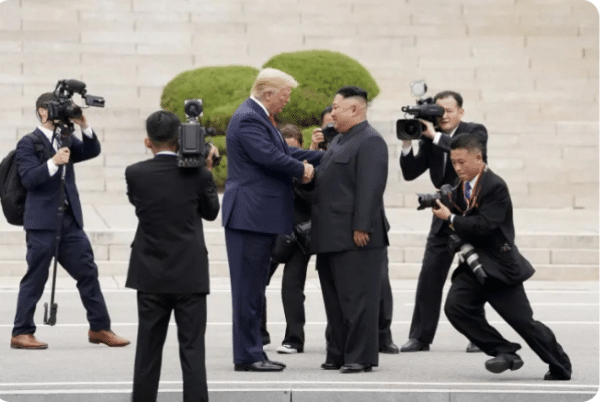
U.S. President Donald Trump has expressed willingness to meet Kim again, though Pyongyang asserts that North Korea fires ballistic missiles to maintain leverage and refuse nuclear disarmament negotiations.
Regional stability faces challenges, as experts warn North Korea fires ballistic missiles in ways that may provoke countermeasures and escalation from neighboring countries during sensitive diplomatic periods.
South Korea’s military stressed that forces are prepared to respond promptly, maintaining vigilance after North Korea fires ballistic missiles and continuing coordination with the United States and Japan.
Analysts emphasize that North Korea fires ballistic missiles to send multiple messages: demonstrating domestic strength, defiance of sanctions, and signaling technological advancements to the international community.
The East Sea remains a frequent testing corridor, illustrating how North Korea fires ballistics along predictable trajectories, enabling Seoul to track launches while assessing defense readiness.
Observers argue these acts strengthen Kim’s negotiating position, as North Korea fires ballistic missiles around high-profile events to show resilience and global relevance to attending leaders.
Trump has stated he may meet Kim again, though Pyongyang stresses that North Korea fires ballistic missiles to affirm its nuclear capability, framing the program as non-negotiable.
The missile launches reflect broader modernization, with North Korea’s action demonstrating enhanced range, precision, and nuclear payload capacity, signaling continued advancement despite sanctions.
International condemnation has followed each test, with calls for North Korea fires ballistic missiles to cease in accordance with United Nations resolutions and global security expectations.
Experts warn repeated launches around diplomatic events could trigger regional militarization, as South Korea, Japan, and U.S. allies reinforce surveillance, defense systems, and strategic readiness after the action of North Korea.
Historical patterns show North Korea fires ballistic missiles during high-visibility periods, leveraging summits and meetings to broadcast strength, reinforce sovereignty, and maintain international attention on its military advancements.
Pyongyang continues to prioritize missile and nuclear technology, despite sanctions to project security, deter foreign threats, and assert regime stability internationally.
With the APEC summit approaching, analysts anticipate the firing may occur again, using these demonstrations to shape diplomatic leverage and signal strategic priorities to global leaders.
South Korea, the United States, and Japan coordinate defense and intelligence after North Korea fires the missiles, ensuring readiness for rapid response while continuing diplomatic efforts to mitigate tensions.
The launch confirms the persistent threat on the Korean Peninsula, reminding the international community that North Korea fires ballistic missiles to maintain its deterrent posture and assert nuclear capability.
About The Author


