

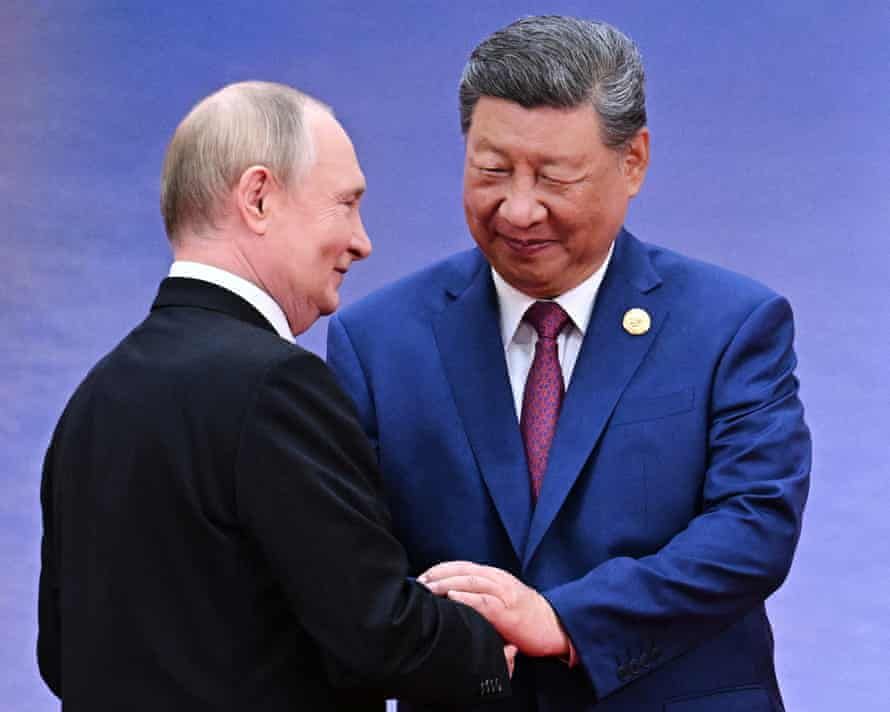
The Putin China visit has drawn global attention after Russian President Vladimir Putin arrived in Beijing just days after U.S. President Donald Trump concluded high-level talks with Chinese leader Xi Jinping. The visit underscores the growing strategic partnership between Russia and China as both nations seek to strengthen political, economic, and energy cooperation amid rising tensions with Western powers.
According to The Guardian, Putin’s latest trip marks his 25th visit to China and comes during a difficult period for Russia as the war in Ukraine continues to strain Moscow’s economy and military resources.
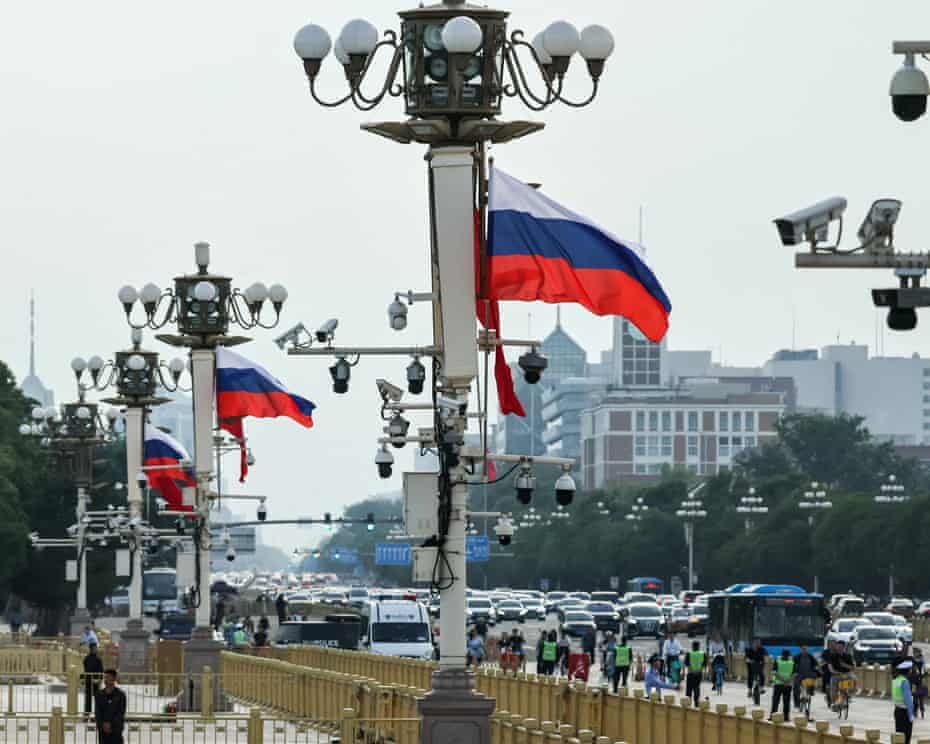
Putin And Xi Strengthen Strategic Partnership
Russian President Vladimir Putin and Chinese President Xi Jinping have developed one of the closest political relationships in modern global diplomacy.
The two leaders have reportedly met more than 40 times, significantly more than Xi’s meetings with most Western leaders. Analysts believe the frequency of those engagements reflects Beijing and Moscow’s long-term commitment to expanding cooperation across trade, security, energy, and international diplomacy.
Speaking ahead of the visit, Putin described China-Russia relations as reaching an “unprecedented level,” highlighting soaring bilateral trade and growing financial cooperation between both countries.
The Russian leader also emphasized that trade settlements between Moscow and Beijing are now conducted mostly in Russian roubles and Chinese yuan instead of the U.S. dollar, reflecting efforts by both countries to reduce dependence on Western financial systems.
China Sends Strong Message To Washington
Putin’s arrival in Beijing only four days after Donald Trump’s own visit to China has fueled speculation that Xi Jinping is positioning Beijing as a central power broker in global affairs.
William Yang, a senior analyst at the International Crisis Group, said hosting both Trump and Putin within days demonstrates China’s increasing confidence on the international stage.
“Hosting two of the most powerful leaders in the world in a matter of days shows China’s growing confidence in its place and standing in the world,” Yang said.
He added that Xi likely wants to remind Washington that Beijing maintains strong international alliances that cannot easily be isolated or weakened through Western pressure.
China’s Foreign Ministry spokesperson Guo Jiakun also praised the relationship between Beijing and Moscow, saying the friendship between both nations would become “more deeply rooted in people’s hearts” under the leadership of Xi and Putin.
Russia’s Economic Dependence On China Grows
While the Kremlin publicly presents the relationship as a partnership of equals, analysts increasingly believe Russia has become more dependent on China since the start of the Ukraine war.
Western sanctions imposed on Moscow after its invasion of Ukraine severely disrupted Russia’s access to global financial systems and export markets.
As a result, China has emerged as one of Russia’s most important economic lifelines through expanded trade, energy purchases, and technology cooperation.
According to data cited by The Guardian, China has purchased more than $367 billion worth of Russian fossil fuels since the start of the full-scale Ukraine invasion.
This growing trade relationship has helped Moscow soften the economic impact of sanctions while also providing Beijing with stable access to discounted Russian energy supplies.
Energy Cooperation Remains Major Focus
One of the biggest issues expected to dominate discussions during the Putin China visit is future energy cooperation between both countries.
Analysts are closely watching developments surrounding the proposed Power of Siberia 2 gas pipeline, a massive infrastructure project designed to transport Russian natural gas to China through Mongolia.
The pipeline would reportedly add 50 billion cubic metres of gas export capacity and help Russia replace energy markets lost in Europe due to sanctions and geopolitical tensions.
For China, additional overland energy supplies from Russia could reduce dependence on vulnerable maritime shipping routes, especially the Strait of Hormuz, which has faced growing instability following the recent U.S.-Iran conflict.
However, some experts warn that overreliance on Russian energy could create long-term strategic risks for Beijing as China also pursues greater energy self-sufficiency.
Ukraine War Continues To Shape Global Diplomacy
The ongoing war in Ukraine remains a major factor influencing relations between China, Russia, and the West.
Despite maintaining official neutrality, China has faced criticism from Western governments for refusing to comply fully with sanctions against Russia and for continuing economic cooperation with Moscow.
Western officials have also accused Chinese companies of supplying dual-use equipment with potential military applications to Russia.
This month, the Chinese embassy in the United Kingdom reportedly lodged formal objections after Britain added two Chinese entities to its sanctions list connected to Russia.
Although Ukraine was reportedly not discussed extensively during Trump and Xi’s recent summit in Beijing, the Financial Times later reported that Xi privately suggested Putin may eventually regret the war.
China’s foreign ministry denied those reports, but analysts believe Beijing may be increasingly concerned about the long-term economic and geopolitical consequences of the conflict.
Putin Faces Growing Domestic Pressure
Putin’s Beijing trip comes at a time when Russia faces mounting economic and military challenges at home.
The war in Ukraine has largely reached a grinding stalemate, while Ukrainian drone and missile attacks have continued targeting Russian energy infrastructure and military facilities.
Economic pressures caused by sanctions, rising military spending, and reduced European trade have also intensified concerns about Russia’s long-term stability.
In a rare public acknowledgment of those difficulties, a Russian deputy from Siberia reportedly called for a “swift conclusion” to the war, warning that Russia’s economy may struggle to withstand a prolonged military campaign.
Such statements remain uncommon within Russia’s political establishment, where criticism of the war is often limited.
China Expands Role In Global Power Politics
Xi Jinping’s diplomatic balancing between Donald Trump and Vladimir Putin highlights China’s growing ambition to position itself as a dominant global power capable of engaging rival blocs simultaneously.
By maintaining close ties with Moscow while also managing relations with Washington, Beijing is attempting to expand its influence across multiple geopolitical fronts.
The optics of hosting Trump and Putin within days of each other also reinforced China’s image as a major center of international diplomacy.
During Trump’s recent Beijing visit, Xi reportedly gave the U.S. president a rare tour of his private Zhongnanhai compound, an honor typically reserved for only a select group of foreign leaders.
Xi reportedly told Trump that Putin was among the few other leaders invited into the exclusive compound.
Trump’s response was reportedly simple: “Good.”
Read also: Iran peace deal: Tehran demands US troop withdrawal, war reparations
Putin China Visit Reflects New Global Realignment
The Putin China visit reflects broader shifts in global power dynamics as China and Russia continue strengthening cooperation against the backdrop of worsening relations with Western nations.
Both governments increasingly view strategic coordination as essential for resisting sanctions pressure, reshaping international trade systems, and countering U.S. global influence.
At the same time, economic realities appear to be creating an increasingly unequal partnership in which Russia relies heavily on Chinese markets, investment, and diplomatic backing.
As geopolitical tensions continue escalating across Europe, Asia, and the Middle East, the growing alliance between Beijing and Moscow is expected to remain one of the defining forces shaping the global balance of power in the coming years.
About The Author
