

Rising solar panel prices threaten Nigeria’s solar adoption momentum
For nearly a decade, falling solar panel prices helped make rooftop solar one of Nigeria’s fastest-growing alternatives to unreliable grid electricity.
Photovoltaic module prices dropped by roughly 90% globally between 2014 and 2025 as manufacturing capacity expanded rapidly, driven largely by aggressive Chinese investment and economies of scale.
The decline made rooftop solar increasingly affordable for Nigerian households and businesses.
Now, however, industry analysts warn that the long downward trajectory in solar prices may be reversing.
A combination of Chinese export policy changes, rising raw material costs and geopolitical tensions affecting global commodity markets is beginning to push solar equipment prices higher, raising concerns that adoption could slow in one of Africa’s largest potential renewable energy markets.
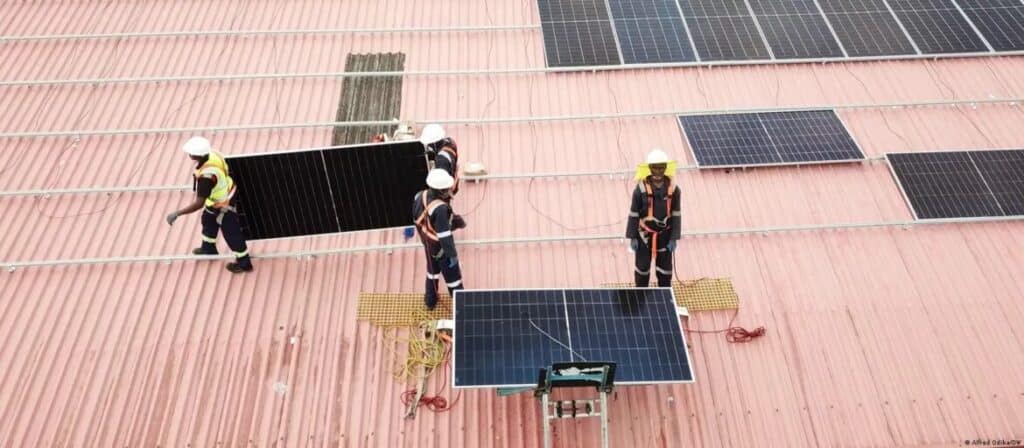
“For a market where every percentage point of cost reduction historically translated into thousands of new adopters, even modest sustained price increases matter,” said Lagos-based renewable energy analyst Ayodele Oni.
China’s policy shift is reshaping global solar pricing
Nigeria sources the overwhelming majority of its solar panels from China, which dominates more than 80% of global solar manufacturing capacity across key segments of the photovoltaic supply chain, according to the International Energy Agency.
China’s dominance helped drive years of steep price declines as manufacturers competed aggressively for market share.
But analysts say that model became increasingly unsustainable after many Chinese solar firms accumulated heavy financial losses due to oversupply and intense price competition.
Industry data cited by the IEA shows Chinese solar manufacturers collectively lost billions of dollars between 2024 and 2025 despite record global demand growth.
In response, Beijing introduced sweeping export rebate reforms beginning in April 2026.
Under the new policy framework, China eliminated a 9% VAT export rebate on solar products while reducing rebates for battery-related exports. The remaining battery rebate is scheduled to be phased out completely by January 2027.
Analysts estimate the reforms alone could increase global solar module prices by around 10%.
Several international installers have already begun adjusting pricing models to reflect higher procurement costs.
“China effectively set the global floor price for solar panels over the last decade,” said energy economist Kelvin Emmanuel.
“Once Beijing changes the economics for exporters, the impact travels quickly across emerging markets like Nigeria.”
Rising metal prices add fresh pressure
Beyond Chinese policy changes, the solar industry is also facing mounting raw material costs linked to global commodity market pressures.
Silver, one of the most conductive metals used in solar cell manufacturing, accounts for a relatively small percentage of a panel’s physical composition but represents a disproportionately large share of production costs.
The Silver Institute estimates that solar photovoltaic manufacturing consumed around 4,000 tonnes of silver in 2023, equivalent to roughly 14% of global silver demand.
By 2030, analysts expect solar-related silver consumption to account for approximately one-fifth of worldwide demand.
Manufacturers have accelerated efforts to replace silver with copper-based alternatives to reduce costs, but copper prices have also climbed sharply due to supply constraints, data centre expansion linked to artificial intelligence infrastructure and geopolitical instability affecting commodity markets.
Prices for aluminium and lithium — both critical to batteries and solar system components — have also risen significantly since late 2025.
Analysts say the combined effect is creating broad cost pressure across the renewable energy supply chain.
“Clean energy technologies are no longer insulated from commodity geopolitics,” said commodity analyst Bismarck Rewane.
“The same market forces that historically shaped oil and gas pricing are increasingly affecting solar and battery systems.”
Nigerian consumers may begin feeling the impact
Although utility-scale solar developers have already begun reporting moderate price increases, smaller rooftop systems — widely used by Nigerian households and businesses — have so far remained relatively affordable.
Market intelligence firm InfoLink Consulting said in recent industry reports that intense competition among manufacturers and strong order volumes have temporarily constrained sharper increases in retail solar pricing.
But installers say pricing pressure is gradually filtering into the Nigerian market.
Three Nigerian solar distributors and installers told our correspondent, that some Chinese suppliers have already begun warning buyers to expect revised pricing structures for shipments scheduled for the second half of 2026.
One Lagos-based importer, who requested anonymity because of ongoing commercial negotiations, said some distributors were accelerating purchases ahead of anticipated price adjustments later this year.
“There is concern that current inventory prices may not hold for very long,” the importer said. “A lot of companies are trying to secure stock early before procurement costs rise further.”
Two solar installation companies operating in Lagos and Ogun told our correspondent, suppliers have started warning distributors about possible upward price revisions in coming months if global costs remain elevated.
One executive at a renewable energy company, who requested anonymity because of ongoing supplier negotiations, said some importers were already adjusting quotations for large commercial installations.
“The concern is not necessarily immediate price spikes,” the executive said. “It’s the possibility that the era of continuously cheaper solar equipment may be ending.”
That shift could have significant implications for Nigeria’s renewable energy ambitions.
Nigeria remains heavily dependent on petrol and diesel generators because of chronic electricity shortages and an underperforming national grid.
The World Bank estimates that tens of millions of Nigerians lack reliable electricity access, while businesses spend billions of dollars annually on self-generated power.
Industry estimates suggest Nigerians spend more than $14 billion annually on petrol and diesel generators due to unreliable grid electricity, making the country one of the world’s largest markets for self-generated power.
Solar imports into Nigeria have risen sharply over the past five years as households and businesses increasingly turned to rooftop systems to reduce fuel costs and dependence on generators, according to renewable energy industry groups.
Solar systems became increasingly attractive partly because declining equipment costs helped offset financing barriers and weak consumer purchasing power.
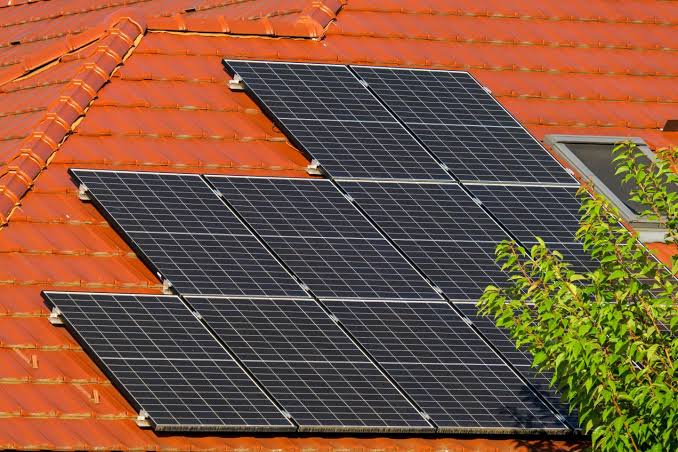
Analysts warn that sustained price increases could slow adoption among lower-income households and small businesses that were only beginning to enter the market.
Economists warn that slower solar adoption could prolong Nigeria’s dependence on diesel generators, increasing energy costs for businesses already struggling with inflation, foreign exchange shortages and weak grid reliability.
Higher electricity costs could also weigh on small business productivity and deepen operating pressures across sectors ranging from retail and manufacturing to healthcare and education, analysts say.
Read Also: Dangote refinery cuts jet fuel price as Nigerian airlines battle soaring aviation costs
Iran-US conflict escalates as Tehran warns of ‘new fronts’ if Trump resumes strikes
Financing remains Nigeria’s biggest renewable energy challenge
Despite the pricing pressures, policymakers and investors argue that financing innovation could still help expand renewable energy adoption.
Nigeria recently launched the Green Finance Investment Facility, a blended-finance platform designed to mobilise approximately $188 million for distributed renewable energy projects.
The initiative, unveiled in Lagos earlier this month, brings together public agencies, commercial banks and infrastructure investors to support mini-grids and decentralised solar systems.
Partners include Rural Electrification Agency, First City Monument Bank, UK PACT and ARM Harith Infrastructure Investment Limited.
The programme aims to finance approximately 191 megawatts of distributed renewable energy capacity serving more than one million Nigerians.
Officials say the platform is designed to reduce investment risk and attract larger pools of institutional capital into Nigeria’s renewable energy market.
Officials familiar with discussions around the financing platform said development finance institutions and private infrastructure investors are increasingly assessing Nigeria’s distributed renewable energy sector as conventional grid challenges persist.
One infrastructure finance executive involved in renewable energy transactions said investor appetite for decentralised solar projects had strengthened over the past two years despite currency volatility and policy uncertainty.
“The demand fundamentals remain extremely strong,” the executive said. “The challenge is creating financing structures that can absorb risk while keeping systems affordable for consumers.”
“The major challenge is no longer whether solar technology works,” said Abba Aliyu, director-general of the Rural Electrification Agency. “The bigger issue is financing access and scalability.”
FCMB has separately committed around ₦100 billion in debt financing to renewable energy initiatives linked to the DARES programme, according to project officials.
Industry analysts say the willingness of commercial banks to increase exposure to distributed renewable energy signals a broader shift in how Nigerian financial institutions view long-term energy transition opportunities.
Investors watch whether clean energy growth can survive higher costs
Renewable energy demand in Nigeria is unlikely to disappear even if equipment prices rise.
Diesel and petrol generators remain significantly more expensive over the long term because of fuel, maintenance and operating costs.
But analysts say the pace of solar adoption could slow if financing conditions fail to improve alongside rising hardware prices.
Nigeria’s clean energy market is also becoming increasingly tied to global macroeconomic trends, from commodity prices and supply chain disruptions to foreign exchange volatility and geopolitical conflict.
“Solar is no longer just a local energy story,” Kolawole said. “It is now deeply connected to global manufacturing policy, commodity markets and international capital flows.”
Some analysts argue the next phase of Nigeria’s renewable energy transition may depend less on falling hardware prices and more on whether financing systems can absorb higher upfront costs for consumers.
Whether the recent increase in pricing pressure becomes temporary or structural will likely depend on Chinese industrial policy, global commodity markets and the trajectory of geopolitical tensions affecting energy supply chains.
Whether solar adoption continues expanding at its recent pace may depend less on technology costs alone and more on whether financing systems can offset rising equipment prices, analysts say.
But as global supply chains, commodity markets and geopolitical tensions increasingly shape clean energy economics, Nigeria’s solar market is becoming more exposed to forces far beyond its borders.
Read more @ireport247news
About The Author

https://shorturl.fm/OUOem