

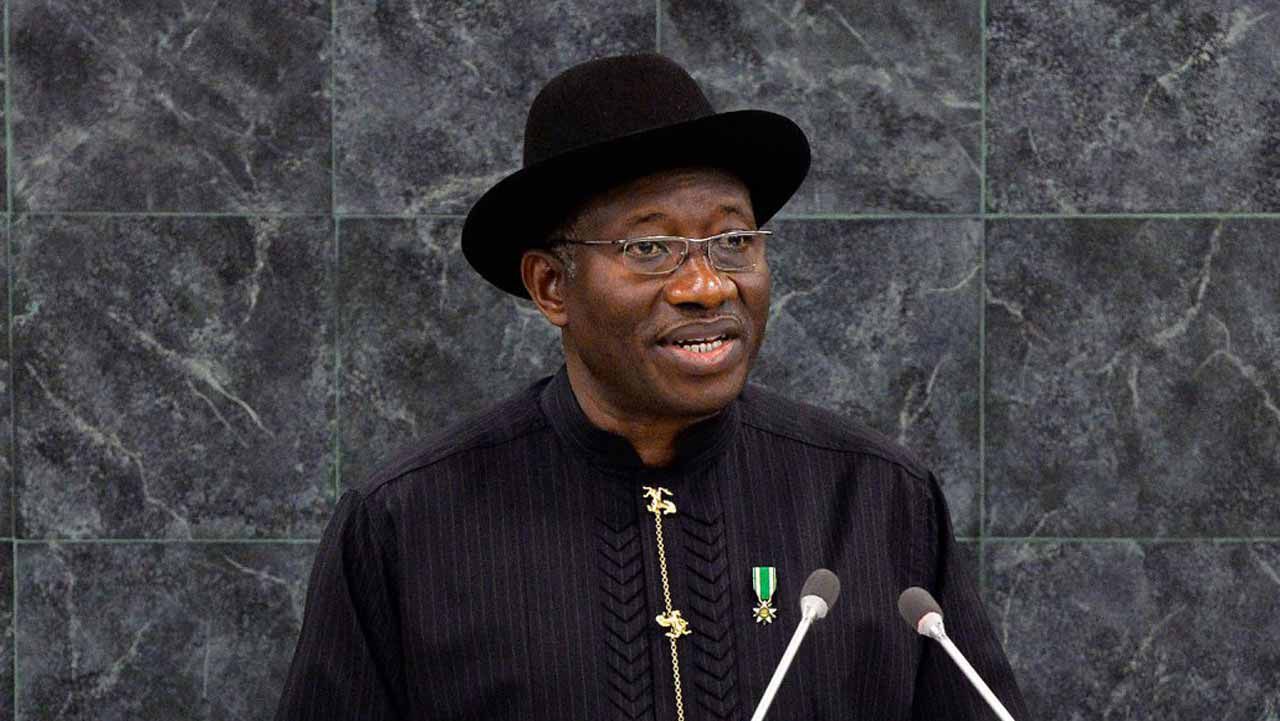
Fresh political tension is rising as growing talks about Goodluck Jonathan’s possible 2027 presidential comeback continue to reshape opposition politics.
Fresh conversations surrounding Goodluck Jonathan and the 2027 presidential election are rapidly gaining momentum across Nigeria, following claims by a senior Peoples Democratic Party (PDP) figure that the former president has already obtained a presidential nomination form.
The disclosure, made by former presidential aide Umar Sani, has triggered renewed debate within political circles and intensified speculations that Jonathan may be preparing for a dramatic return to frontline politics more than a decade after leaving office.
Sani, who previously served as Senior Special Assistant on Media and Publicity to former Vice President Namadi Sambo, made the remarks during an appearance on Trust TV, where he defended Jonathan’s constitutional eligibility to contest again and dismissed ongoing legal efforts challenging the former president’s possible ambition.
According to him, the matter regarding Jonathan’s eligibility had already been addressed in previous judicial rulings and should no longer generate controversy.
“We are convinced the case will eventually be dismissed because the issue has already been settled legally,” Sani stated during the interview.
The PDP chieftain further argued that only the Supreme Court possesses the constitutional authority to overturn previous interpretations concerning Jonathan’s eligibility to run for office again.
He also suggested that the pending case before Justice Peter Lifu may struggle to survive on jurisdictional grounds when proceedings resume later this month.
The latest development has added fuel to the growing political conversation around a possible Goodluck Jonathan 2027 comeback, especially at a time when opposition parties are battling internal crises, coalition talks, and leadership uncertainty ahead of the next general election.
Although Jonathan has not publicly declared his intention to contest, political observers say his recent consultations and increasing engagement with influential stakeholders have strengthened suspicions that the former president may eventually enter the race.
Sani insisted that political intentions are often revealed through strategic actions rather than public speeches, stressing that obtaining nomination documents is one of the clearest indicators of serious interest.
“In politics, actions matter more than speculation. Once someone begins following official processes, it reflects clear interest,” he said.
When asked directly whether Jonathan had indeed secured the forms, Sani answered in the affirmative and added that the former president could soon make his position publicly known.
The growing discussion around Goodluck Jonathan 2027 is also reviving public debate about Jonathan’s legacy in office.
Since leaving power in 2015, the former president has largely remained outside partisan political battles, choosing instead to focus on diplomatic assignments, peace negotiations, and election observation missions across Africa.
However, worsening economic hardship, insecurity, inflation, and political dissatisfaction within the country have pushed some Nigerians to reassess his administration differently from how it was viewed years ago.
Supporters of the former president argue that many citizens now look back on his tenure with a sense of nostalgia, particularly when comparing current national conditions with previous administrations.
Sani echoed that sentiment during the interview, claiming that public perception toward Jonathan has changed significantly over time.
“At the time he left office, many Nigerians believed the PDP government was underperforming. Today, many people believe things were far more stable back then,” he said.
RELATED NEWS:
- Keyamo labels NDC 2027 Southern presidency plan ‘political 419′
- NDC zones 2027 presidential ticket to South amid opposition coalition
Jonathan became president in 2010 following the death of former President Umaru Musa Yar’Adua and later won the 2011 presidential election.
His administration oversaw major conversations around electoral reforms, infrastructure, agriculture, and national security challenges before he lost reelection in 2015 to former President Muhammadu Buhari.
Now, with the Goodluck Jonathan 2027 conversation gathering momentum, political analysts believe his possible return could significantly alter opposition calculations ahead of the next election cycle.
Some analysts argue that Jonathan’s reputation as a relatively moderate political figure may attract support from multiple regions and political blocs seeking a consensus candidate capable of challenging the ruling establishment.
Others, however, believe his potential return could deepen existing divisions within the PDP, where several influential politicians are already positioning themselves ahead of the primaries.
The situation has also generated reactions from other opposition figures, including former Labour Party presidential candidate Peter Obi.
Speaking with journalists after being screened as the presidential candidate of the Nigeria Democratic Congress for the 2027 election, Obi said he was not concerned about speculations surrounding Jonathan or any other potential contender.
According to Obi, democracy allows qualified individuals to seek office freely, adding that his main focus remains national development rather than monitoring political rivals.
“I’m concentrating on how to build a better Nigeria. Democracy gives everyone the right to contest,” Obi stated.
His response has been interpreted by some political observers as an attempt to avoid unnecessary confrontation while keeping attention on governance and economic issues affecting ordinary Nigerians.
Meanwhile, discussions surrounding the Goodluck Jonathan 2027 movement continue to dominate conversations on social media and within party structures across the country.
Within the PDP itself, uncertainty remains over who may eventually emerge as the party’s strongest candidate.
Internal disagreements, defections, and leadership struggles have weakened the opposition party in recent years, forcing many stakeholders to search for a unifying figure ahead of the next election.
For some party loyalists, Jonathan represents political experience, national recognition, and broader acceptability across different regions.
For others, the idea of another presidential comeback raises constitutional, strategic, and generational questions that could shape the future of opposition politics in Nigeria.
Despite the growing noise, Jonathan has remained publicly silent on the claims surrounding his alleged nomination form and possible presidential ambition.
Still, with political activities gradually intensifying nationwide, the debate around Goodluck Jonathan 2027 is already becoming one of the defining political conversations shaping the road to Nigeria’s next presidential election.
About The Author
