

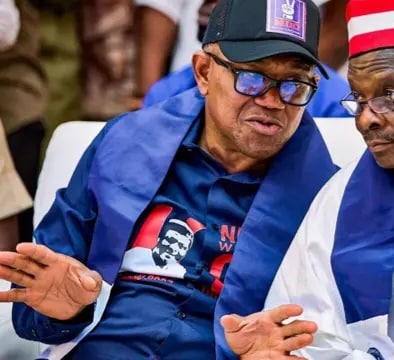
Peter Obi becomes the only aspirant for the NDC presidential ticket as the party closes presidential form sales ahead of Nigeria’s 2027 election.
The battle for the National Democratic Coalition (NDC) presidential ticket appears to be taking a new shape following the decision of the Nigeria Democratic Congress to officially close the sale of Expression of Interest Forms for its 2027 presidential primary election.
At the end of the registration process, former Labour Party presidential candidate, Peter Obi, reportedly emerged as the only politician who obtained the form to contest for the party’s presidential ticket.
The latest development has sparked fresh conversations across Nigeria’s political landscape, with many supporters and political observers interpreting it as a possible indication that Obi could eventually secure the party’s presidential nomination without facing internal opposition.
Although party officials insist that the process is far from over, the absence of other aspirants in the presidential race has intensified speculations about ongoing coalition talks and behind-the-scenes political negotiations ahead of the 2027 election.
The NDC presidential ticket has become one of the most discussed political subjects in recent days, especially among opposition supporters searching for a strong platform capable of challenging the ruling establishment in the next general election.
While the presidential application window has now been shut, the party disclosed that aspirants seeking other elective positions would still be given additional time to complete their registration.
According to the party leadership, the extension affects governorship candidates, senatorial hopefuls, House of Representatives aspirants, and those contesting for seats in various State Houses of Assembly.
RELATED NEWS:
In a statement issued by the party’s National Secretary, Ikenna Morgan Enekweizu, the NDC announced that the deadline for obtaining Expression of Interest Forms for non-presidential positions had been extended from May 17 to May 24, 2026.
The party explained that the adjustment was made to accommodate more aspirants and ensure wider participation in the process. However, it emphasized that the extension does not apply to the presidential category, which has already been concluded.
Political analysts believe the emergence of Obi as the sole aspirant for the NDC presidential ticket could reshape opposition politics in the coming months, especially if more political actors decide to align with the party before the election season fully begins.
Since the conclusion of the 2023 presidential election, Obi has continued to maintain a loyal support base, particularly among young Nigerians and urban voters who remain active in conversations around governance reforms, accountability, and economic recovery.
Some observers argue that his decision to contest under the NDC platform may signal a broader political strategy aimed at building a fresh opposition movement ahead of 2027.
Meanwhile, the party has unveiled a timetable for the next phase of its internal exercise. According to the schedule released by the NDC, screening and verification of aspirants who successfully obtained and submitted their forms will begin on Tuesday, May 19, and end on Tuesday, May 26, 2026.
The party also stated that collection and submission of Nomination Forms for cleared aspirants would run between May 20 and May 26.
It stressed that only aspirants who pass the screening process would be allowed to proceed further in the race for party tickets.
In addition, the NDC warned aspirants against violating party guidelines, stating clearly that no further extension would be granted after the new deadline expires.
All aspirants were directed to appear before designated screening committees nationwide with complete documentation for verification and pre-qualification interviews.
Among the documents listed by the party are educational certificates, birth certificates or declarations of age, passport photographs, voter cards, membership cards, and updated curriculum vitae.
The party also instructed aspirants to submit multiple copies of their documents to assist the screening committee during the verification process.
According to the statement, the screening panel would assess aspirants based on leadership qualities, competence, integrity, political capacity, and their acceptance among party members within their constituencies.
The party further directed its screening committee to consider its affirmative action principles by ensuring fair opportunities for women, youths, and persons living with disabilities.
Beyond the administrative process, attention is now shifting toward the wider political implications surrounding the NDC presidential ticket and what Obi’s emergence could mean for opposition politics in Nigeria.
Several political commentators believe the coming months may witness fresh alliances, negotiations, and strategic movements among opposition figures preparing for the 2027 election cycle.
There are also growing discussions about whether the NDC can transform itself into a major political force capable of attracting dissatisfied politicians and undecided voters across the country.
For now, the spotlight remains firmly on Peter Obi and the next steps expected from the party leadership as preparations for the presidential contest continue.
With screening activities already underway, political stakeholders will be watching closely to see whether the NDC eventually adopts a consensus arrangement or proceeds with a formal presidential primary despite having only one aspirant in the race.
As developments continue to unfold, the contest for the NDC presidential ticket is expected to remain one of the key political stories shaping conversations ahead of Nigeria’s 2027 general election.
About The Author
