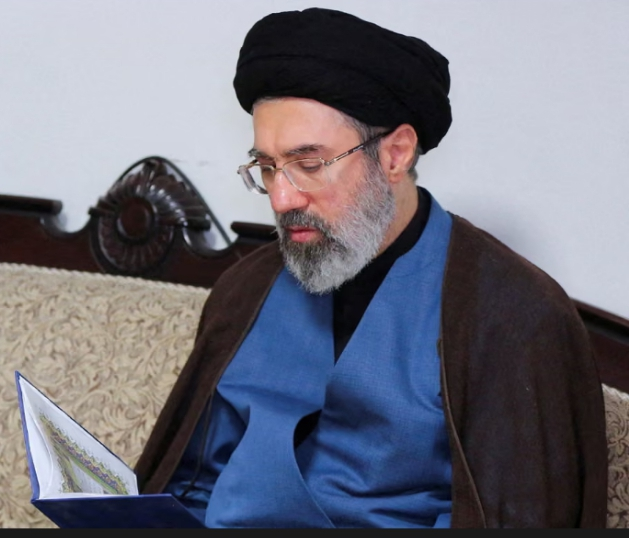
The announcement that Mojtaba Khamenei named Iran Supreme leader marks a pivotal shift in Iranian power, as senior clerics confirmed that Mojtaba Khamenei will succeed his slain father as the country’s highest political and religious authority.
Senior members of Iran’s Assembly of Experts declared the decision after what state media described as a decisive internal vote, urging citizens nationwide to unite behind the new leadership.
In a nationally broadcast statement, the clerical body called on academics, seminary scholars, and political elites to “pledge allegiance” and preserve national cohesion during what it described as a sensitive political moment.
The transition follows the death of former supreme leader Ayatollah Ali Khamenei, who ruled the Islamic republic for nearly four decades and held ultimate authority over state institutions.
State television reported that security agencies, senior government officials, and military commanders swiftly endorsed the appointment, presenting the succession as orderly despite extraordinary wartime pressures.
Analysts say the leadership decision aims to project internal stability as regional conflict intensifies and external pressure mounts from Western governments opposed to Tehran’s military posture.
International reaction proved immediate, particularly from the United States, where President Donald Trump openly criticized the appointment and questioned the durability of Iran’s new leadership structure.

Speaking during an overseas media interview, Trump remarked, “We’ll see what happens,” signaling uncertainty while suggesting Washington would closely monitor Tehran’s political transition.
He further warned that Iran’s leadership would face consequences if regional hostilities continued, stating the next supreme leader “is not going to last long” without broader international acceptance.
The White House reiterated that decisions regarding regional conflict management would involve coordination with Israeli authorities amid escalating cross-border military operations.
Israeli Prime Minister Benjamin Netanyahu was reported to have discussed the development with American officials as both governments assessed strategic implications for ongoing military planning.
Meanwhile, Iran’s Revolutionary Guards publicly pledged loyalty, declaring they stood “ready to defend the revolution and obey the leadership without hesitation.”
Senior security official Ali Larijani described Mojtaba Khamenei as capable of guiding the country through instability, emphasizing continuity within Iran’s political and religious institutions.
Parliamentary leaders echoed those sentiments, calling obedience to the newly appointed supreme leader a “religious and national duty” necessary to preserve state authority.
Military commanders similarly affirmed allegiance, reinforcing perceptions that Iran’s core power structures remain aligned despite leadership changes occurring during active regional confrontation.
Beyond official endorsements, the succession has sparked domestic debate regarding hereditary influence within a political system originally established in opposition to monarchical governance.
Observers note that the development represents the first time leadership of the Islamic republic has passed directly from father to son since the 1979 revolution.
Critics argue the move risks undermining revolutionary principles, while supporters maintain that ideological continuity outweighs concerns about dynastic political optics.
Born in Mashhad in 1969, Mojtaba Khamenei pursued advanced religious scholarship in Qom and maintained a relatively low public profile despite longstanding proximity to executive decision-making circles.
Over decades, he cultivated relationships with influential clerics and senior figures inside the Islamic Revolutionary Guards Corps, strengthening his position within Iran’s conservative power networks.
Reformist politicians previously accused him of influencing security responses during disputed elections, though he has never addressed those allegations publicly nor pursued elected office.
Regional militant groups aligned with Tehran welcomed the leadership transition, describing it as reinforcement of the ideological framework established by the Islamic republic’s founding leadership.
Yemen’s Houthi movement issued congratulations, calling the appointment “a new victory” and praising Iran’s leadership continuity during wartime uncertainty.
The group said the decision represented “a resounding blow” to perceived adversaries while expressing confidence in Tehran’s ongoing regional alliances and strategic coordination.
Military developments coincided with the announcement as Israeli forces confirmed strikes targeting infrastructure they described as linked to Iranian command capabilities.
Defense officials said operations aimed to disrupt logistical networks, though independent verification of specific facilities and operational damage remained limited.
Iranian media simultaneously broadcast footage of projectiles launched toward Israeli territory bearing inscriptions expressing loyalty to Mojtaba Khamenei’s leadership.
The symbolic messaging appeared designed to demonstrate unified command authority while reinforcing narratives of resistance against foreign military pressure.
Energy markets reacted sharply as fears grew that expanding hostilities could threaten production and shipping routes vital to global oil supplies.
Iranian officials warned neighboring states against facilitating attacks, suggesting retaliation could target regional energy installations if confrontations persisted.
A Revolutionary Guards spokesperson cautioned, “If you can tolerate oil at more than $200 per barrel, continue this game,” linking conflict escalation with economic consequences.
The United States later sought to calm markets by indicating it would avoid targeting Iran’s core energy infrastructure to prevent further supply disruptions.
Across Gulf states, air defense systems intercepted aerial threats as governments heightened security around strategic industrial facilities and civilian population centers.
Saudi authorities reported casualties after debris struck residential districts, underscoring risks to noncombatants as regional tensions expanded geographically.
Diplomatic observers say the leadership transition may harden Tehran’s negotiating posture, complicating prospects for ceasefire agreements or renewed nuclear diplomacy.
European officials expressed concern that wartime leadership consolidation could reduce incentives for compromise while strengthening hardline factions favoring prolonged confrontation.
Inside Iran, state-aligned commentators framed the development as evidence of institutional resilience, portraying unity as essential to resisting foreign political pressure.
Public messaging emphasized stability, continuity, and revolutionary legitimacy while minimizing discussion of internal disagreements preceding the selection process.
For many citizens, economic uncertainty and security anxieties overshadow constitutional debates, with daily life increasingly shaped by inflation, shortages, and conflict-driven disruptions.
Read also: UAE denies Iran strike on Desalination facility, faults Israeli reports
Strategic analysts suggest the new leadership must balance ideological expectations with pragmatic governance as sanctions, military risks, and diplomatic isolation intensify simultaneously.
Whether the transition ultimately stabilizes or strains Iran’s political system may depend on battlefield developments, economic resilience, and the leadership’s ability to consolidate elite consensus.
About The Author